10-Year Treasury Yield
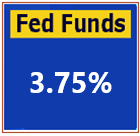
U.S. Treasury yields retreated on Monday as investors weighed President-elect Donald Trump’s Treasury secretary pick and eyed a key inflation reading due later in the week. The 10-year Treasury yield slid more than 11 basis points at 4.198%. The 2-year Treasury lost nearly 6 basis points, sitting at 4.307%.
CFNAI - Business Activity
The Chicago Fed National Activity Index (CFNAI) decreased to –0.40 in October 2024 from –0.27 in September. It shows growth well under trend in October 2024. Three of the four broad categories of indicators used to construct the index decreased from September, and all four categories made negative contributions in October. The index's three-month moving average, CFNAI-MA3, decreased to –0.24 in October from –0.21 in September.
Case-Shiller Index
Home-price growth has ‘stalled,’ Case-Shiller says . Home prices are appreciating less rapidly in the 20 largest U.S. cities. Home prices in the 20 biggest U.S. metropolitan areas lost more steam in September 2024, buckling under the pressure of high mortgage rates and historic unaffordability. September 2024 marked the sixth consecutive month of slowing annual appreciation. The S&P CoreLogic Case-Shiller 20-city house-price index rose 0.2% in September, compared with the previous month. The Case-Shiller index tracks home prices across the nation. The data generally reports with a two-month delay. 20-City Adjusted - M/M + 0.2%, 20-City Unadjusted - M/M -0.3% and 20-City Unadjusted - Yearly +4.6%. The index’s 20-city measuring home prices in the largest U.S. cities – reported monthly rises of 0.2%. Year-over-year, the 20-city composite posted increase of 4.6%.
FHFA
U.S. House Prices Rise 4.4 Percent over the Prior Year; Up 0.7 Percent from the Second Quarter of 2024. U.S. house prices rose 4.3 percent between the third quarter of 2023 and the third quarter of 2024, according to the Federal Housing Finance Agency (FHFA) House Price Index (FHFA HPI®). House prices were up 0.7 percent compared to the second quarter of 2024. FHFA’s seasonally adjusted monthly index for September was up 0.7 percent from August. U.S. house price growth slowed in the third quarter, continuing a trend that started in the fourth quarter of the previous year. While house prices continued to increase because housing demand outpaced the locked-in housing supply, elevated house prices and mortgage rates likely contributed to the slowdown in price growth.
New Home Sales
US new home sales tumble to two-year low in October 2024. Sales of new U.S. single-family homes dropped to the lowest level in nearly two years in October, likely as a rise in mortgage rates drove buyers to the sidelines and hurricanes disrupted activity. New home sales plunged 17.3% to a seasonally adjusted annual rate of 610,000 units last month, the lowest level since December 2022, the Commerce Department's Census Bureau said on Tuesday. The sales pace for September was unrevised at a rate of 738,000 units. Economists polled by Reuters had forecast new home sales, which account for about 15% of U.S. home sales, would ease to a pace of 725,000 units. New home sales are counted at the signing of a contract, and can be volatile on a month-to-month basis. They dropped 9.4% year-on-year in October.
Consumer Confidence
Post election euphoria lifts US consumer confidence to 16-month high. U.S. consumer confidence increased to a 16-month high in November amid optimism over the labor market, expectations for lower inflation and higher stock prices over the next year. Part of the second straight monthly rise in confidence reported by the Conference Board on Tuesday likely reflected the outcome of the Nov. 5 election which returned Donald Trump to the White House and gave his Republican Party control of the U.S. Congress. The Conference Board did not attribute the improvement to the election, but noted "that write-in responses about politics, including the November elections, surged to above 2020 levels."
Money Supply
US dollar weakness, growing money supply could fuel Bitcoin 2025 rally. Bitcoin price rallied over 58% since May, when the M2 money supply turned positive year-over-year for the first time since November 2023. The growing global money supply and a potential decline in the United States dollar could fuel a Bitcoin bull rally in 2025, as analysts expect to see an over six-figure valuation. An analyst says Bitcoin’s correlation with the global M2 suggests it could imminently drop 20%, but not all observers agree. The M2 money supply and its growth have historically been correlated with previous Bitcoin bull runs. M2 Level $21,311.2 B.
FOMC Minutes
FOMC minutes highlight gradual approach to policy easing amid uncertainty. The minutes from the FOMC November meeting revealed that if economic data aligns with expectations, it would likely be appropriate to “move gradually” toward a neutral policy stance over time. However, they stressed that decisions were “not on a preset course” and would depend on the state of the economy and risks to the outlook. Fed officials see interest rate cuts ahead, but only ‘gradually,’ meeting minutes show. Federal Reserve officials expressed confidence that inflation is easing and the labor market is strong, allowing for further interest rate cuts albeit at a gradual pace, according to minutes from the November meeting released Tuesday.
Geopolitical Risk
On the data front, investors will closely monitor flash euro zone inflation data for November, due to be released at 10 a.m. London time. The reading comes ahead of the European Central Bank’s last meeting of the year on Dec. 12. France’s harmonized inflation rate came in at 1.7% in November, up slightly from 1.6% in October, according to preliminary data from the National Institute of Statistics and Economic Studies (Insee). The November reading was in line with the expectations of economists surveyed by the Wall Street Journal and remains below the European Central Bank’s 2% target.
South Korea unexpectedly cuts rates. On Thursday, the Bank of Korea cut its benchmark interest rate by 25 basis points to 3%. A Reuters poll of economists had expected the BOK to keep rates unchanged. South Korea reported last month disappointing third-quarter economic growth of just 0.1% from a quarter earlier. The BOK on Thursday lowered its 2024 gross domestic product outlook to 2.2% from 2.4%.
MBA Purchase Applications
Homebuyer demand for mortgages jumps 12% after first interest rate drop in over 2 months. Applications for a mortgage to purchase a home increased 12% from the previous week and were 52% higher than the same week one year ago. The average contract interest rate for 30-year fixed-rate mortgages with conforming loan balances ($766,550 or less) decreased to 6.86% from 6.90%. Applications to refinance a home loan dropped 3% for the week but were 119% higher than the same week one year ago.
Jobless Claims
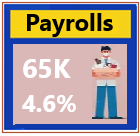
Also reported Wednesday, initial claims for unemployment benefits fell by 2,000 to 213,000 in the week ended Nov. 23, a sign that the U.S. labor market remains tight. Economists polled by Dow Jones expected claims to come in at 215,000.
Jobless claims slide to 7-month low. Businesses not cutting many jobs. Yet jobs are harder to find for the unemployed. The numbers: The number of Americans who applied for unemployment benefits the week before the Thanksgiving holiday dipped to a seven-month low in a sign of strength for a steadily expanding U.S. economy.
GDP
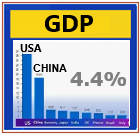
U.S. economy grew at 2.8% pace in third quarter - and it’s still going strong. The U.S. grew a 2.8% annual pace in the third quarter, revised figures showed, and indicated the economy headed into the crucial holiday shopping season with plenty of momentum. The increase in gross domestic product, the official scorecard of the economy, was unchanged from an initial 2.8% estimate last month. Economists polled by MarketWatch had forecast GDP to remain the same. Consumer spending, the lynchpin of GDP growth, expanded at a frothy 3.5% rate, down from the original 3.7% estimate. Consumer spending accounts for more than two-thirds of everything that goes on in the economy.
Durable Goods Orders
Durable Goods Orders in the US increased $0.7 billion, or 0.2%, to $286.6 billion in October, the US Census Bureau reported on Wednesday. This reading followed the 0.4% decrease (revised from -0.8%) recorded in September and came in worse than the market expectation for an increase of 0.5%. U.S. Durable Goods Orders Rise Less Than Expected In October. The numbers: Orders at U.S. factories posted a tepid increase in October, signaling that an ongoing slump in the industrial side of the economy shows no sign of abating. Durable-goods orders rose 0.2% last month, largely because of new airplane contracts for Boeing. Durable-goods orders barely budge. No sign manufacturing slump is ending. The Commerce Department released a report on Wednesday showing new orders for U.S. manufactured durable goods increased by less than expected in the month of October. The report said durable goods orders rose by 0.2 in October after falling by a revised 0.4 percent in September.
Corporate Profis
Corporate profits, meanwhile, fell by 0.3% in the third quarter after a 3.6% gain in the second quarter.
Intal Trade in Goods
mmmmmm
Retail Inventories Adv
Advance retail inventories +0.1%.
Whosale Trade Adv
Wholesale Inventories Rise, Beating Forecasts and Boosting USD. US October advance wholesale inventories +0.2% vs -0.2% prior. Wholesale inventories are estimated to be higher in October, up slightly to $905.1 billion, while retail inventories are also seen marginally higher on the month up to $824.7 billion. Here is the breakdown by the month. In a surprising turn of events, the recent data on Wholesale Inventories indicates a positive change, outperforming both the forecasted and previous numbers. This unexpected rise suggests a bullish trend for the US Dollar (USD), as the total value of goods held in inventory by wholesalers has increased. The actual increase for Wholesale Inventories stands at 0.2%, a figure that has surpassed the forecasted stagnation of 0.0%. This increase is not only significant when compared to the forecast, but it also represents a turnaround from the previous decrease of -0.2%. The rise in Wholesale Inventories is generally seen as a bullish sign for the USD. This is because an increase in the total value of goods held in inventory by wholesalers suggests a potential increase in future sales, which could lead to higher overall economic activity and, in turn, a stronger USD.
Chicago PMI
Chicago PMI dips below forecast, indicating contraction in manufacturing sector. The Chicago Purchasing Managers' Index (PMI), a key indicator of the economic health of the manufacturing sector in the Chicago region, has reported a figure of 40.2. This latest figure falls below the forecasted number of 44.9, hinting at a contraction in the manufacturing sector. The actual figure of 40.2 not only falls short of the forecasted 44.9 but also represents a decrease from the previous figure of 41.6. This decline suggests that the manufacturing sector in the Chicago region is experiencing a contraction, which could potentially affect the overall health of the U.S. economy.
Personal Income
The personal consumption expenditures price index, a broad measure the Fed prefers as its inflation gauge, increased 0.2% on the month and showed a 12-month inflation rate of 2.3%. Both were in line with the Dow Jones consensus forecast, though the annual rate was higher than the 2.1% level in September.
Consumer Spending
Consumer spending was still solid in October, though it tailed off a bit from September. Current-dollar expenditures rose 0.4% on the month, as forecast, while personal income jumped 0.6%, well above the 0.3% estimate, the report showed. The personal saving rate slipped to 4.4%, tied for its lowest since January 2023. The October personal consumption expenditures price index, a broad measure that the Fed favors as its main inflation gauge, increased 0.2% on the month and 2.3% over the past year. Both were in line with the Dow Jones consensus forecast, although the annual rate was higher than the 2.1% level in September. Excluding food and energy, core inflation increased 0.3% on a monthly basis and 2.8% in one year, also in-line with economists’ expectations.
Core PCE
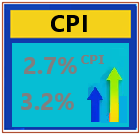
Inflation edged higher in October as the Federal Reserve is looking for clues on how much it should lower interest rates, the Commerce Department reported Wednesday. Excluding food and energy, core inflation showed even stronger readings, with the increase at 0.3% on a monthly basis and an annual reading of 2.8%. Both also met expectations. The annual rate was 0.1 percentage point above the prior month. Fed’s preferred inflation gauge rises to 2.3% annually, meeting expectations. The personal consumption expenditures price index increased 0.2% on the month and showed a 12-month inflation rate of 2.3%, both in line with expectations. Core inflation showed even stronger readings, with an increase at 0.3% on a monthly basis and an annual reading of 2.8%, also as forecast. Spending rose 0.4% on the month, as forecast, while personal income jumped 0.6%, well above the 0.3% estimate.
Pending Home Sales
Contracts to buy U.S. previously owned homes rose unexpectedly in October, notching a third straight month of increases, despite high mortgage rates and as inventory of properties for sale continued to build and a healthy job market fortifies the finances of prospective buyers. The National Association of Realtors (NAR) said on Wednesday its Pending Home Sales Index, based on signed contracts, rose 2.0% last month to 77.4 - the highest since March - from 75.9 in September. Economists polled by Reuters had forecast contracts, which become sales after a month or two, would fall 2.0% after increasing 7.5% in September, the largest increase in more than four years. Pending home sales rose 5.4% from a year earlier and all four regions saw month-over-month and year-over-year increases.
Oil - Commodity
mmmm
Fed Balance Sheet
mmmm
Mortgage Rates
Mortgage rates started this week slightly lower but could make a bigger move after economic data is released Wednesday. Holiday weeks tend to be choppy for the markets overall, especially the bond markets.. The average contract interest rate for 30-year fixed-rate mortgages with conforming loan balances ($766,550 or less) decreased to 6.86% from 6.90%. The 30-year fixed-rate mortgage averaged 6.84% last week. Mortgage rates have reversed all of the decline that had pushed them to more than a 1-1/2-year low of 6.08% at the end of September after Federal Reserve began cutting interest rates. The average rate on a 30-year fixed-rate mortgage jumped to 6.72% by the end of October, tracking a rise in the 10-year U.S. Treasury yields, which have increased on strong domestic data that have suggested a slower path of rate cuts from the U.S. central bank. Expectations of fewer rate cuts next year have also been strengthened by fears of a resurgence in inflation. President-elect Donald Trump said on Monday he would impose a 25% tariff on all products from Mexico and Canada, and an additional 10% tariff on goods from China, on his first day in office.
Hedging - Gold
mmmm
S&P 500 Index - Week Performance
mmm |