International Trade
Exports grow when foreign economies are strong. The weaker the foreign exchange value of the dollar, the less expensive goods and services are to foreigners, and this also helps spurt export activity. Imports grow when U.S. economic growth is robust. Imports are also spurred by a strong foreign exchange value of the dollar.
International Trade Balance
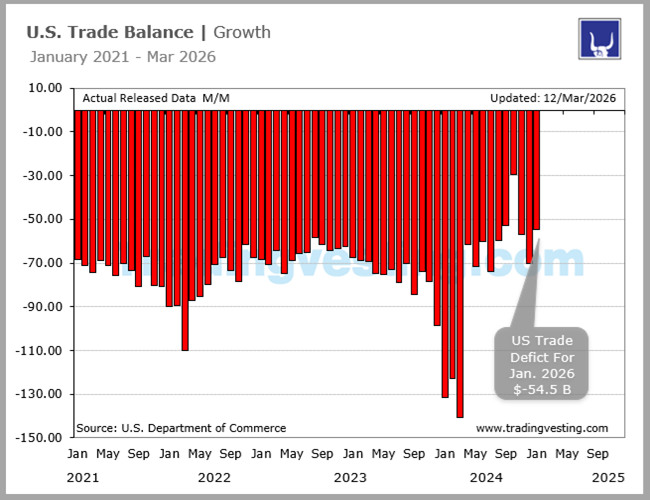
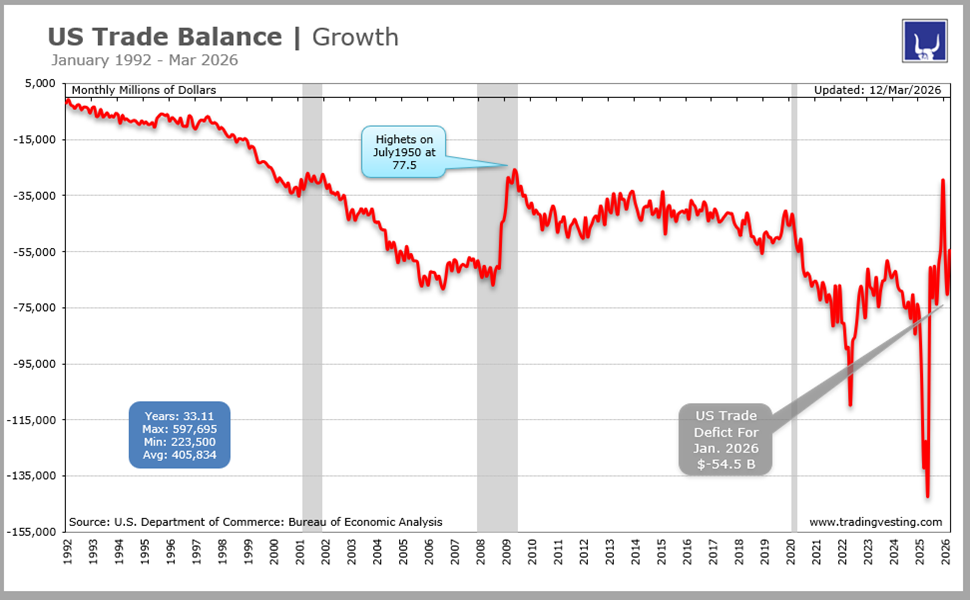
The international trade balance has posted a deficit almost continuously since the 1980s. Any trade deficit is a drag on U.S. GDP growth, but a smaller deficit adds to growth, while a larger deficit decreases GDP growth.
Interpreting the Rating for Trade Balance
A National Association for Business Economics forecasting panel has projected that the deficit for 2012 will narrow by 4.1% to $535.4 billion and will edge down further to $525 billion in 2013 as growth in exports keeps pace with import increases
Consider this fact....Economic growth weakens when exports decline because factories tend to produce fewer goods. And U.S. companies earn less.
A wider trade deficit acts as a drag on growth because the U.S. is typically spending more on imports while taking in less from the sales of American-made goods. So, wat this moment we need Imports to decrease and Exports Decline means a Red Flag for our purposes...Negative View
What is the Trade Deficit?
The trade deficit is when the total goods and services the U.S. imports is greater than the total it exports.
In 2010, the total U.S. trade deficit was $497.9 billion. This was $1.8 trillion in exports minus $2.3 trillion in imports. This shows the economy is strengthening, since it is more than the $375 billion trade deficit in 2009. Still, it's much less than the record $759 billion trade deficit in 2006. A wider deficit can depress economic growth because it usually means fewer export-related jobs. For the 2011, the U.S. deficit climbed to $588 billion, the highest level since 2008. Both exports and imports rose to all-time highs.
There are many causes of the steady growth in U.S. trade deficits. These include non-tariff barriers to U.S. exports in a number of key foreign markets, and export-led growth strategies in many countries that target American markets because they are the largest and are more open than many others. Macroeconomic factors such as the over-valuation of the U.S. dollar and slow growth abroad have also played important roles in the 1990s, and especially in the past few years. Perhaps most important is a pattern of neglect of the American industrial structure by the federal government.
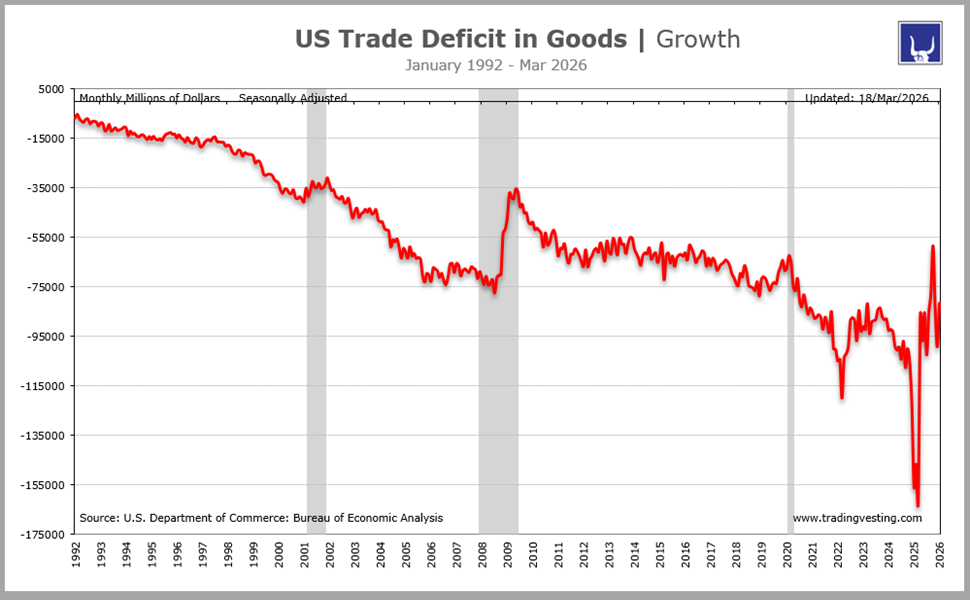
Since the 1970s the U.S. moved from a trade surplus to a deficit position, as Europe and Japan began to compete effectively with the U.S. in a range of industries. The trade surplus of the 1960s was transformed into a deficit that reached 2.9% of GDP in 1998, as shown in Figure 1. This deficit will grow rapidly in the future as a result of the continuing global financial crisis. Although financial markets are beginning to recover throughout the world, the real economies of many developing countries and Japan remain mired in recessions.the steady growth in our trade deficits over the past two decades has eliminated millions of U.S. manufacturing jobs.
Balance of Payments
The Balance of Payment records in detail how one country interacts with others in the international economy - tracking the purchase, sale and transfer of goods, services and capital investments.
The forces that affect a country's balance of payments give deep insight into the broader picture of demand and supply for that country's currency. With impact on economic and political developments. The Balance of Payments is affected by several component reports detailed below.
The U.S. trade deficit widened : as American exports declined and imports increase
Exports grow when foreign economies are strong. The weaker the foreign exchange value of the dollar, the less expensive goods and services are to foreigners, and this also helps spurt export activity. Imports grow when U.S. economic growth is robust. Imports are also spurred by a strong foreign exchange value of the dollar.
Why an Ongoing Trade Deficit Weakens the Economy
An ongoing trade deficit is detrimental to the nation's economy over the long term because it is financed with debt. In other words, the U.S. can buy more than it makes because the countries that it buys from are lending it the money. It is like a party where you've run out of money, but the pizza place is willing to keep sending you pizzas and put it on your tab. Of course, this can only go on as long as there are no other customers for the pizza, and the pizza place can afford to loan you the money. One day the lending countries may decide to ask the U.S. to repay the debt. On that day, the party is over.
How the Dollar Decline Affects the Trade Deficit:
The dollar declined 40% against the euro in the last six years. This means that U.S. goods and services are 40% cheaper for Europeans, which makes U.S. companies more competitive, and increases exports. However, the recession offset this advantage, so that exports declined - from $1.8 trillion in 2008 to $1.5 trillion in 2009. The recession also lowered imports, which dropped from $2.3 trillion in 2007 to $1.6 in 2009.
OIL
Keep in mind that oil is priced in dollars. As the dollar declines, OPEC increases prices to maintain its revenue. The U.S. reliance on oil means it will be difficult to escape its trade deficit.
The U.S. Could Be Losing Its Competitiveness:
A third concern about the trade deficit is the statement it makes about the competitiveness of the U.S. economy itself. By purchasing goods overseas for a long enough period of time, U.S. companies lose the expertise and even the factories to make those products. Try finding a pair of shoes made in the America. As the U.S. loses competitiveness, it has even lower quality jobs and the standard of living decline.
The reasoning is simple: Taking as much as 4% out of our gross domestic product will push the economy back into recession. And when the economy tumbles, the government takes in less tax revenues and has to spend more on social programs like unemployment insurance, food stamps, welfare and the like.
Now you don't have to be a rocket scientist to conclude that less revenues and more spending increases the deficit: not the other way around. |