Durable Good Orders
Orders for durable goods, items ranging from toasters to aircraft that are meant to last three years or more, accelerated 1.8% in August 2021 after climbing 0.5% in July. They were boosted by a 5.5% rebound in orders for transportation equipment, which followed a 0.4% fall in July. Strong U.S. business spending on equipment seen underpinning GDP growth in Q3.New orders and shipments of key U.S.-made capital goods increased solidly in August amid strong demand for computers and electronic products, keeping business spending on equipment on track for another quarter of robust growth. The sustained strength in business investment is expected to limit the hit on economic growth from an anticipated slowdown in consumer spending in the third quarter as the boost from fiscal stimulus fades and COVID-19 infections flare up. Demand for goods is being driven by businesses desperate to replenish inventories, but strained supply chains remain a challenge.
Personal Income
Persona
Consumer Spending or Real PCE
Real d
Core PCE Price Index - Inflation
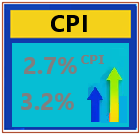
Inflation ran at a fresh 30-year high in August 2021 as supply chain disruptions and extraordinarily high demand fueled ongoing price pressures, the Commerce Department reported Friday. The core personal consumption expenditures price index, which excludes food and energy costs and is the Federal Reserve’s preferred measure of inflation, increased 0.3% for the month and was up 3.6% from a year ago. The monthly gain was slightly higher than the 0.2% Dow Jones estimate and the annual forecast of 3.5%. That’s the highest since May 1991 and reflective of inflationary pressures that Fed Chairman Jerome Powell said earlier this week he finds “frustrating.” On a headline basis,
PCE prices rose 0.4% for the month and 4.3% year over year, the highest since January 1991. That reflected a 24.9% increase in energy prices and a 2.8% rise in food. Goods prices rose by 5.5% while services increased by 3.6%. The rise in inflation came as personal income increased 0.2% for the month, in line with estimates but indicative that real income is falling as inflation rises. Spending accelerated 0.8%, slightly above the 0.7% forecast.
ISM Manufacturing Index
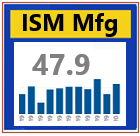
The ISM Manufacturing index for September 2021 registered a 61.1 reading, representing the percentage of companies seeing expansion. Anything above 50 represents growth; the Dow Jones estimate was 59.5. The survey also showed prices rising, with 81.2% of respondents reporting increases against 79.4% in August. Order backlogs decreased to 64.8, a drop of 3.4 points from a month ago, but companies overall were still reporting delays. “Supply chain concerns are growing beyond electronics and chips into most other commodities.
Lead times are extending, shipping lanes are slowing, and we will not see an end to this in 2021,” said one respondent in the electrical equipment, appliances and components industry. Also, consumer sentiment improved, according to the University of Michigan’s index, which rose to 72.8 in September compared to 70.8 in August and a 71 estimate.
Consumer Confidence
U.S. consumer confidence hits seven-month low; goods trade deficit widens. U.S. consumer confidence fell to a seven-month low in September 2021 as a relentless rise in Covid-19 cases deepened concerns about the economy’s near-term prospects. The Conference Board said its consumer confidence index dropped to a reading of 109.3 this month from 115.2 in August, the third straight monthly decline. U.S. consumer confidence fell to a seven-month low in September as a relentless rise in COVID-19 cases deepened concerns about the economy’s near-term prospects, fitting in with expectations for a slowdown in growth in the third quarter. The survey from the Conference Board on Tuesday showed consumers less interested in buying a home and big-ticket items such as motor vehicles and major household appliances over the next six months. Consumers were also not as upbeat in their views of the labor market as in the prior month. Economic activity has cooled in recent months as the boost from pandemic relief money faded and infections flared up, driven by the highly contagious variant of the coronavirus.
S&P Case-Shiller
U.S. home prices soared in July 2021 by a record amount from a year earlier as buyers desperate for homes bid up prices amid a limited supply. The S&P CoreLogic Case-Shiller 20-city home price index surged 19.9% in July compared with a year ago, the largest gain on records dating back to 2000. In 17 of the 20 cities, prices rose more quickly in July than in June. And prices reached all-time highs in 19 of 20 cities. The one exception was Chicago, where prices are just 0.3% below their 2006 peak. Sales of new and existing homes have jumped this year, driven by low mortgage rates and a desire for more living space during the pandemic. Sales of existing homes are up 16% in the first eight months of 2021 compared with last year, and they’re up 12% from the same period in 2019. Phoenix, San Diego, and Seattle reported the biggest price increases, with Phoenix leading the nation for the 26th straight month. The rising prices are making it harder for younger would-be buyers to purchase a home, with the proportion of sales going to first-time homebuyers falling to 29% last month, the lowest since January 2019, according to the National Association of Realtors. Meanwhile, investors snapped up 15% of homes in August, up slightly from a year earlier..
Record July jump in U.S. home prices, sidelining more buyers. U.S. home prices soared in July by a record amount from a year earlier. Buyers desperate for homes bid up prices amid a limited supply. The S&P CoreLogic Case-Shiller 20-city home price index surged 19.9% in July compared with a year ago, the largest gain on records dating back to 2000.
Corporate Profits
US Corporate Profits Growth Revised Up in Q2. Corporate profits in the United States climbed 10.5% to a record high of USD 2.44 trillion in the second quarter of 2021, after rising 4.5% in the previous period and compared with a preliminary estimate of a 9.7% jump. Undistributed profits climbed 21.4% to $1.03 trillion and net cash flow with inventory valuation adjustment, the internal funds available to corporations for investment, advanced 7.9% to $3.08 trillion. Also, net dividends rose 3.8% to $1.41 trillion.
FHFA
House prices rose nationwide in July, up 1.4 percent from the previous month, according to the latest Federal Housing Finance Agency House Price Index (FHFA HPI®). House prices rose 19.2 percent from July 2020 to July 2021. The previously reported 1.6 percent price change for June 2021 was revised upward to 1.7 percent. For the nine census divisions, seasonally adjusted monthly house price changes from June 2021 to July 2021 ranged from +0.8 percent in the West North Central division to +1.9 percent in the South Atlantic division. The 12-month changes ranged from +15.6 percent in the West North Central division to +25.6 percent in the Mountain division.
GDP
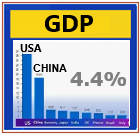
US Slightly Revises up Its GDP Estimate for Q2 to 6.7%. The U.S. economy expanded at a 6.7% annual pace from April through June, the Commerce Department said Thursday, slightly upgrading its estimate of last quarter’s growth in the face of a resurgence of COVID-19 in the form of the delta variant. The U.S. economy expanded at a 6.7% annual pace from April through June, the Commerce Department said Thursday, slightly upgrading its estimate of last quarter's growth in the face of a resurgence of COVID-19 in the form of the delta variant.The government's estimate of growth in the second quarter — its last of three — was up from its previous estimate of a 6.6% annual pace that will likely mark a high point for the economy's expansion this year as the virus slows some activity, government support programs wind down and manufacturing supply-chain issues persist.
Thursday’s report from the government showed that the nation’s gross domestic product — its total output of goods and services — accelerated from a 6.3% annual rate in the first three months of the year.
A key factor in the upgraded growth estimate for the April-June quarter was a slightly higher level of consumer spending, which accounts for roughly 70% of economic activity. Consumer spending grew at a 12% annual rate, the fastest expansion since a surge in the third quarter last year, when the economy began to re-open.
PMI Manufacturing Final fro Sep. 2021
Markit manufacturing final PMI 60.7 versus 60.5 preliminary. Manufacturing sector final output index comes in at 55.7 versus flash reading up 55.2. August came in at 56.7. Final input prices index for September comes in at 87.0 versus flash reading of 86.9. August prices came in at 87.5. Prices index decreases from previous month for the first time since January.
Pending Home Sales
Pending home sales increase 8.1% in August. Contracts rise in all four regions. Applications for home purchase loans fall last week. Contracts to buy U.S. previously owned homes rebounded to a seven-month high in August, but higher prices as supply remains tight are slowing the housing market momentum. Other data on Wednesday showed applications for loans to buy a house fell last week as mortgage rates increased after the Federal Reserve signaled it would likely begin reducing its monthly bond purchases as soon as November. There are indications that supply could improve in the fall.
U.S. Trade in Goods - Growth
Goods trade deficit rises 0.9% to $87.6 bln in August 2021. Expectations for slower GDP growth were reinforced by a separate report from the Commerce Department on Tuesday showing the goods trade deficit rose 0.9% to $87.6 billion in August 2021 as businesses imported more products to replenish inventories. Trade has subtracted from GDP growth for four straight quarters. Imports of goods climbed 0.8% to $236.6 billion, lifted by consumer goods and industrial supplies. But imports of food, capital goods and motor vehicles fell.
Motor vehicle imports were likely weighed down by a global shortage of semiconductors, which is impacting production. Rising imports offset a 0.7% gain in goods exports to $149.0 billion, supported by industrial supplies and consumer goods. But the nation reported a decline in exports of capital goods, motor vehicles and food products. Exports are increasing as global economies continue to recover from the pandemic. Some of the increase in imports ended up in warehouses at wholesalers and retailers. Wholesale inventories accelerated 1.2% last month. Stocks at retailers edged up 0.1%. Retail inventories were held back by a 1.5% tumble in stocks of motor vehicles.
Construction Spending
U.S. construction spending was unexpectedly flat in August as an increase in public sector projects was offset by weakness in the private sector. The Commerce Department said on Friday that the unchanged reading in construction spending followed a 0.3% gain in July. Construction spending increased 8.9% on a year-on-year basis in August. Economists polled by Reuters had forecast construction spending gaining 0.3%.
Consumer Sentiment UM
U.S. Consumer Sentiment Improves More Than Initially Estimated In September. A report released by the University of Michigan on Friday showed consumer sentiment in the U.S. improved by more than previously estimated in the month of September. The report said the consumer sentiment index for September was upwardly revised to 72.8 in September from a preliminary reading of 71.0. Economists had expected the consumer sentiment index to be unrevised from the preliminary reading, which was still slightly higher than the nearly ten-year low of 70.3 hit in August. |