ISM Service - Non Manufacturing Index
The Services PMI reached another all-time high in May, registering 64 percent, which is 1.3 percentage points higher than April's reading of 62.7 percent. The previous record high was 63.7 percent in March. The May reading indicates the 12th straight month of growth for the services sector, which has expanded for all but two of the last 136 months.
Case Shiller
Home prices in March were 13.2% higher in March, compared with March 2020, according to the S&P CoreLogic Case-Shiller National Home Price Index. That’s up from the 12% annual gain in February, and it marks the 10th straight month of accelerating home prices. The March gain is the largest since December 2005 and is one of the largest in the index’s 30-year history. Prices are being pushed higher by incredibly strong competition in the market. High demand is butting up against near record-low supply, resulting in bidding wars for the vast majority of listings. The 10-city composite rose 12.8% year over year, up from 11.7% in the previous month. The 20-city composite increased 13.3%, up from 12% in February.
Factory Orders
New orders for U.S.-made goods fell more than expected in April as a global semiconductor shortage weighed on the production of motor vehicles and electrical equipment, appliances and components. The Commerce Department said on Friday that factory orders dropped 0.6% in April after increasing 1.4% in March. Economists polled by Reuters had forecast factory orders slipping 0.2%. Orders surged 14.2% on a year-on-year basis.
Cosntruction Spending
U.S. Census Bureau: April Construction Spending Up 9.8% Year-Over-Year. Construction spending for the fourth month of 2021 was up 0.2% from the previous month of March. Construction spending during April was estimated at a seasonally adjusted annual rate of $1,524.2 billion, 0.2% above the March 2020 estimate of $1,521 billion, but 9.8% above the April 2020 estimate of $1,387.9 billion, according to the U.S. Census Bureau.
ISM Manufacturing Index
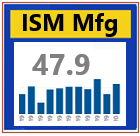
Manufacturing PMI at 61.2%; May 2021 Manufacturing ISM Report On Business. The May Manufacturing PMI® registered 61.2 percent, an increase of 0.5 percentage point from the April reading of 60.7 percent. This figure indicates expansion in the overall economy for the 12th month in a row after contraction in April 2020. The New Orders Index registered 67 percent, increasing 2.7 percentage points from the April reading of 64.3 percent. The Production Index registered 58.5 percent, a decrease of 4 percentage points compared to the April reading of 62.5 percent.
Mortgage Applications
Sky-high home prices mean demand for ever bigger mortgages, but those prices may also be causing a pullback in homebuying overall. Mortgage applications to purchase a home fell 4% last week compared with the previous week, according to the Mortgage Bankers Association’s seasonally adjusted index. Volume was just 2% higher than the same week one year ago, when the housing market was just starting to come back after the pandemic shut it down.
Jobless
mm
Beige Book
Fed's Beige Book Reports Pickup in Recovery, Price presuure. The pace of the U.S. recovery picked up somewhat in the past two months, sparking price pressures as businesses contended with worker scarcity and rising costs, the Federal Reserve said. The national economy expanded at a moderate pace from early April to late May, a somewhat faster rate than the prior reporting period. Several Districts cited the positive effects on the economy of increased vaccination rates and relaxed social distancing measures, while they also noted the adverse impacts of supply chain disruptions. The effects of expanded vaccination rates were perhaps most notable in consumer spending in which increases in leisure travel and restaurant spending augmented ongoing strength in other spending categories.
Oil - Commodity
The price of oil, meanwhile, jumped to a two-year high of $71.15 a barrel for Brent crude Tuesday, which is driving gasoline prices above $3 a gallon. "Much of the inflation for goods and housing are one-off impacts," Wilmington Trust economists Luke Tilley and Rhea Thomas wrote last week. "The massive spending done to fortify homes for the quarantine environment, such as new decks, patios, swimming pools, and exercise equipment, will abate as the economy reopens. Additionally, the last round of stimulus checks are out the door and will have diminishing impact as they are spent more slowly over the coming months.".
PMI Manufacturing Final
New orders for manufactured goods increased at a record pace in May, along with other measures that show the health of the U.S. manufacturing industry jumped sharply as companies responded to strong demand for their products. Overall, the seasonally adjusted IHS Markit U.S. Manufacturing Purchasing Managers' Index reached 62.1 in May, up from 60.5 in April. The increase in business among U.S. manufacturers was among the strongest in the 14-year history of the index..
U.S. Manufacturing Soars in May, With New Orders Hitting a Record Level, Though Prices Rise.
U.S. manufacturers are enjoying a bumper second quarter, with the PMI hitting a new high for the second month running in May. Inflows of new orders are surging at a rate unsurpassed in 14 years of survey history, buoyed by reviving domestic demand and record export sales as economies reopen from COVID-19 restrictions.
.
PMI Composite Final
May U.S. PMI Composite revised higher, beating consensus. Thu, Jun. 03, 2021 for May U.S. PMI Composite (Final): 68.7 vs. 68.1 consensus and 68.1 prior. Signals steepest upturn in business activity since data collection began in October 2009. The overall upturn was supported by a sharper expansion in new business. Rates of growth were the fastest on record in both the manufacturing and service sectors, IHS Markit said. Services PMI: 70.4 vs. 70.1 consensus and 70.1 prior. Inflationary pressures increased in May. As a result, firms tried to pass on the higher costs to clients, with the pace of charge inflation rising to a new series high. Rate of job creation softened from April as firms were challenged in finding suitable job candidates.
Trade Balance
The U.S. trade deficit in goods narrowed 7.3% in April, according to the Commerce Department’s advanced estimate released Friday.The deficit narrowed to $85.2 billion from a record $92 billion in March.Economists polled by Econoday were looking to a $91 billion deficit.The report also showed a 0.8% gain in wholesale inventories while retail inventories were down 1.6%. Excluding autos, retail inventories were up 0.5%. Big picture: The international trade gap remains wide due to the strong economy that is getting stoked by U.S. fiscal stimulus. The trade deficit is expected to continue to be a drag on U.S. GDP growth this year. Shipping delays caused by congestions at U.S. ports, especially on the West Coast, weighed on trade in the past year, analysts said.
Productiviy and Cost
U.S. productivity growth was unrevised at a 5.4% rate in the first three months of the year while labor costs rose at an even faster rate. The first-quarter gain in productivity was unchanged from the initial estimate a month ago, the Labor Department reported Thursday. The 5.4% gain at a seasonally adjusted annual rate followed a steep plunge at a 3.8% rate in the fourth quarter. Labor costs rose at a 1.7% rate in the first quarter, up from the initial estimate of a 1.6% increase. Productivity, the amount of output per hour of work, showed turned in weak gains over the record-long economic expansion that ended with the pandemic-triggered recession last year. Economists are hoping that some of the efficiencies businesses have implemented to cope with the pandemic may lead to stronger productivity gains in the coming years.
Personal Income
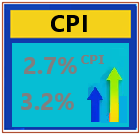
A key inflation indicator rose a faster-than-expected 3.1% in April as price pressures built in the rapidly expanding U.S. economy, the Commerce Department reported Friday. The core personal consumption expenditures index was forecast to increase 2.9% after rising 1.9% in March. Federal Reserve officials consider the measure to be the best gauge for inflation, though they watch a number of metrics. The index captures price movements across a variety of goods and services and is generally considered a wider-ranging measure for inflation as it captures changes in consumer behavior and has a broader scope than the Labor Department’s consumer price index. The CPI accelerated 4.2% in April. Over the past month, core PCE rose 0.7 %, also quicker than the expected 0.6%.
ADP employment Report 978K
Private job growth for May accelerated at its fastest pace in nearly a year as companies hired 978,000 workers, according to a report Thursday from payroll processing firm ADP. It was a big jump from April’s 654,000 and the largest gain since the 4.35 million added in June 2020 as the national economy came out of its Covid-19 lockdown. Economists surveyed by Dow Jones had been looking for 680,000 in May. The April total was revised sharply lower from the initially reported 742,000.
Consumer Sentiment
Rising inflation has cast a shadow over the U.S. economic recovery as Americans pay higher prices for a variety of goods and services ranging from steaks to used cars to plane tickets, according to a closely followed consumer survey. The second and final reading of the consumer sentiment index edged up a tick to 82.9 from an initial 82.8, the University of Michigan said Friday. But it was still down sharply from a 13-month high of 88.3 in April. All three major surveys of consumer confidence fell in May owing to worries about higher prices.
Employment Situation
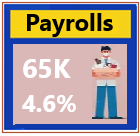
US non-farm payroll employment grew 559k in May, below expectation of 621k. Prior month’s figure was revised slightly up from 266k to 278k. Total non-farm payroll employment is down by -7.6m, or -5.0%, from its pre-pandemic level in February 2020. Unemployment rate dropped to 5.8%, down from 6.1%, slightly below expectation of 5.9%. Number of unemployed persons fell by -496k to 9.3m. The unemployment measures are still well above pre-pandemic levels of 3.5% and 5.7m, in February 2020. Labor force participation rate was little changed at 61.6%, and remained in range of 61% to 61.7% since June 2020. Wage growth was strong, as average hourly earnings rose 0.5% mom, versus expectation of 0.2% mom.
|