10-Year Treasury Yield
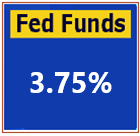
U.S. 10-yr Treasury yield to hit 1.9% by year end -Goldman Sachs. Stronger economic data should push the benchmark 10-year U.S. Treasury yield up to 1.9% by the end of 2021, according to Goldman Sachs’ latest forecast released on Thursday. Expectations that government stimulus and a countrywide coronavirus vaccination program are fueling an economic rebound in the United States have pushed Treasury yields higher in recent weeks, a move that has reverberated throughout global markets and weighed on U.S. stocks. The 10-year yield, which began 2021 at 0.930%, hit a high of 1.614% on Feb. 25 and was trading around 1.55% on Thursday. The 10-year yield last reached 1.9% in January 2020, which was before the full force of the coronavirus pandemic hit the U.S. economy and the Federal Reserve took action to cut interest rates to rock bottom levels. Recent data has shown some signs of economic improvement as the roll out of COVID-19 vaccines is underway. Rising Treasury yields tend to dim the allure of stocks and other comparatively risky investments. Wall Street ended sharply lower on Thursday, leaving the Nasdaq down around 10% from its February record high, after remarks from Federal Reserve Chair Jerome Powell disappointed investors worried about rising longer-term U.S. bond yields.
Jobs Report Coming Friday 05
The U.S. Labor Department's February jobs report set for release on Friday will be one of the main reports of the week, offering a fresh look at the state of the labor market recovery after back-to-back disappointments in each of the January and December reports.
Consensus economists are expecting to see that non-farm payrolls rose by 150,000 in February, accelerating from the tepid gain of 49,000 a month earlier. The unemployment rate likely ticked up to 6.4% from 6.3%, though any increase could be in part the result of rising labor force participation as unemployed Americans resume their job searches in anticipation of more business reopenings.
ISM Manufacturing Index
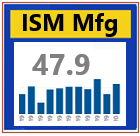
Manufacturing sector activity surged in February 2021 by the most in three years: ISM
Activity in the domestic manufacturing sector jumped by the most in three years, boosted by a rise in prices paid for raw materials.
The Institute for Supply Management's (ISM) manufacturing index jumped to a reading of 60.8 in February from 58.7 in January. Consensus economists were looking for a tick higher to just 58.9, according to Bloomberg consensus data. Readings above the neutral level of 50 indicate expansion in a sector. Manufacturing data Monday showed the sector at its highest growth level since August 2018. That report from the Institute for Supply Management in turn helped confirm the notion among economists that output to start the year is far better than the low single-digit growth many had been predicting in late 2020.
U.S. Construction Spending
Construction spending reaches record high in January amid economic rebound, strong housing market
U.S. construction spending jumped more than expected to reach a record level in January, as construction projects picked up strongly as the economy recovered from the pandemic, and as housing activity remained robust.
Construction spending increased by 1.7% to $1.521 trillion, according to the Commerce Department's monthly report for January, with that level marking the greatest since the start of the government series in 2002. December's construction outlays were revised up to show a 1.1% increase, from the 1.0% rise previously reported. The January jump was more than double the 0.8% rise expected.
Residential projects were an exceptional contributor to the January gain, with spending on these projects rising by 2.5% following a 3.8% jump in December.
SP 500 Target for 2021 Credit Suisse thinks stocks are heading even higher in 2021 in the wake of the Georgia Senate runoff races, as Wall Street strategists increasingly warm to the prospect of a unified Democratic government.
The firm raised its price target on the S&P 500 to 4,200 from 4,050 on Thursday, with the revised outlook representing 12.7% upside from closing prices on Wednesday. Credit Suisse now sees S&P 500 aggregate earnings per share growing by 25% over last year to $175 in 2021, up from the $168 seen previously.
The likelihood of additional, robust fiscal stimulus under a unified Democratic government served as the main catalyst for the more bullish call. The political backdrop, solidified after Democratic candidates won both Senate seats in the Georgia runoff elections this week to give the party a narrow majority in the chamber, is set to generate stronger government support to consumers as they await a broader economic reopening.
Mortgage Applications
Mortgage application demand stalls as interest rates surge to highest level since July. Total mortgage application volume was essentially flat for the week, rising just 0.5% according to the Mortgage Bankers Association. Mortgage applications to purchase a home increased 2% for the week and were just 1% higher than a year ago. Applications to refinance a home loan, which are most sensitive to weekly rate moves, managed to eke out a 0.1% gain for the week and were just 7% higher than a year ago. By comparison, refinance volume in the middle of December was over 100% higher year over year. The refinance share of mortgage activity decreased to 67.5% of total applications from 68.5% the previous week. Mortgage applications to purchase a home increased 2% for the week and were just 1% higher than a year ago. Homebuyers are facing a pricey and lean housing market, as homebuilders struggle to meet demand, and potential sellers pull back. As mortgage rates rise, affordability will weaken further, but more first-time buyers appear to be venturing in.
ADP Employment
Private payrolls increase 117,000 in February, vs 225,000 estimate, ADP says. Private payrolls increased 117,000 in February, below the 225,000 Dow Jones estimate.The total also was a decline from the upwardly revised 195,000 in January. Services accounted for all of the gains, led by trade, transportation and utilities. Private payroll growth disappointed in February despite otherwise encouraging signs of economic growth, according to a report Wednesday from ADP. Companies added just 117,000 positions for the month, well below the 225,000 forecast from economists surveyed by Dow Jones.
PMI Composite Final Feb. 2021
February PMI Composite final print rises sharply.Wed, Mar. 03, 2021 February U.S. PMI Composite Index (final): 59.5 vs. 58.8 consensus and 58.7 prior. Service Index: 59.8 vs. 58.9 consensus, 58.3 prior.
PMI Manufacturing Final
US February final Markit manufacturing PMI 58.6 vs 58.5 expected. US February final Markit manufacturing PMI 58.6 vs 58.5 expected. Prelim was 58.5. Prior was 59.2. The rate of input price inflation accelerated to the sharpest since April 2011. Output prices rise at highest since July 2008. Employment best since Sept 2014
Another month of strong production growth suggests that the US manufacturing sector is close to fully recovering the output lost to the pandemic last year, and a renewed surge in optimism suggests the recovery has much further to run. Business expectations about the year ahead jumped to a level only exceeded once over the past six years, buoyed by a cocktail of stimulus and post-COVID recovery hopes as life continues to return to normal amid vaccine roll outs.
ISM Services Index - Non Manufacturing Index
U.S. services industry slowed in February amid winter storms, and prices paid by companies for inputs surged to the highest level in years. The Institute for Supply Management said its non-manufacturing activity index fell to a reading of 55.3 last month from 58.7 in January, which was the highest since February 2019. The economy has recovered 12.3 million of the 22.2 million jobs lost during the pandemic.The Institute for Supply Management (ISM) said on Wednesday its non-manufacturing activity index fell to a reading of 55.3 last month from 58.7 in January, which was the highest since February 2019. A reading above 50 indicates growth in the services sector, which accounts for more than two-thirds of U.S. economic activity. Economists polled by Reuters had forecast the index unchanged at 58.7. Brutal winter storms lashed Texas and parts of the populous South region in mid-February, leaving millions of people without water and power.
Initial state jobless claims
Weekly jobless claims rise less than expected despite weather impact First-time claims for unemployment benefits totaled 750,000 last week, up from 736,000 the week before but below the 750,000 Dow Jones estimate. Continuing claims fell to just below 4.3 million. Those receiving benefits under all programs also declined, to just over 18 million. The Labor Department on Thursday reported that first-time filings for unemployment insurance in the week ended Feb. 27 totaled a seasonally adjusted 745,000, a touch below the Dow Jones estimate of 750,000. The total was a slight uptick from the previous week’s upwardly revised 736,000.
Productivity and Cost
Hourly compensation climbed 1.5 percent (vs 1.7 percent previously reported) and productivity fell 4.2 percent (vs -4.8 percent previously reported). Year-on-year, unit labor costs in the nonfarm business sector rose 4.2 percent. Nonfarm Productivity down -4.2% and the estimate was -4.7%. Unit labor costs at 6.0% and the estimate was 6.7%.
Factory Orders
U.S. Factory Orders Jump More Than Expected In January. Partly reflecting a spike in orders for transportation equipment, the Commerce Department released a report on Thursday showing a bigger than expected increase in new orders for U.S. manufactured goods in the month of January.The Commerce Department said factory orders surged up by 2.6 percent after jumping by an upwardly revised 1.6 percent in December. Economists had expected factory orders to advance by 2.1 percent compared to the 1.1 percent increase originally reported for the previous month.
U.S. Trade Deficit - Trade Balance in Goods and Services
US trade deficit up 1.9% in January 2021 on record goods imports. U.S. imports of goods broke a record in January and pushed the trade deficit 1.9% higher as the coronavirus pandemic distorted global commerce.The gap between the goods and services the United States sold and what it bought abroad rose to $68.2 billion from $67 billion in December, the Commerce Department reported Friday. Exports rose 1% to $191.9 billion, while imports increased 1.2% to $260.2 billion. Imports of goods increased $3.4 billion to a record $221.1 billion in January, led by pharmaceuticals, which rose $5 billion, or 39%, to $17.4 billion. Imports of services fell about 1%.
Employment Situation
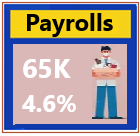
Job growth surges in February on hiring jump in restaurants and bars Nonfarm payrolls increased by 379,000 in February and the unemployment rate was 6.2%. Dow Jones estimates for were 210,000 new jobs and a headline jobless rate of 6.3%. Most of the hiring came in the hospitality sector, which saw 355,000 new jobs. Education, construction and mining all saw declines. The Black unemployment rate jumped to 9.9% from 9.2%. Nonfarm payrolls increased by 379,000 in February and the unemployment rate was 6.2%. Hiring surged in February as U.S. economic activity picked up with Covid-19 cases steadily dropping and vaccine rollouts providing hope for more growth. The Labor Department reported Friday that nonfarm payrolls jumped by 379,000 for the month and the unemployment rate fell to 6.2%. That compared with expectations of 210,000 new jobs and the unemployment rate holding steady from the 6.3% rate in January.
Beige Book
Economic activity in the U.S. has expanded at a modest to moderate pace since mid-January, according to the Federal Reserve's Beige Book. The Beige Book, a compilation of anecdotal evidence on economic conditions in each of the twelve Fed districts, noted that many districts reported that the surge in Covid-19 cases temporarily disrupted business activity as firms faced heighted absenteeism. The spike in Covid-19 cases was also blamed for a temporary weakening in demand in the hospitality sector in some districts, while severe winter weather was also cited as disrupting activity. The Fed noted consumer spending was subsequently generally weaker than in the prior report, which was released in early January. While the Beige Book said manufacturing activity continued to grow at a modest pace, all districts noted that supply chain issues and low inventories continued to restrain growth, particularly in the construction sector.
The report also said employment increased at a modest to moderate pace, although widespread strong demand for workers remained hampered by equally widespread reports of worker scarcity. With regard to inflation, the Beige Book said prices charged to customers increased at a robust pace across the nation, with a few districts reporting an acceleration in the pace of price growth. Rising input costs were cited as a primary contributing factor across a broad swath of industries, the Fed said. Labor cost increases and ongoing materials shortages also contributed to higher input prices. The release of the Beige Book comes two weeks before the Fed's next monetary policy meeting on March 15-16, when the central bank is widely expected to raise interest rates.
Fixed Mortgage Rates
10-year Treasury yield jumps to year-high 1.62% after strong jobs report. Bond yields have been rising as economists and Wall Street strategists have grown increasingly bullish on the economy with the rollout of Covid-19 vaccines. The prospect for strong economic growth and budding concerns about inflation have pushed down the prices for bonds. The climb in Treasury yields has led some to speculate that the Federal Reserve may adjust its policy to hold down parts of the yield curve or even ease up on its dovish stance, but so far the central bank has not shown a willingness to alter course. The 10-year yield rose to 1.55% on Thursday after Federal Reserve Chairman Jerome Powell said he expected inflation to rise as the economy recovers but thinks it will be temporary.
Consumer Credit
Credit Card Borrowing Falls to Lowest in Level in 4 Years Borrowing by Americans fell in January for the first time in five months, as the use of credit cards fell to the lowest level in four years, offsetting gains in auto loans and student loans. The Federal Reserve reported Friday that consumer borrowing fell by $1.3 billion in January, the first setback since a $9 billion decline in August. The weakness came from a $9.9 billion decline in borrowing in the category that covers credit cards. It marked the fourth straight decline in that category and was the biggest drop since a $10.8 billion fall in August. It pushed credit card activity down to the lowest level since January 2017. The category that covers auto and student loans posted an $8.6 billion increase in the first month of 2021, following an even bigger gain of $11.6 billion in December. |