10 Year Yield
Manufact
MBA Purchase Applications
Manufact
Consumer Price Index (CPI) - Inflation
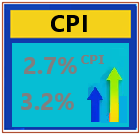
Consumer inflation surges in December on higher gas prices, CPI finds. Prices of consumer goods and services — the cost of living — rose in December at the fastest clip since last summer as Americans paid more to fill up their gas tanks.
The consumer price index advanced 0.4% last month, the government said Wednesday, marking the largest gain since August.
Yet the pace of inflation over the past year was still quite low at 1.4%. The yearly rate increased from 1.2% in the prior month.
Before the pandemic began last spring, consumer inflation was running at a much higher 2.3% pace.
Treasury Budget
The U.S. government posted a December budget deficit of $144 billion - a record for the month - due to far higher outlays with coronavirus relief spending and unemployment benefits, while revenues ticked slightly higher, the Treasury Department said on Wednesday. The Treasury said the December deficit compares with a $13 billion deficit in December 2019, before the COVID-19 pandemic started in the United States. Receipts for the month rose 3% from a year earlier to $346 billion, while outlays were up 40% to $490 billion.
December individual withheld income tax receipts were flat, while the Treasury registered increases in non-withheld income taxes and year-end corporate tax payments. The cumulative U.S. deficit for the first three months of fiscal 2021, which started Oct. 1, reached $573 billion, up from $357 billion in the pre-pandemic year-earlier period.
Beige Book
Fed's Beige Book Shows Modest U.S. Recovery as Job Growth Slows. Fed's Beige Book: 2021 business optimism tempered by rise in COVID-19 cases. Most parts of the U.S. saw increases in economic activity as 2020 came to a close, though business optimism over 2021 growth has been tempered by recent spikes in COVID-19 cases, the Federal Reserve's latest Beige Book found. The Beige Book, an anecdotal summary of Fed officials' conversations with local contacts, said conditions varied across the central bank's 12 districts. Most of them saw growth, but two reported little change and two others reported declines.
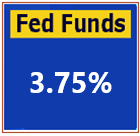
The Beige Book comes ahead of the next Federal Open Market Committee meeting on Jan. 26-27. Fed officials have signaled they may keep their benchmark federal funds rate at effectively 0% through 2023, and they have indicated they will keep purchasing at least $120 billion per month of Treasurys and mortgage-backed securities until they make "substantial further progress" on their goals of maximum employment and stable prices.
Business inventories for Nov 2020
U.S. business inventories for November 2020 increased, according to the latest U.S. manufacturing and trade statistics report released on Friday. Manufacturers' and trade inventories, adjusted for seasonal variations but not for price changes, were estimated at an end-of-month level of 1,959.9 billion U.S. dollars, up 0.5 percent from October 2020, but were down 3.2 percent from November 2019, said the report of the U.S. Department of Commerce.
U.S. business inventories increase 0.5 percent in November 2020. The Commerce Department announced on Friday that business inventories rose 0.5 percent m-o-m in November, following a revised 0.8 percent m-o-m advance in October (originally a 0.7 percent m-o-m gain). That was in line with economists’ forecast for a 0.5 percent m-o-m increase. According to the report, stocks at retailers and manufacturers both rose by 0.7 percent m-o-m, while inventories at wholesalers were unchanged m-o-m.
Jobless Claims
First-time claims for unemployment insurance jumped to 965,000 last week amid signs of a slowdown in hiring due to pandemic restrictions, the Labor Department reported Thursday. The total was worse than Wall Street estimates of 800,000 and above the previous week’s total of 784,000. Markets reacted little to the number, as the decline in economic activity is expected to be met with more stimulus from Washington. President-elect Joe Biden later Thursday is announcing his hopes for another package likely in excess of $1 trillion. Still, the jobless number for the week ended Jan. 9 was another sign of economic turmoil brought on by restrictions in activity aimed at combating the pandemic. The total was the highest since the week of Aug. 22, when just over 1 million claims were filed. Continuing claims also were higher, rising 199,000 to 5.27 million. That figure runs a week behind the weekly claims total and increased for the first time since late November.
Import and Exports Prices
U.S. import prices advanced 0.9 percent in December 2020, the U.S. Bureau of Labor Statistics reported today, following a 0.2-percent increase the previous month. Higher fuel and nonfuel prices both contributed to the December rise in import prices. The price index for U.S. imports rose 0.9 percent in December, after advancing 0.2 percent from August to November. The December increase was the largest monthly advance since August. Import prices declined 0.3 percent for the year ended in December. The last time the index rose on a 12-month basis was a 0.5- percent increase in January 2020.
Prices for U.S. exports also rose in December, advancing 1.1 percent, after increasing 0.7 percent in November 2020. U.S. export prices increased 1.1 percent in December, the largest 1-month advance since a 1.8-percent rise in June 2020. In December, higher agricultural and nonagricultural prices contributed to the increase in export prices. Prices for U.S. exports rose 0.2 percent from December 2019 to December 2020, the first 12- month advance since January 2020
Fixed Mortgage Rates
Manufact
Empire Estate Manufacturing Index
Manufacturing activity in New York state expanded in January at a softer pace than that of the previous month, data from the Federal Reserve Bank of New York showed Friday.
The Empire State Manufacturing Survey's general business conditions index decreased to 3.5 in January from 4.9 in December.
The reading misses expectations from economists polled by The Wall Street Journal, who had expected the indicator to increase to 6.0.
JOLTS
The quits rate has remained at 2.2 percent since September, but in November, it increased to 5.0 percent in accommodation and food services, where pay has declined and jobs are risky due to the pandemic. Today’s numbers from the federal Job Openings and Labor Turnover Survey (JOLTS) show both the continuation of our tepid labor market recovery as well as the risks to further progress. Job openings were down slightly, but still fairly strong given the huge amount of damage to the broader labor market. Hiring remains steady, but the rise in layoffs is a reminder that we are not out of the woods. While job openings increased in November, the competition for these jobs among the jobless did not increase much, with measures of more enduring unemployment showing competition for new jobs is roughly at levels last seen in mid-2016. While that suggests the current labor market isn’t as dire as the immediate aftermath of the Great Recession, it does mean the labor market lost more than three years of progress.
November JOLTS report shows 6.5M job openings. The number of job openings was little changed at 6.5 million on the last business day of November, the U.S. Bureau of Labor Statistics reported today. Hires were little changed at 6.0 million while total separations increased to 5.4 million. Within separations, the quits rate was unchanged at 2.2 percent while the layoffs and discharges rate increased to 1.4 percent. Jobs openings decreased in November to 6.527 million from 6.632 million in October.
Producer Price Index PPI
Prices paid to U.S. producers rose less than expected in December as the pandemic continued to limit pricing power at the end of 2020. The producer price index for final demand climbed 0.3% from a month earlier after a 0.1% gain in November, Labor Department figures showed Friday. The figure was below the median estimate of 0.4% in a Bloomberg survey of economists. The PPI advanced 0.8% from a year earlier. Excluding volatile food and energy components, the so-called core PPI increased 0.1% from a month earlier, missing estimates, and was up 1.2% from a year earlier.While the consumer price index -- out earlier this week -- is generally considered a more important indicator of inflation, producer prices can offer a glimpse into how price pressures will filter through to consumers.
Retail Sales Dec 2020 U.S. retail sales fall again in December 2021. U.S. retail sales declined further in December as renewed measures to slow the spread of Covid-19 undercut spending at restaurants and reduced traffic to shopping malls. Retail sales dropped 0.7% last month, the Commerce Department said on Friday. U.S. retail sales declined further in December as renewed measures to slow the spread of COVID-19 undercut spending at restaurants and reduced traffic to shopping malls, the latest sign the economy lost considerable speed at the end of 2020.
Retail sales dropped 0.7% last month, the Commerce Department said on Friday. Data for November was revised down to show sales declining 1.4% instead of 1.1% as previously reported. Economists polled by Reuters had forecast retail sales unchanged in December.
Industrial Production
U.S. industrial production rose 1.6% in December 2021, a third straight monthly gain, but remains below its pre-pandemic level. The December gain in industrial output followed a 0.5% increase in November and a 1% increase in October, the Federal Reserve reported Friday. Even with those gains, industrial output is still about 3.3% below its level in February before the pandemic hit. Manufacturing increased 0.9%, its eighth straight monthly gain, even as production of motor vehicles and parts declined 1.6%. That follows a string of gains for the auto sector, including last month's strong 5% increase. Without the drag in the auto sector last month, manufacturing posted gains of 1.1%. Mining production rose 1.6%, while utilities' output rose 6.2% as a rebound in December demand followed a 4.2% decline in November due to unseasonably warm weather. U.S. industry operated at 74.5% of capacity in December, still below the pre-pandemic rate of 76.9% in February.
Consumer Sentiment UM
U.S. consumer sentiment dipped in early January as Americans reacted to the assault on the Capitol building in Washington and a relentless surge in COVID-19 infections and deaths, weighing on the economic outlook, the University of Michigan said on Friday. The University of Michigan’s consumer sentiment index dropped to 79.2 in January 2021, early this month from a final reading of 80.7 in December 2020. The survey period covered the earliest days in January, including Jan. 6, when thousands of angry supporters of Donald Trump stormed the Capitol as lawmakers were certifying Democrat Joe Biden’s victory over the Republican president in the Nov. 3, 2020, election.
Leading Indicators
The Conference Board Leading Economic Index® (LEI) for theU.S. increased 0.3 percent in December to 109.5 (2016 = 100), following a 0.7 percent increase in November and a 0.9 percent increase in October. “The US LEI’s slowing pace of increase in December suggests that US economic growth continues to moderate in the first quarter of 2021. Improvements in the US LEI were very broad-based among the leading indicators, except for rising initial claims for unemployment insurance and a mixed consumer outlook on business and economic conditions,” said Ataman Ozyildirim, Senior Director of Economic Research at The Conference Board. “While the resurgence of COVID-19 and weak labor markets remain barriers to growth, The Conference Board expects the economy to expand by at least 2.0 percent (annual rate) in Q1 and then gain momentum throughout the year.”
JP Morgan Chase
Earning Season 15/Jan/2021 Week 02
JPMorgan beats profit estimates on better-than-expected credit, record trading revenue. JPMorgan Chase’s fourth-quarter earnings per share of $3.79 beat the Refinitiv estimate of $2.62. Revenue of $30.16 billion exceeded the expected $28.70 billion. The bank released $2.9 billion from its pile of cash set aside for expected loan defaults in the quarter, resulting in a $1.9 billion boost after about $1 billion in charge-offs
Here are the numbers:
Earnings: $3.79 per share vs. $2.62 per share estimate of analysts.
Revenue: $30.16 billion vs $28.70 billion estimate. The bank delivered strong results. |