FOMC Meeting Announcement 03/Nov/2021
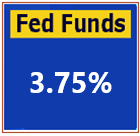
The Federal Reserve said Wednesday it will begin tapering the pace of its asset purchases later in November. On a monthly basis, the reduction will see $10 billion less in Treasurys and $5 billion less in mortgage-backed securities. There also was only a slight change to Fed’s view on inflation. The post-meeting statement kept the word “transitory” to describe price increases that are running at a 30-year high, though it qualified the term somewhat by saying pressures are “expected to” be temporary. Chairman Jerome Powell said he expects conditions pushing inflation to last “well into next year.
ISM Service - Non Manufacturing Index
U.S. service sector index hits record high in October; shortages worsening - ISM survey
A measure of U.S. services industry activity surged to a record high in October likely as declining COVID-19 cases boosted demand, but businesses remained burdened by snarled supply chains and the resulting exorbitant prices. The Institute for Supply Management said on Wednesday its non-manufacturing activity index vaulted to a reading of 66.7 last month. That was the highest since the series started in 1997 and followed a 61.9 reading in September. A reading above 50 indicates growth in the services sector, which accounts for more than two-thirds of U.S. economic activity.
Employment Situation
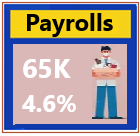
Total nonfarm payroll employment rose by 531,000 in October 2021, following increases of 312,000 in September and 483,000 in August. Employment in leisure and hospitality increased by 164,000, or 1.1 percent in October 2021, while employment in professional and business services rose by 100,000, or 0.5 percent. United States October 2021 Total Nonfarm Payroll Employment Rose By 531,000, the Unemployment Rate Declined to 4.6% - Notable Job Gains in Leisure and Hospitality, October job growth beats expectations, and revisions show August and September were far better than first reported..
The labor force participation rate was unchanged at 61.6 percent in October and has remained within a narrow range of 61.4 percent to 61.7 percent since June 2020. The participation rate is 1.7 percentage points lower than in February 2020. The employment- population ratio, at 58.8 percent, was little changed over the month.
Total nonfarm payroll employment rose by 531,000 in October. Thus far this year, monthly job growth has averaged 582,000. Nonfarm employment has increased by 18.2 million since a recent trough in April 2020 but is down by 4.2 million, or 2.8 percent, from its pre-pandemic level in February 2020. Job growth was widespread in October, with notable job gains occurring in leisure and hospitality, in professional and business services, in manufacturing, and in transportation and warehousing.
America's jobs recovery gathered some steam last month as US employers added 531,000 positions in October. The unemployment rate fell to 4.6%, the lowest level since the economic recovery started in May 2020. The number of jobs added in October easily outpaced economists' prediction of 450,000 jobs. It marked the first month since July that the official number didn't undercut the consensus estimate. Economy still down 4.2 million jobs since beginning of pandemic with 531,000 jobs added in October. The unemployment rate fell to 4.6 percent, its lowest rate since the pandemic took hold...
U.S. Trade Balance
The U.S. monthly international trade deficit increased in September 2021 according to the U.S. Bureau of Economic Analysis and the U.S. Census Bureau. The deficit increased from $72.8 billion in August (revised) to $80.9 billion in September, as imports increased and exports decreased. The previously published August deficit was $73.3 billion. The goods deficit increased $8.9 billion in September to $98.2 billion. The services surplus increased $0.8 billion in September to $17.2 billion.
PMI Composite Final Services for Oct. 2021
October U.S. PMI Composite Index (Final): 57.6 vs. 57.3 consensus and 55.0 prior. The IHS Markit US Composite PMI Output Index* posted 57.6 in October, up from 55.0 in September to signal the fastest rise in private sector output since July. Although manufacturing production continued to be constrained by supply issues, the overall expansion was supported by a sharper service sector upturn. Contributing to the overall expansion was a faster increase in new business. The rise was supported by sharp upticks in new orders at services providers and manufacturers. Foreign client demand fared less well, however, as goods producers registered only a fractional expansion and service sector firms saw a further contraction. Services Index: 58.7 vs. 54.9 consensus, 58.2 prior
PMI manufacturing Final for Oct. 2021
US: Markit Manufacturing PMI declines to 58.4 in October vs. 59.2 expected. US Markit Manufacturing PMI edged lower in October. US Dollar Index stays in a consolidation phase above 94.00. The economic activity in the US manufacturing sector continued to expand in October, albeit at a slightly slower pace than it did in September, with IHS Markit's Manufacturing PMI declining to 58.4 (final) from 60.7. This reading fell short of the flash estimate and the market expectation of 59.2. October saw US manufacturers report yet another near-record lengthening of supply chains, with shortages of components constraining production growth to the lowest since July of last year," noted Chris Williamson, Chief Business Economist at IHS Markit. "Although production growth has now slipped below the pre-pandemic long-run average due to the supply and labor constraints, demand growth – as measured by new order inflows – remains well above trend despite easing in October.
ISM Manufacturing Index
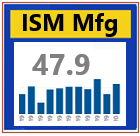
Manufacturing PMI at 60.8%, October 2021 Manufacturing ISM Report On Business. he October Manufacturing PMI® registered 60.8 percent, a decrease of 0.3 percentage point from the September reading of 61.1 percent. This figure indicates expansion in the overall economy for the 17th month in a row after a contraction in April 2020. The New Orders Index registered 59.8 percent, down 6.9 percentage points compared to the September reading of 66.7 percent.
Productiviy and Cost
Washington, DC, November 4, 2021-Nonfarm business sector labor productivity decreased 5.0% in Q3 2021, the U.S. Bureau of Labor Statistics reported, as output increased 1.7% and hours worked increased 7.0%. This is the lowest rate of quarterly productivity growth since Q2 1981, when the measure decreased 5.1%. From Q3 2020 to Q3 2021, nonfarm business sector labor productivity decreased 0.5%. The four-quarter rate is the lowest rate since Q3 2011, when the measure also declined 0.5%..
Thursday, U.S. productivity growth was worse than even the expected decline of 3.2%, falling 5% for the biggest quarterly drop since the second quarter of 1981, the Bureau of Labor Statistics reported. At the same time, unit labor costs soared 8.3%, which is a combination of the productivity decline plus a 2.9% increase in hourly compensation. That increase was more than the 7.4% Dow Jones estimate...
Construction Spending
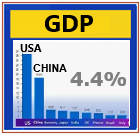
U.S. construction spending unexpectedly fell in September amid declines in outlays on both private and public projects. The Commerce Department said on Monday that construction spending dropped 0.5% after edging up 0.1% in August. Economists polled by Reuters had forecast construction spending gaining 0.4%. Construction spending increased 7.8% on a year-on-year basis in September. The government reported last week that gross domestic product increased at a 2.0% annualized rate, stepping down from the April-June's robust 6.7% pace.
ADP Employment Report 571K
Better-than-expected monthly payrolls from the Automatic Data Processing ADP survey came out this morning, with 571K new private-sector jobs in October having surpassed the analyst estimate of 398K by a ton. This follows a downwardly revised September, to 523K from an originally reported 568K. Friday’s nonfarm payroll survey from the U.S. government is currently expected to come in at 450K.
Factory Orders
New orders for U.S.-made goods unexpectedly rose in September, though manufacturing remains constrained by input shortages. The Commerce Department said on Wednesday that factory orders increased 0.2% in September. Data for August was revised down to show orders rising 1.0% instead of 1.2% as previously reported. Economists polled by Reuters had forecast factory orders unchanged. Orders gained 17.6% on a year-on-year basis.
Consumer Credit
US September Outstanding Consumer Credit +29.9 billion vs. +15.9 billion exp. Prior was + $ 14.38B. Revolving credit + 9.84B. Non-renewable credit + 20.08B. Non-revolving credit is typically student and auto loans, while revolving credit is credit cards. The numbers show a high willingness to spend despite the scarcity. The first retail sales data for October is also extremely strong. |