Durable Good Orders
U.S. orders for long-lasting durable goods rebounded in March 2021 after a poor showing in the prior month, but shortages of key supplies are still hampering manufacturers as they race to keep up with rising demand from customers. Orders for durable goods rose 0.5% last month, the government said Monday. These are products such as electronics, appliances, machines, cars and other transportation equipment meant to last at least three years. Economists surveyed by Dow Jones and the Wall Street Journal had forecast a 2.2% increase. Orders would have been three times stronger in March, however, if not for a sharp drop in bookings for commercial and military aircraft. Orders had decline in February for the first time since the pandemic began, mostly because of unusually harsh winter weather and a sharp drop in auto production owing to a shortage of key computers chips.
Wholesale Inventories Advance
The Census Bureau on Wednesday released numbers that showed wholesale inventories rose 1.4% from February 2021 o March 2021. Wholesalers are basically the middle step in the retail supply chain. They buy goods from manufacturers that they’re hoping to sell to retailers. “So they’re speculating on the future,” said Tim Fiore, with the Institute for Supply Management. “So wholesale inventory growth is absolutely an optimistic indicator.” It is optimistic because wholesalers believe consumers are going to be spending more. And that’s already starting to happen, according to Wells Fargo senior economist Sarah House: “Products are just flying off the shelves as soon as retailers can get their hands on them.” House said that’s a sign the economy has plenty of room to grow. “Sales could be even better if we could actually get our hands on the supplies and products that consumers and businesses want.”
S&P Case-Shiller HPI
Home prices in top 20 U.S. cities up nearly 12% in past year: Case-Shiller. Home price gains continue to outpace expectations, as tight supply and strong demand lead to bidding wars. Nationally, prices in February 2021 rose 12% year over year, up from 11.2% in January, according to the S&P CoreLogic Case-Shiller home price index. The 10-city composite rose 11.7% annually, up from 10.9% in January. The 20-city composite gained 11.9%, up from 11.1% in the previous month. All the gains were in the double digits, except Chicago and Las Vegas.
FHFA House Price Index
House prices rose nationwide in February, up 0.9 percent from the previous month, according to the latest Federal Housing Finance Agency House Price Index (FHFA HPI®). House prices rose 12.2 percent from February 2020 to February 2021. The previously reported 1.0 percent price change for January 2021 remained unchanged.
Consumer Confidence
Consumer confidence came in at 121.7 in April 2021, up from March's 109.0. As a result, the index increased further above the 100-threshold, indicating healthy optimism among consumers. U.S. consumer confidence jumped to a 14-month high in April 2021 as increased vaccinations against COVID-19 and additional fiscal stimulus allowed for more services businesses to reopen, boosting demand and hiring by companies. The upbeat survey from the Conference Board on Tuesday, which also showed a strong increase in vacation plans, suggested the economy continued to power ahead early in the second quarter after what appears to have been robust growth in the first three months of the year, believed by many economists to have been the second strongest since 2003. Growth this year is expected to be the best in nearly four decades.
Intal Trade - US. Trade in Goods
The goods trade deficit surged 4.0% to $90.6 billion in March 2021, the highest in the history of the series. Exports of goods accelerated 8.7% to $142.0 billion. They were boosted by shipments of motor vehicles, industrial supplies, consumer and capital goods, and food. The U.S. trade deficit in goods jumped to a record high in March, suggesting trade was a drag on economic growth in the first quarter, but that was likely offset by robust domestic demand amid massive government aid. Economic activity in the United States has rebounded more quickly compared to its global rivals. The pent-up demand is drawing in imports, eclipsing a recovery in exports and keeping the overall trade deficit elevated. The report from the Commerce Department on Wednesday also showed inventories at retailers were drawn down in March, underscoring the strong domestic demand.The widening in the goods deficit suggests that trade will be a drag on first-quarter GDP.
Wholesale Trade Advance
The Census Bureau on Wednesday released numbers that showed wholesale inventories rose 1.4% from February to March. Wholesalers are basically the middle step in the retail supply chain. They buy goods from manufacturers that they’re hoping to sell to retailers. “So they’re speculating on the future,” said Tim Fiore, with the Institute for Supply Management. “So wholesale inventory growth is absolutely an optimistic indicator.” It is optimistic because wholesalers believe consumers are going to be spending more. And that’s already starting to happen, according to Wells Fargo senior economist Sarah House: “Products are just flying off the shelves as soon as retailers can get their hands on them.” House said that’s a sign the economy has plenty of room to grow. “Sales could be even better if we could actually get our hands on the supplies and products that consumers and businesses want.”.
Pending Home Sales March 2021
Pending home sales increased 1.9% in March 2021 after two months of decline. Compared to the prior month, pending sales increased nationwide except in the Midwest region. Compared to one year ago, pending sales rose by double-digits in all regions. Pending home sales increased in March, snapping two consecutive months of declines, according to the National Association of Realtors®. All but one of the four major U.S. regions experienced month-over-month gains in March, while each area recorded year-over-year growth.
Pending home sales, a measure of signed contracts on existing homes, rose 1.9% in March 2021 compared with April, according to the National Association of Realtors. Forecasters had expected a 5% gain. Pending sales were 23.3% higher than March 2020, but that annual comparison is skewed widely because the housing market essentially ground to a halt last March at the start of the coronavirus pandemic. The market then rebounded strongly last summer and is still showing incredibly solid demand.
Real Gross Domestic Product - GDP
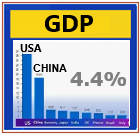
Consumer-fueled economy pushes GDP to 6.4% first-quarter gain. First-quarter GDP for 2021 increased at a 6.4% rate, just below the Dow Jones estimate. It marked the second-fastest pace for growth since the second quarter of 2003 and was exceeded only by the reopening-fueled burst of Q3 in 2020. Economic activity boomed to start 2021, as widespread vaccinations and more fuel from government spending helped get the U.S. closer to where it was before the Covid-19 pandemic struck, the Commerce Department reported Thursday. Gross domestic product, the sum of all goods and services produced in the economy, jumped 6.4% for the first three months of the year on an annualized basis. Outside of the reopening-fueled third-quarter surge last year, it was the best period for GDP since the third quarter of 2003. Economists surveyed by Dow Jones had been looking for a 6.5% increase. Q4 of 2020 accelerated at a 4.3% pace.
Jobless Claims
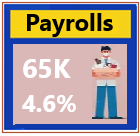
Initial jobless claims fell to a fresh pandemic-era low but were higher than expected. A separate report from the Labor Department showed that another 553,000 Americans filed first-time jobless claims last week. That marked another pandemic-era low but was above the Dow Jones estimate of 528,000. Continuing claims, which run a week behind, nudged higher to 3.67 million, while the total receiving benefits through all programs fell by nearly 850,000 to 16.6 million. The struggles in the jobs market continue to fuel accommodative monetary policy. The Fed on Wednesday noted that “indicators of economic activity and employment have turned up recently, although the sectors most adversely affected by the pandemic remain weak.”
FOMC Meeting 28/Apr/2021
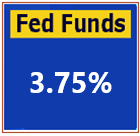
Fed holds interest rates near zero, sees faster growth and higher inflation/ The Fed on Wednesday declined to let up on its easy money policy despite an economy that it acknowledged is accelerating. As expected, the U.S. central bank decided to keep short-term interest rates anchored near zero as it buys at least $120 billion of bonds each month.
The Federal Reserve on Wednesday kept its easy money policy in place despite an economy that it acknowledged is accelerating. As expected, the U.S. central bank decided to keep short-term interest rates anchored near zero as it buys at least $120 billion of bonds each month. The latter part of policy is a two-pronged effort to support an economy that grew strongly to start 2021 as well as to support market functioning at a time when 30-year mortgages still go for around 3%. Despite noting the economic strength as well as inflation that is on the rise, if just temporarily, the policymaking Federal Open Market Committee unanimously decided to make no changes in its approach and gave no indications that things will change anytime soon.
Amazon
Amazon’s sales surge 44% as it smashes earnings expectations. Amazon shares climbed more than 3% in extended trading Thursday after the company released its first-quarter earnings, beating Wall Street’s expectations for earnings and revenue. Here’s how the e-commerce giant fared, relative to analyst estimates compiled by Refinitiv: Earnings: $15.79 per share vs. $9.54 per share expected Revenue: $108.52 billion vs. $104.47 billion expected.
MSFT
Microsoft shares moved 3% lower in extended trading Tuesday after the software maker announced fiscal third-quarter earnings and quarterly revenue guidance that came in stronger than analysts had expected. The company’s operating margin narrowed somewhat as cloud became a larger part of its business. Here’s how the company did: Earnings: $1.95 per share, adjusted, vs. $1.78 per share as expected by analysts, according to Refinitiv. Revenue: $41.71 billion, vs. $41.03 billion as expected by analysts, according to Refinitiv.
Microsoft MSFT, +0.16% on Tuesday reported fiscal third-quarter earnings of $15.46 billion, or $2.03 a share, up from $1.40 a share a year ago, with profit buttressed by a $620 million net income-tax benefit. Without that tax gain, Microsoft would have reported earnings of $1.95 a share, still ahead of estimates. Revenue for the quarter was $41.7 billion, up from $33.06 billion in the same quarter last year.
GOOG
Google parent Alphabet Inc. rang up record profits for a third straight quarter during the pandemic, catapulting shares 5% toward a record stock high in after-hours trading Tuesday. The search-engine behemoth GOOGL, -0.82% GOOG, -0.84% reported net income of $17.93 billion, or $26.29 a share in its fiscal first quarter, compared with net income of $6.84 billion, or $9.87 a share, in the year-ago quarter. Revenue after removing traffic-acquisition costs improved to $45.6 billion from $33.7 billion in the year-ago period. Overall revenue soared 34% to $55.3 billion. Analysts surveyed by FactSet had estimated net income of $15.76 a share, on ex-TAC revenue of $51.5 billion. Traffic-acquisition costs were estimated at $9.1 billion, which would give Alphabet revenue of $42.4 billion when extracted.
AAPL
Apple reports another blowout quarter with sales up 54%, authorizes $90 billion in share buybacks. Apple reported a blowout quarter on Wednesday, announcing companywide sales up 54% higher than last year, and significantly stronger profits than Wall Street expected. Apple did not issue official guidance for what it expects in the quarter ending in June. Apple authorized $90 billion in share buybacks. Here’s how Apple did versus Refinitiv estimates: EPS: $1.40 vs. $0.99 estimated. Revenue: $89.58 billion vs. $77.36 billion estimated, up 53.7% year-over-year.
Personal Income
Personal income and spending rose 21.1% and 4.2%, respectively, in March, according to the Bureau of Economic Analysis, as the economic recovery continued to gain momentum amid more federal stimulus.
Consumer Spending or Real PCE
The key 10-year U.S. Treasury yield edged lower on Friday following consumer spending data that showed significant jumps in personal income and spending as well as a rise in prices. The yield on the benchmark 10-year Treasury note fell slightly slightly to 1.629% around 2 p.m. ET. The yield on the 30-year Treasury bond was little changed 2.308%. Yields move inversely to prices. Friday’s data showing a 4.2% rebound in U.S. consumer spending in March 2021, amid a 21.1% surge in income as households received additional COVID-19 relief money from the government, supported the dollar. That led to a 0.4% rise in the core personal consumption expenditures (PCE) index, compared with a gain of 0.3% the previous month.
Aside from earnings, investors are also analyzing a slew of economic data.
Core PCE Price Index March 2021 - Inflation
The Personal Consumption Expenditure Prices Index (PCE) is forecast to rise 0.3% in March from 0.2% in February and to be unchanged at 1.6% on the year. The Core PCE Price Index should gain 0.3% and 1.8% following February’’s 0.1% and 1.4% increases. The PCE Price Index rose 0.5%, while the core PCE Index, which excludes food and energy, rose 0.4% in the month. Economists surveyed by Dow Jones had penciled in a 0.3% rise for the core index.
The PCE inflation metric is watched closely by the Federal Reserve, and Chairman Jerome Powell warned earlier this week it may show a transitory increase in prices. The index had climbed 0.1% and 0.2% in the two prior months this year.
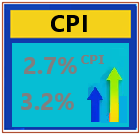
The March 2021 PCE price index added 0.5% for the month and 2.3% year-over-year, while the core PCE rose in both respects. Furthermore, March spending surged to a better-than-expected 4.2%, while personal incomes jumped 21.1%.
Consumer Sentiment UM
Revised data released by the University of Michigan on Friday showed consumer sentiment in the U.S. improved by more than initially estimated in the month of April. The report showed the consumer sentiment index for April was upwardly revised to 88.3 from a preliminary reading of 86.5. Economists had expected the index to be upwardly revised to 87.5. The consumer sentiment index rose from 84.9 in March to reach its highest level since hitting 89.1 in March of 2020. |