10-Year Treasury Yield
The 10-year Treasury yield settled at 0.97% on January 4, 2021.
U.S. PMI Manufacturing Final
U.S. manufacturing activity picked up at its briskest pace in more than six years in December, extending a recovery in the factory sector that has spurred the strongest pricing environment for goods producers since 2011 as the coronavirus pandemic upends supply chain networks.Still, IHS Markit’s final manufacturing purchasing managers’ survey of a rocky 2020, released on Monday, showed the sector’s rebound was uneven. Consumer goods makers saw weaker order flow as COVID-19 infections surged and limited consumer spending, while producers of machinery and equipment noted strong demand in a potential sign of improving business investment, said Chris Williamson, Chief Business Economist at IHS Markit. IHS Markit said its manufacturing PMI climbed to 57.1 in December from 56.7 in November. The index also improved from its preliminary - or “flash” - reading in mid-December of 56.5, with a reading above 50 signaling expansion in activity.The index finished 2020 at its highest level since September 2014, with December’s gain marking the eighth straight month of improvement after plunging to its lowest in more than a decade in April when the first rounds of business shutdowns to contain COVID-19 were in full swing.
U.S. Construction Spending for Nov. 2020
U.S. Construction Spending Actual 0.9% frm Previous 1.6% and forecast 1.0%. Construction spending during November 2021 was estimated at a seasonally adjusted annual rate of $1,625.9 billion, 0.4% above the revised October estimate of $1,618.8 billion, according to the U.S. Census Bureau. The November figure is 9.3% above the November 2020 estimate of $1,487.2 billion. During the first eleven months of this year, construction spending amounted to $1,463.2 billion, 7.9% above the $1,355.6 billion for the same period in 2020.
ISM Manufacturing Index for Dec. 2020
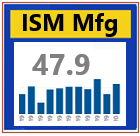
The December Manufacturing PMI registered 60.7 percent, up 3.2 percentage points from the November reading of 57.5 percent. This figure indicates expansion in the overall economy for the eighth month in a row after contracting in March, April, and May, which ended a period of 131 consecutive months of growth. The New Orders Index registered 67.9 percent, up 2.8 percentage points from the November reading of 65.1 percent,
U.S. dollar's down year in 2020 was first since 2017
The U.S. dollar went from life preserver to castaway in a topsy-turvy 2020 that many investors think marks the start of a downtrend for the currency.
The ICE U.S. Dollar Index DXY, a measure of the unit against a basket of six major rivals, was down 6.7% for the year, its first annual drop since a 9.9% decline in 2017.
The index’s fall came after the financial panic created by the COVID-19 pandemic in February and March prompted a rush for dollars that propelled DXY to a more-than-three year high. Action by the Fed, injecting liquidity into financial markets and expanding or establishing swap lines with foreign central banks, was credited with helping the dollar turn south.
The dollar’s weakness was largely welcomed by investors, who see it easing global financial conditions. A weaker dollar is seen as a net positive for U.S. and global equities, including emerging markets.
A weaker buck is also seen as a positive for commodities, which like equities rebounded sharply from pandemic-inspired losses in the spring.
MBA Purchase Applications
Mortgage Applications Drop over Holidays. Despite near-record low interest rates, Americans had the holidays in mind and not mortgages, the Mortgage Bankers Association reported this morning in its Weekly Applications Survey for the weeks ending Dec. 25 and Jan. 1.
Mortgage applications decreased 4.2 percent from two weeks earlier, according to data from the Mortgage Bankers Association's (MBA) Weekly Mortgage Applications Survey for the week ending January 1, 2021. The results include adjustments to account for the holidays. The Market Composite Index, a measure of mortgage loan application volume, decreased 4.2 percent on a seasonally adjusted basis from two weeks earlier. On an unadjusted basis, the Index decreased 33 percent compared with two weeks ago. The holiday adjusted Refinance Index decreased 6 percent from two weeks ago. The unadjusted Refinance Index was 34 percent lower than two weeks ago and was 100 percent higher than the same week one year ago. The seasonally adjusted Purchase Index decreased 0.8 percent from two weeks ago. The unadjusted Purchase Index decreased 30 percent compared with two weeks earlier and was 3 percent higher than the same week one year ago.
FOMC Mintes for 15-16/Dec/2020
Fed Officials Fretted Over Virus Surge at December Meeting. Minutes from the central bank's December gathering show that the chair, Jerome H. Powell, and his colleagues were hoping for a 2021 rebound. Federal Reserve officials were warily eyeing a coronavirus surge in December, but hoped that vaccine breakthroughs might set the stage for a strong economic rebound in 2021. “With the pandemic worsening across the country, the expansion was expected to slow even further in coming months,” according to minutes from the gathering of the Federal Open Market Committee, released Wednesday. “Nevertheless, the positive vaccine news” was “viewed as favorable for the medium-term economic outlook.”Central bank officials held interest rates steady at near zero at the meeting, and committed to buying up $120 billion in bonds each month “until substantial further progress has been made toward the committee’s maximum employment and price stability goals.” They have been rapidly expanding their holdings of government and mortgage-backed debt since March to keep markets calm and many types of credit cheap. Minutes showed that the Fed discussed the balance sheet guidance in depth at the meeting, with “a few” remarking that the new wording signaled that the Fed could ramp up bond buying “if progress toward the committee’s goals proved slower than anticipated.” The Fed’s December meeting took place as virus cases surged after Thanksgiving. Since then, the number of new cases moderated at first but then resumed their increase.
ADP Employment Report Dec. 2020
Private sector employment decreased by 123,000 jobs from November to December according to the December ADP National Employment Report®. Broadly distributed to the public each month, free of charge, the ADP National Employment Report is produced by the ADP Research Institute® in collaboration with Moody's Analytics. The report, which is derived from ADP's actual payroll data, measures the change in total nonfarm private employment each month on a seasonally-adjusted basis.
U.S. Factory Orders
U.S. factory orders rose 1% in November as manufacturing recovery continued.
U.S. factory goods orders rose for the seventh straight month in November, the Commerce Department said Wednesday.Orders for manufactured goods rose 1% after a 1.3% gain in the prior month. Factories have been able to adapt their operations to meet health precautions required by the coronavirus pandemic
PMI Composite Final Dec 2020 - Business Activity
U.S. final manufacturing PMI ends 2020 at 6-year high - IHS Markit. U.S. manufacturing activity picked up at its briskest pace in more than six years in December 2020, extending a recovery in the factory sector that has spurred the strongest pricing environment for goods producers since 2011 as the coronavirus pandemic upends supply chain networks.
Still, IHS Markit's final manufacturing purchasing managers' survey of a rocky 2020, released on Monday, showed the sector's rebound was uneven. Consumer goods makers saw weaker order flow as COVID-19 infections surged and limited consumer spending, while producers of machinery and equipment noted strong demand in a potential sign of improving business investment, said Chris Williamson,
Chief Business Economist at IHS Markit. IHS Markit said its manufacturing PMI climbed to 57.1 in December 2020 from 56.7 in November 2020. The index also improved from its preliminary - or "flash" - reading in mid-December of 56.5, with a reading above 50 signaling expansion in activity. The index finished 2020 at its highest level since September 2014, with December's gain marking the eighth straight month of improvement after plunging to its lowest in more than a decade in April when the first rounds of business shutdowns to contain COVID-19 were in full swing.
Initial state jobless claims dip by 3,000 to 787,000 during week ended Jan. 2
Jobless claims dip to 787,000 in first week of new year, but layoffs still running high. Initial jobless claims filed traditionally through the states fell by 3,000 to a seasonally adjusted 787,000 in the seven days ended Jan. 2, the government said Thursday. The prior week’s number was revised up by 3,000 to 790,000.
ISM Non-Manufacturing Service Dec. 2020
Services PMI at 57.2%; December 2020 Services ISM® Report On Business. Business Activity Index at 59.4%; New Orders Index at 58.5%; Employment Index at 48.2%; Supplier Deliveries Index at 62.8%. Economic activity in the services sector grew in December for the seventh month in a row, say the nation's purchasing and supply executives in the latest Services ISM® Report On Business.
U.S. Trade Deficit widened in Nov. 2020
U.S. trade deficit widens 8% in November. Imports advance at faster pace than exports as U.S. economy recovers from pandemic.the U.S. trade deficit widened 8% in November, as Americans maintained their appetite for foreign goods, the U.S. Commerce Department said Thursday. The trade gap expanded to $68.1 billion from $63.1 billion in the prior month. Economists surveyed by the Wall Street Journal had forecast a deficit of $67.3 billion. In contrast to the economy after the financial crisis in 2008, trade flows have largely recovered from the global pandemic this year, said IMF Chief Economist Gita Gopinath. Still, economists are worried that much of the world is using the demand of the U.S. consumer to spur exports, without creating demand for reciprocal trade.
U.S. International Trade in Goods and Services, November 2020. The U.S. Census Bureau and the U.S. Bureau of Economic Analysis announced today that the goods and services deficit was $68.1 billion in November, up $5.0 billion from $63.1 billion in October, revised...
Mortgage Rates
Mortgage rates started 2021 close to record lows, most notably with the 30-year fixed rate at 2.86 percent, and the 15-year fixed rate at a survey low of 2.40 percent. The record-low rates for fixed-rate mortgages is good news for borrowers looking to refinance or buy a home, as around 98 percent of all applications are for fixed-rate loans.
Home prices continued growth in November with the cost of more affordable homes increasing more than higher-priced homes. Mortgage rates, meanwhile, continued their downward trend in the new year. The average interest rate on a 30-year fixed-rate mortgage was 2.973% on Monday — down from 3.026% on Thursday. (Lenders did not release new rates on Friday in observance of New Year's Day.).
Employment Situation
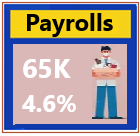
The U.S. lost jobs in December 2020 for the first time in eight months as the coronavirus bore down on the economy again and forced businesses to resort to more layoffs. The government and private sector shed 140,000 jobs last month, the Bureau of Labor Statistics said Friday. The decline in employment was the first since last April, when the U.S. lost a gargantuan 20.8 million jobs in that one month alone.The official unemployment rate, meanwhile, was unchanged at 6.7%. Yet economists estimate true unemployment is several points higher because the official jobless rate doesn’t include about 4 million people who left the labor force last year.
December 2020 total nonfarm payroll declined for the first time since April 2020; employers face increased unemployment insurance costs due to federal loans. United States November 2020 Total Nonfarm Payroll Employment Rose By 245,000, the Unemployment Rate Declines to 6.7%...
Economy sees job loss in December for the first time in eight months as surging virus takes toll. Nonfarm payrolls fell by 140,000 in December against the consensus estimate for a 50,000 gain. The unemployment rate held steady at 6.7%. Hospitality accounted for most of the job losses, as bars and restaurants took a particularly hard hit. The level of permanent job losses actually fell for the month, an encouraging sign. Job gains came in professional and business services, retail and a handful of other industries..
The unemployment rate was unchanged at 6.7%, compared to a 6.8% estimate. An alternative unemployment measure that includes discouraged workers and those holding part-time jobs for economic reasons declined to 11.7% from 12%..
Wholesale Trade inventories (Pre) Nov. 2020
Wholesale trade dipped slightly in November 2020 compared to the same month a year ago but improved compared with October, according to the latest report from the U.S. Census Bureau. November 2020 sales of merchant wholesalers, except manufacturers’ sales branches and offices, after adjustment for seasonal variations and trading day differences but not for price changes, were $496.7 billion, down 0.2% from the revised November 2019 level but up 0.2% from the revised October level. The September 2020 to October 2020 percent change was revised from the preliminary estimate of up 1.8% to up 1.7%.
Total inventories of merchant wholesalers, except manufacturers’ sales branches and offices, after adjustment for seasonal variations but not for price changes, were $649.8 billion at the end of November, down 2.1% from the revised November 2019 level and virtually unchanged from the revised October level. The October 2020 to November 2020 percent change was revised from the advance estimate of down 0.1% to virtually unchanged. The November inventories/sales ratio for merchant wholesalers, except manufacturers’ sales branches and offices, based on seasonally adjusted data, was 1.31. The November 2019 ratio was 1.33.
Consumer Credit
U.S. consumer borrowing rose 4.4% in November, its strongest showing in five months, led by strong gains in auto and student loans that offset a drop in credit card borrowing. The Federal Reserve said Friday that the rise represented an increase of $15.3 billion, the best showing since June. Borrowing had risen $4.5 billion in October. Borrowing for autos and student loans increased by $16.1 billion, while borrowing in the category that includes credit cards fell by $786.7 million after a larger $5.5 billion drop in October. The drop in credit card use was an indication consumers remain cautious about spending amid a spike in coronavirus cases in recent weeks. The changes in borrowing left consumer credit at $4.18 trillion in November, up a modest 0.5% from a year ago. The Fed's monthly consumer credit report does not cover home mortgages or any loans secured by real estate, such as home equity loans. Consumer borrowing is closely watched for indications of the willingness of households to take on more debt to support their spending, which accounts for 70% of U.S. economic activity. |