Chicago Fed Nat Activity Index
The Chicago Fed National Activity Index in the US dropped to -0.15 in December 2021 from an upwardly revised +0.44 in the previous month, suggesting there was a contraction in economic activity following a two-month period of expansion. The national activity is expected to slip to 0.25 in December versus 0.37 in November.
Earnings Season
Verint
Samana rated the stock a Buy and provided a price target of $62. Further, the analyst noted that the company is capable of serving both legacy and cloud-native customers, and its cloud solutions software is easily adaptable for pre-existing clients. This kind of entrenched relationship is expected to drive strong retention levels and deter churn.
Amazon
Deceleration in consumer spending and tough earnings comparisons have dented Amazon’s (AMZN) shares. However, now as supply constraints are projected to ease and Amazon’s investments in logistics and fulfillment infrastructure are expected to pay off, analysts are back on the train. Doug Anmuth of JPMorgan is one of the most recent to publish a bullish report, noting reaccelerating e-commerce trends and a largely successful holiday shopping season. Moreover, Amazon Web Services (AWS) still reigns over the cloud-computing market. Anmuth rated the stock a Buy and declared a price target of $4,350.
Tesla
Tesla beats on earnings and revenue, says supply chain issues were ‘main limiting factor’. Tesla beat on the top and bottom lines.CEO Elon Musk gave a “product road map” update saying the company would not release any new model vehicles in 2022. Instead, Tesla is focusing on developing autonomous vehicle tech, and scaling up production at its new factories in Austin, Texas and outside of Berlin. Here’s how the company performed: Earnings (adjusted): $2.52 per share, vs. $2.36 per share expected by analysts, according to Refinitiv. Revenue: $17.72 billion, vs. $16.57 billion expected by analysts, according to Refinitiv.
VMware
Indicators may be pointing to a breakout for shares of cloud-computing company VMware (VMW). Brian White of Monness detailed several reasons for which the stock may be poised for upside. He highlighted the company’s “unique value proposition in the cloud,” as well as its attractive valuation.He upgraded the stock to Buy from neutral and calculated a price target of $153.
Walmart
Walmart (WMT) appears to have widened its customer base since the outset of the Covid-19 pandemic, and it may also have the capacity to continue performing despite rising gasoline and inflationary costs. Robert Drbul of Guggenheim believes this to be true, writing that Walmart is well positioned to continue benefiting despite challenging consumer spending environments. He was not worried about inflationary pressures, gas prices, and other difficulties brought on by persisting Covid variants. However, he pointed out “lapping stimulus benefits and the expiration of child tax credits” as possible negative catalysts. Calling it one of his “top ideas,” Drbul rated the stock a Buy and provided a price target of $185.
Mortgage rates hit 22-month high
As the economic shutdown set in during March 2020, the Federal Reserve dropped interest rates to basically zero, nearly overnight. In Feb. 2020, the interest rate was roughly 1.5%. Two months later, it was 0.05%. The Fed’s actions contributed to a steady decline in mortgage rates, where the average 30-year mortgage rate hit a low of 2.65% in Jan. 2021. Since then, the average mortgage rate has climbed to 3.56% as of Jan. 21 — matching rates prior to the first shutdowns and hitting a 22-month high. And it’s not looking like they will slow down as several Federal Reserve members have stated they are predicting three interest rate hikes to fight back against inflation rates not seen in over 40 years. However, no finite decisions have been made as of yet. Mortgage rates and interest rates set by the Federal Reserve are closely tied to one another. As the Fed cuts and raises interest rates, mortgage rates will typically follow suit. Additionally, rates tend to swing as the 10-year Treasury yield swings upward, and it’s currently approaching pre-pandemic levels. But each lender can offer different rates to customers based on their level of risk and types of customers they decide to serve. But in this case, banks are raising rates in anticipation the Fed will do the same. And while borrowing money for a home has been historically cheap throughout the pandemic, home prices have not mirrored that. Because of a lack of housing supply and record-low mortgage rates home prices have skyrocketed since March 2020. In Q1 2020, the median home sale price was $329,000. In Q3 2021, it was $404,700.
PMI Composite Flash Jan. 2022
The PMIs have been slowing from the higher mid-to-high 50s to the lower mid-to-high 50s, consistent with strong but easing growth. More of the same is expected for January with an incremental decline expected for manufacturing, to 57.0, and a slightly more tangible decline for services, to 55.0.
GE
General Electric was the biggest drag on the S&P 500 with a 6.4% loss after the company topped quarterly earnings expectations, but missed revenue estimates.....
S&P Case-Shiller
Home prices surged in November 2021, but at a slower rate than in October, S&P Case-Shiller says. Even as the housing market entered its traditionally slower season in November, home prices showed big gains from a year ago. Prices rose 18.8% year over year on the S&P CoreLogic Case-Shiller National Home Price Index. Yet that was a slower rate than the October pace, which was a 19% annual gain. The 10-city composite rose 16.8% annually, down from 17.2% in the previous month. The 20- city composite grew 18.3%, down from 18.5% in October 2021.
FHFA Home Index Nov. 2021
House prices rose nationwide in November, up 1.1 percent from the previous month, according to the latest Federal Housing Finance Agency House Price Index (FHFA HPI®). House prices rose 17.5 percent from November 2020 to November 2021. The previously reported 1.1 percent price change for October 2021 remained unchanged. FHFA will release its next HPI report on February 22, 2022, with monthly data through December 2021 and quarterly data through the fourth quarter of 2021.
Political
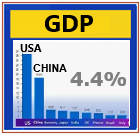
The International Monetary Fund has downgraded its 2022 global growth forecast to 4.4%. In its World Economic Outlook report, published Tuesday, the IMF said it expects global gross domestic product to grow 0.5 percentage points less than previously estimated. The revised outlook is largely due to growth markdowns in the world’s two largest economies; the U.S. and China.
PMI Composite Flash
U.S. PMI Composite Flash falls more than expected in January. January IHS Markit U.S. PMI Composite Index (Flash): 50.8 vs. 56.7 consensus and 57.0 prior. Manufacturing Index: 55.0 vs. 57.0 consensus and 57.7 prior., Service Index: 50.9 vs. 55.0 consensus and 57.6 prior. The flash index shows a marked slowdown in growth at the start of the year with softer demand conditions, worsening supply chain disruptions, and labor shortages linked to the Omicron variant wave, says IHS Market. The Flash Composite and Services index are both at 18-month lows, while the Manufacturing index fall to its lowest level in 19 months.
MBA Applications
Mortgage refinance demand plunges 13% as interest rates climb toward two-year high
The average contract interest rate for 30-year fixed-rate mortgages with conforming loan balances ($647,200 or less) increased to 3.72% from 3.64%. Refinance applications fell 13% for the week and were 53% lower year over year. Mortgage applications to purchase a home dropped just 2% for the week and were 11% lower than a year ago. Rising interest rates are causing big headaches for mortgage lenders, especially those who depend most on refinance business. Demand is simply drying up. The average contract interest rate for 30-year fixed-rate mortgages with conforming loan balances ($647,200 or less) increased to 3.72% from 3.64%, with points decreasing to 0.43 from 0.45 (including the origination fee) for loans with a 20% down payment. That rate was 77 basis points lower the same week one year ago. As a result mortgage refinance applications, which are highly sensitive to daily rate moves, fell 13% for the week and were 53% lower year over year, according to the Mortgage Bankers Association’s seasonally adjusted index. Rates have now been moving higher for five straight weeks. Mortgage applications to purchase a home fell just 2% for the week and were 11% lower than a year ago. Buyers are actually more active now than usual, as some are hoping to get a jump on the popular spring market. With mortgage rates rising, and home prices still soaring, some are concerned they will no longer be able to afford the home they want. That house was priced right around the national median, at $375,000, which is where supply is lean. Most of the buying activity is happening on the higher end, which is why the average purchase loan size set yet another record at $433,500....
MSFT
Microsoft beats on earnings and revenue, delivers upbeat forecast for fiscal third quarter. Microsoft reported better-than-expected earnings and revenue for the fiscal second quarter. The stock initially dropped in extended trading but turned positive after the company issued a sales forecast that also exceeded estimates. Here’s how the company did:
Earnings: $2.48 per share, adjusted, vs. $2.31 per share as expected by analysts, according to Refinitiv.
Revenue: $51.73 billion, vs. $50.88 billion as expected by analysts, according to Refinitiv.
Morgan Stanley upgrades DraftKings, projects sports betting stock can rebound 60%
...
FOMC Meeting 26-27 January 2022
The Federal Reserve is expected to signal at its meeting this week that it is ready to raise interest rates as soon as March and that it will consider other policy tightening. The Fed issues its policy statement Wednesday afternoon, at the end of its two-day meeting, and it is expected to show that it is willing to take the steps necessary to fight inflation.The Fed begins its two-day meeting Tuesday, and on Wednesday afternoon, the central bank is expected to issue a new statement that shows it is resolved to fight inflation. Against the backdrop of a violent stock market correction, Fed officials are expected to say they are ready to push up the fed funds rate from zero as soon as March.
Balance Sheet
Fed officials have also been discussing paring back their nearly $9 trillion balance sheet, which more than doubled during the pandemic. At their December meeting, central bank officials discussed the balance sheet, and some strategists expect the wind-down to begin in June, or even as early as May.The central bank’s asset purchase program, scheduled to end in March, has been the primary contributor to the size of the balance sheet. The Fed had been buying $120 billion of Treasury and mortgages securities a month but has been tapering back.Once it ends that program, Fed officials are expected to begin to examine how they will shrink the balance sheet. The Fed currently replaces securities that are maturing with market purchases. It could change that operation and make other moves, like altering the duration of securities it holds.“The fact they’re talking about reducing the balance sheet at the same time they’re still adding to it is a bit inconsistent,” said Swonk. For that reason, she expects there could be some dissent at this week’s meeting, and at least one Fed member, like St. Louis Fed President James Bullard, could push for ending the purchases immediately.Swonk said there is also debate within the Fed about how aggressive they should get with rate hikes. Some market pros have speculated the Fed could move quickly out of the gate with a half-percentage-point rate hike in March, though the consensus is for a quarter-point hike.By moving on the balance sheet at the same time it is raising rates, the Fed would be quickening the pace of tightening. Swonk said every $500 billion on the balance sheet is worth 25 basis points of tightening. One basis point is equal to 0.01%“They talk about taking it down by $100 billion a month. They could easily go faster,” she said....
U.S. Trade in Goods
The U.S. trade deficit in goods topped $1 trillion in 2021 for the first time ever, as an economic recovery enabled Americans to snap up a record amount of imports such as toys, cell phones and appliances.
For all of 2021, the trade gap in goods rose to $1.08 trillion from $893.5 billion in the prior year. The deficit in 2020 had also been a record high.
The deficit in goods increased 3% in December to $101 billion from $98 billion, according to an advanced government estimate. It was the biggest monthly increase on record.
The speedy rebound in the U.S. economy compared to most other countries — fueled by massive government stimulus — helps explain the record trade deficit. Americans could afford to buy more foreign-made goods, and they did.
Demand for U.S. exports was slower to bounce back because other countries lagged behind in their economic recoveries.
The deficit is expected to subside once other countries catch up, but the U.S. has run large trade gaps for years and there doesn’t appear to be any end in sight.
Key details: U.S. imports advanced 2% in December to $258.2 billion.
Exports edged up 1.4% to $157.3 billion.
The overall trade deficit in 2021 is expected to fall short of $1 trillion since the U..S. regularly runs a surplus in services such as tourism and travel. The total gap is likely to be just under $800 billion.
More details will be released next week when the government publishes the full December report on the U.S. trade balance.
Also in the trade report, the government said advanced retail inventories jumped 4.4% in December. Wholesale inventories increased 2.1%, preliminary data show.
Businesses have been trying to boost production to keep up with strong customer demand, but they’ve been dogged by persistent labor and supply shortages.
FOMC Meeting Announcement
The Dow Jones Industrial Average fell in volatile trading Wednesday, after Federal Reserve Chairman Jerome Powell suggested the central bank has plenty of room to raise interest rates before it would harm the economy. The Fed signaled in a statement following its policy group’s January meeting that a quarter-percentage-point increase to its benchmark short-term borrowing rate could be coming as soon as March. The announcement was expected, and stocks maintained their gains shortly after it was released. However, the market began to gyrate as Powell spoke, continuing a pattern of volatility this week in markets.
Treasury yields turned higher Wednesday after the Federal Reserve indicated that it could start raising interest rates in March, the first increase in three years. The yield on the benchmark 10-year Treasury note jumped 8 basis points to 1.86%. The yield on the 30-year Treasury bond was up 5 basis points at 2.18%. Yields move inversely to prices and 1 basis point is equal to 0.01%. Yields popped to their highs of the session when at a press conference following the decision, Chair Powell emphasized that the central bank was committed to stable prices and that there was “quite a bit of room” to raise rates before harming the labor market....
In its post-meeting statement, the Fed said a quarter-percentage point increase to its benchmark short-term borrowing rate is likely coming soon. It did not provide a specific time for when the increase will come, though indications are that it could happen as soon as the March meeting. Powell said that there’s a risk that inflation will not decline back toward its pre-pandemic levels any time soon, and that the rise in prices could accelerate. In its post-meeting statement, the Fed said a quarter-percentage point increase to its benchmark short-term borrowing rate is likely coming soon. It did not provide a specific time for when the increase will come, though indications are that it could happen as soon as the March meeting. Powell said that there’s a risk that inflation will not decline back toward its pre-pandemic levels any time soon, and that the rise in prices could accelerate.
Oil
Brent crude futures, the international oil benchmark, topped $90 on Wednesday for the first time since 2014, adding to oil’s blistering recovery since its pandemic-era lows in April 2020. The threshold breakthrough comes amid growing geopolitical tensions between Russia and Ukraine, and as supply remains tight amid a rebound in demand. The contract added more than 2% at one point to hit a high of $90.47 per barrel for the first time since October 2014. However, Brent pulled back slightly in afternoon trading, ultimately settling 2% higher at $89.96 per barrel.
TESLA
Tesla reported fourth-quarter results that came in stronger than expected, but shares fell slightly in extended trading on Wednesday after the automaker warned supply chain issues could persist throughout 2022. Here’s how the company performed:
Earnings (adjusted): $2.52 per share, vs. $2.36 per share expected by analysts, according to Refinitiv
Revenue: $17.72 billion, vs. $16.57 billion expected by analysts, according to Refinitiv
BA
Production problems have prevented Boeing from delivering its 787 Dreamliner for most of the last 15 months. The manufacturer posted its third consecutive annual loss. Boeing took a $3.5 billion charge in the fourth quarter on the 787 delays.
Here’s how Boeing performed compared with analysts’ estimates complied by Refinitiv:
Adjusted results: A loss of $7.69 a share vs. an expected loss of 42 cents a share.
Revenue: $14.79 billion vs. $16.59 billion, expected.
Boeing lost $4.29 billion last year, its third annual loss in a row as the Covid pandemic and production issues continued to hurt its bottom line. It’s an improvement from 2020 when the company had a loss of $11.94 billion.
For the fourth quarter, Boeing reported a net loss of $4.16 billion, less than half of the $8.44 billion it lost a year earlier. Sales fell 3% from a year ago to $14.79 billion, lower than the $16.59 billion analysts expected.
Durable Goods Orders
Durable goods orders, up 2.6 percent (revised from 2.5 percent), jumped sharply in November with December's consensus at a decrease of 0.5 percent. Both ex-transportation and core capital goods orders are seen up 0.4 percent. Also, orders for long-lasting goods declined 0.9% for December, worse than the estimate for a 0.6% drop. Orders for durables hit their lowest point since April 2020, reflecting an end-of-year slowdown as omicron cases skyrocketed..
GDP
GDP grew at a 6.9% pace to close out 2021, stronger than expected despite omicron spread, The U.S. economy grew at a much better than expected pace to end 2021 though the acceleration likely tailed off as the omicron spread put a damper on hiring and further hindered the global supply chain. Gross domestic product, the sum of all goods and services produced during the October-through-December period, increased at a 6.9% annualized pace, the Commerce Department reported Thursday. Economists surveyed by Dow Jones had been looking for a gain of 5.5%. The increase was well above the unrevised 2.3% growth in the third quarter. Gains came from increases in private inventory assessment, strong consumer activity as reflected in personal consumption expenditures, exports and business spending as measured by nonresidential fixed investment.
Wholesale Inventories Advance
US advanced wholesale inventories for December 2021 2.1% versus 1.3% estimate. The US preliminary wholesale inventories for December 2021. Prior was 1.4% revised to 1.7. Wholesale inventories come in stronger at 2.1% vs estimate of 1.3% wholesale inventories YoY are up 18.3% from December 2020 retail inventories rose 4.4% and were up 3.8% from December 2020. The prior month was revised at up 2.0%. Retail inventories excluding autos +3.6%. Wholesale inventories have been up for 17 consecutive months as inventory replenishment continues post the pandemic.
Jobless Claims
Thursday, jobless claims totaled 260,000 for the week ended Jan. 22, slightly less than the 265,000 estimate and a decline of 30,000 from the previous week.
New Home Sales
Dec. New Home Sales Up 11.9% Month-to-Month. Buyers worried about rising interest rates and home prices pushed new-home sales to a 10-month high in Dec. Sales of new single family homes in December rose to their highest level in 10 months as buyers took advantage of lower prices in anticipation of higher interest rates. The increase put the seasonally adjusted annual sales pace to 811,000 for the month, according to the Commerce Department, an 11.9% increase over November’s figure, which was revised down to 725,000 from 744,000.
McDonalds
McDonald’s on Thursday reported quarterly earnings and revenue that missed analysts’ expectations as higher costs weighed on its profits. It marks the fourth earnings miss for the company in eight quarters. Shares of McDonald’s fell nearly 2% in premarket trading. Here’s what the company reported for the quarter ended Dec. 31 compared with what Wall Street was expecting, based on a survey of analysts by Refinitiv:
Earnings per share: $2.23 adjusted vs. $2.34 expected
Revenue: $6.01 billion vs. $6.03 billion expected
Personal Income
Along with the inflation numbers, personal income rose 0.3% for the month, a touch lower than the 0.4% estimate.
Each month, the Bureau of Economic Analysis also compiles the personal consumption expenditure price index, also known as the PCE price index. This inflation index measures a basket of goods and services that is updated annually in contrast to the CPI, which measures a fixed basket.
Core PCE Price Index Dec. 2021
U.S. inflation was 5.8% for 2021, highest since 1981. U.S. inflation was 5.8% for 2021 as measured by the core PCE, or personal consumption expenditures index. The annual number is the highest since 1981. Measured by the Consumer Price Index, inflation was an even higher 7% for 2021. Inflation rose 4.9% in December according to the core PCE. The Commerce Department said the increase for that month was the highest since September 1983. That core PCE index is the one preferred by the Federal Reserve. It excludes food and energy. The December 2021 number was an increase of 0.5% over November 2021. Inflation was even higher for 2021 according to the Consumer Price Index, another measure of inflation that uses a weighted average of prices
Personal Consumption Expenditures - M/M: Consumer Spending
Consumer spending declined 0.6%, less than the 0.7% estimate.
ECI
A separate Labor Department data point that Fed officials also watch closely showed that total compensation costs for civilian workers increased 4% over the past 12 months. That is the fastest pace in history for the employment cost index, a data set that goes back to the beginning of 2002.The Labor Department's Bureau of Labor Statistics said the employment cost index also increased 4% over the past 12 months, the fastest increase since that data set began in 2002. Wages and salaries increased 4.5% for 2021, while benefits costs were up 2.5%, according to the Bureau of Labor Statistics. The Federal Reserve is planning to raise interest rates later this year in an effort to combat the inflation. According to CNBC, "market pricing is pointing to five quarter-percentage-point increases this year for benchmark short-term borrowing rates."
Apple
Apple is on an unstoppable run at the moment, according to the chief analyst at CCS Insight Ben Wood. The iPhone maker posted a record quarterly profit of almost $124 billion on Thursday, causing Apple’s shares to pop 11%. It beat on the top and the bottom line, with sales for every product category bar the iPad beating expectations. The iPhone maker posted a record quarterly profit of almost $124 billion on Thursday.It beat on the top and the bottom line, with sales for every product category bar the iPad beating expectations. Here is how Apple did in the quarter ending Dec. 25 versus Refinitiv consensus estimates:
EPS: $2.10 vs. $1.89 estimated, up 25% year-over-year Revenue: $123.9 billion vs. $118.66 billion estimated, up 11% year-over-year
In an interview with CNBC’s Julia Boorstin Thursday, Apple CEO Tim Cook acknowledged that inflationary pressures are affecting the company.
Consumer Confidence
Confidence in the economy fell slightly in January, while inflation worries eased and consumers are still in a spending mood, according to the latest survey by The Conference Board released Tuesday. The organization’s Consumer Confidence Index fell to 113.8 from 115.2 in December. The present situation index – measuring how consumers feel about the current economy – rose to 148.2 from 144.8, while the expectations index – a more forward looking assessment – declined to 90.8 from 95.4.
Consumer Sentiment UM
The University of Michigan's sentiment index fell to 67.2 in January, the lowest since November 2011. The Omicron surge and still-elevated inflation fueled most of the drop, the survey's chief economist said. Even the Fed's fight with inflation can weaken sentiment if people misinterpret rate hikes, he added.
Worries over soaring prices and the Omicron variant of the coronavirus soured Americans' views of the economy in January. US consumer sentiment in January fell nearly 5% to the lowest level since November 2011, the University of Michigan's consumer sentiment survey showed Friday. Survey respondents felt worse about both the current economic conditions, as well as the outlook for the near-term. Consumer sentiment has been on a roller coaster throughout the pandemic, initially plummeting in the spring of 2020, then recovering in lockstep with the reopening, before it again declined amid the spread of the Delta variant that weighed on the economy in the summer. With a new variant — Omicron — in town, it's not surprising that consumers are again feeling anxious.
Pending Home Sales
Contracts to buy U.S. previously owned homes fell for a second straight month in December amid record low inventory. The National Association of Realtors (NAR) said on Thursday its Pending Home Sales Index, based on signed contracts, dropped 3.8% last month to 117.7. Pending home sales fell in all four regions. Economists polled by Reuters had forecast contracts, which become sales after a month or two, dipping 0.2%. Pending home sales decreased 6.9% in December on a year-on-year basis.
|