10-Year Treasury Yield
mmmm
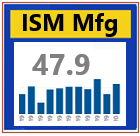
ISM Manufacturing Index The July Manufacturing PMI® registered 52.8 percent, down 0.2 percentage point from the reading of 53 percent in June. This figure indicates expansion in the overall economy for the 26th month in a row after a contraction in April and May 2020. This is the lowest Manufacturing PMI® figure since June 2020, when it registered 52.4 percent.
Title 2
mmmm
Factory Orders
Orders rose 2.0% on a month-on-month basis in June 2022. It was expected a 1.1% increase. Manufacturing, which accounts for 11.1% of the economy, continues to plod along despite 525 basis points in rate hikes from the Federal Reserve since March 2022.
PMI Composite Final
The S&P Global US Composite PMI registered 47.5 in July, down notably from 52.3 in June to signal a solid contraction in private sector output, flash estimates showed. The rate of decline was the sharpest since the initial stages of the pandemic in May 2020, as both manufacturers and service providers reported subdued demand conditions. New export orders fell for a second successive month and new orders returned to expansion territory but the increase was only modest and, with the exception of June’s decline, was the weakest in the past two years. Challenges retaining employees and some reports of cost cutting initiatives led to the weakest rise in staffing numbers since February. On the price front, the pace of input price inflation eased again from May’s series peak and was the softest for six months, and the pace of charge inflation slowed to the lowest since March 2021. Looking ahead, business confidence among US companies slipped to the lowest since September 2020.
Title 5
mmmm
Title 6
mmmm
JOLTS
The number of available jobs in the US shrank considerably in June, according to new data released Tuesday by the Bureau of Labor Statistics. Job openings dropped to 10.7 million in June, down from a revised 11.3 million in May, according to the latest Job Openings and Labor Turnover Survey, or JOLTS. That’s the lowest level since September 2021 but still above pre-pandemic levels of 7 million. The retail and wholesale trade sectors saw the biggest pullback in unfilled jobs.
MBA Purchase Applications
Total mortgage demand increased 1.2% as the average 30-year fixed mortgage rate made the largest weekly drop since 2020. Applications to refinance a home rose 2% weekly, and applications to purchase a home increased 1%. The average contract interest rate for 30-year fixed-rate mortgages with conforming loan balances decreased to 5.43% from 5.74%. Mortgage applications inched up last week for the first time since June 24. Total mortgage demand increased 1.2% as the average 30-year fixed mortgage rate made the largest weekly drop since 2020. Applications to refinance a home rose 2%, according to the Mortgage Bankers Association, but the annual drop was still huge, down 82% since last year. Applications to purchase a home increased 1% and were down 16% from one year ago. The slight increases came as mortgage rates dropped 0.31 percentage point from 5.74% to 5.43% following the Federal Reserve announcement of its latest rate hike and the GDP report, which showed the U.S. economy contracted for the second straight quarter. “Mortgage rates declined last week following another announcement of tighter monetary policy from the Federal Reserve, with the likelihood of more rate hikes to come. Treasury yields dropped as a result, as investors continue to expect a weaker macroeconomic environment in the coming months,” said Joel Kan, MBA’s associate vice president of economic and industry forecasting.
ADP
Published: June 30, 2022 at 6:18 a.m. ET ADP said it's going to halt the release of its private-sector employment report as it retools the report to make it "a more robust, high-frequency view of the labor market and trajectory of economic growth." The report has been criticized for not being a good predictor of what the Labor Department reports in its employment report that is typically issued two days after the ADP survey. ADP says it's targeted August 31, 2022 to reintroduce the new ADP National Employment Report and said it will work with the Stanford Digital Economy Lab on the project.
Note: The ADP Jobs report will not be published on July 7, 2022 or August 3, 2022. ADP said it is targeting Aug. 31, 2022 to reintroduce the new ADP National Employment Report.
ADP said Thursday it will pause the release of its private-sector employment report as it “retools” the methodology to make it “a more robust, high-frequency view of the labor market and trajectory of economic growth.” The ADP report has attracted criticism for being overly optimistic predicting private payrolls, compared with the Labor Department’s more comprehensive official tally of job creation, which is usually released two days after the ADP survey. ADP said it is aiming for Aug. 31, 2022 to reintroduce the new ADP National Employment Report and said it will work with the Stanford Digital Economy Lab on the project.
Title 9
mmmm
Title 10
mmmm.
Title 11
mmmm
Jobless Claims
mmmm
Title 12
mmmm
Title 13
mmmm
Title 14
mmmm
Construction Spending
U.S. construction spending tumbled in June as outlays on single-family homebuilding declined sharply amid rising mortgage rates. The Commerce Department said on Monday that construction spending dropped 1.1% in June 2022 after gaining 0.1% in May. Economists polled by Reuters had forecast construction spending would rise 0.1%. Construction spending increased 8.3% on a year-on-year basis in June. Spending on private construction projects decreased 1.3% after increasing 0.2% in May. Investment in residential construction dropped 1.6%, with spending on single-family projects plunging 3.1%. Outlays on multi-family housing projects increased 0.4%.
Unemployment
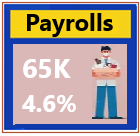
Payrolls increased 528,000 in July 2022, much better than expected in a sign of strength for jobs market. Nonfarm payrolls rose 528,000 for the month and the unemployment rate was 3.5%, easily topping the Dow Jones estimates of 258,000 and 3.6%, respectively. Wage growth also surged, as average hourly earnings jumped 0.5% for the month and 5.2% from a year ago, higher than estimates. Traders are now pricing in a higher likelihood of a 0.75 percentage point hike for the next Federal Reserve meeting in September. Nonfarm payrolls rose 528,000 for the month and the unemployment rate was 3.5%, easily topping the Dow Jones estimates of 258,000 and 3.6%, respectively. The unemployment rate is now back to its pre-pandemic level and tied for the lowest since 1969, though the rate for Blacks rose 0.2 percentage point to 6%. Wage growth also surged higher, as average hourly earnings jumped 0.5% for the month and 5.2% from the same time a year ago.
Those numbers add fuel to an inflation picture that already has consumer prices rising at their fastest rate since the early 1980s. The Dow Jones estimate was for a 0.3% monthly gain and 4.9% annual increase.
Back to pre-pandemic Despite downbeat expectations, the July gains were the best since February and well ahead of the 388,000 average job rise over the past four months. The BLS release noted that total nonfarm payroll employment has increased by 22 million since the April 2020 low when most of the U.S. economy shut down to deal with the Covid pandemic.Previous months’ totals were revised slightly, with May raised by 2,000 to 386,000 and June up 26,000 to 398,000.
Fixed Mortgage Rates
mmmm |