10-Year Treasury Yield
Markets reopened on Tuesday following the July Fourth holiday after the major averages finished another losing week, compounding one of Wall Street’s worst first halves in decades. In this shortened holiday week, investors are looking ahead to the release of June jobs report data on Friday. U.S. Treasury yields were mixed on Tuesday as concerns about a potential economic recession continued to send investors in search of safety. At around 8:00 a.m. ET, the yield on the benchmark 10-year Treasury note dropped six basis points to 2.842%, while the yield on the 30-year Treasury bond fell five basis points to 3.076%. Yields move inversely to prices, and a basis point is equal to 0.01%. The 2-year Treasury yield and other short-dated yields rose, however, flattening the yield curve.
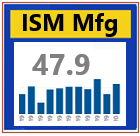
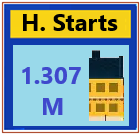
Factory Orders New orders for U.S.-manufactured goods increased more than expected in May, bucking a slew of recent data showing a softening in the economy and underscoring that demand for products remains strong even as the Federal Reserve aggressively tightens financial conditions. The Commerce Department said on Tuesday that factory orders rose 1.6% in May after advancing 0.7% in April. Economists polled by Reuters had forecast factory orders would rise 0.5%. Other indicators have shown less resilience. A survey on Friday showed the Institute for Supply Management's national factory activity index contracted for a second straight month, though an "overwhelming majority" of companies indicated they were hiring. That followed moderate consumer spending growth in May along with weak housing starts, building permits and factory production. Manufacturing accounts for 12% of the U.S. economy and is being held up by strong demand for goods even as overall spending rotates more toward the services sector. The U.S central bank is seeking to cool demand across the economy as it tries to tamp down high inflation.
PMI Composite Final
US final services PMI from S&P Global 52.3 vs 52.4 preliminary. June saw signs of a broad-based weakening of the economy with demand now falling in both the manufacturing and service sectors. While the survey data point to a stalling of GDP at the end of the second quarter, a downshifting in the forward-looking new orders index and drop in companies' future output expectations hints at falling economic activity as we head through the summer.
ISM Service
The ISM services index for June fell slightly to 55.3, but that was better than the estimate. the ISM services index for June registered a 55.3 reading, indicative of the percentage of firms seeing expansion. That was better than the 54 Dow Jones estimate though a deceleration from the 55.9 in May.
JOLTS
Job openings fell in May but still outnumber available workers by almost 2 to 1 Job openings totaled 11.25 million for May, a considerable drop from the upwardly revised 11.68 million in April, according to the Labor Department’s JOLTS report. There were 5.95 million people counted as unemployed in the month, meaning there were 1.9 openings per every available worker, still around historical highs. Job openings fell sharply in May but still far outnumbered the level of people looking for work, the Bureau of Labor Statistics reported Wednesday. Available positions totaled 11.25 million for the month, a considerable drop from the upwardly revised 11.68 million in April. As a share of the labor force, the rate of vacancies fell to 6.9% from 7.2%, according to the bureau’s Job Openings and Labor Turnover Survey. Despite the decline, the level of job openings was better than the 11.04 million estimate from FactSet. There were 5.95 million people counted as unemployed in the month, meaning there were 1.9 openings per every available worker, still around historical highs. Quits also declined slightly, falling to 4.27 million as the so-called Great Resignation abated. The level of workers voluntarily leaving their jobs has soared in the Covid era, a sign of enhanced mobility during a time of extreme labor shortages. Federal Reserve officials watch the JOLTS report closely for signs of labor market slack. The U.S. unemployment rate in May was 3.6%, just above where it was before the pandemic. However, there are 440,000 fewer Americans at work now than there were in February 2020. Layoffs nudged higher during the month to 1.39 million after hitting a series low in April from data going back to December 2000.
FOMC Minutes
Fed sees ‘more restrictive’ policy as likely if inflation fails to come down, minutes say. Federal Reserve officials at their June meeting said another interest rate increase of 50 or 75 basis points is likely at the July meeting, according to minutes released Wednesday. Policymakers “recognized the possibility that an even more restrictive stance could be appropriate if elevated inflation pressures were to persist,” the document said. Federal Reserve officials in June emphasized the need to fight inflation even if it meant slowing an economy that already appears on the brink of a recession, according to meeting minutes released Wednesday. Members said the July meeting likely also would see another 50 or 75 basis point move on top of a 75 basis point increase approved in June. A basis point is one one-hundredth of 1 percentage point. Officials at the June14-15 meeting remarked that they needed to make the move to assure markets and the public that they are serious about fighting inflation.
MBA Purchase Applications
Mortgage applications fell for the first time in four weeks, while mortgage rates fell for the second straight week, the Mortgage Bankers Association reported Wednesday in its Weekly Mortgage Applications Survey for the week ending July 1. This week’s results include a holiday adjustment to account for early closings on Friday, July 1, ahead of the Independence Day holiday. The Market Composite Index fell by 5.4 percent on a seasonally adjusted basis from one week earlier. On an unadjusted basis, the Index increased by 6 percent from the previous week. The unadjusted Refinance Index decreased by 8 percent from the previous week and was 78 percent lower than the same week one year ago. The refinance share of mortgage activity decreased to 29.6 percent of total applications from 30.3 percent the previous week. The seasonally adjusted Purchase Index decreased by 4 percent from one week earlier. The unadjusted Purchase Index increased by 7 percent from the previous week but was 17 percent lower than the same week one year ago.
Jobless Claims
Weekly jobless claims nudged higher while the U.S. trade deficit hit its lowest level of the year in May as Covid-related shutdowns gripped China, according to economic data released Thursday. Initial filings for unemployment benefits totaled 235,000 for the week ended July 2, a gain of 4,000 from the previous period and slightly more than the 230,000 Dow Jones estimate, according to the Labor Department. The total was the highest since Jan. 15 and raised the four-week moving average to 232,500, its highest level since December 2021. Continuing claims, which run a week behind, also moved higher, rising 51,000 to 1.375 million, higher than the 1.337 million FactSet estimate.
Trade Balance
US Trade Gap in Goods, Services Narrows to Smallest This Year. The gap narrows $1.1 billion, or 1.3% from a month earlier, to $85.5 billion.The U.S. imbalance for goods and services declined to $85.5 billion, from $86.7 billion in April.The U.S. imbalance for goods and services declined to $85.5 billion, from $86.7 billion in April, according to government figures. Though it was the lowest of 2022, it was above the Dow Jones estimate of $84.7 billion. The deficit was still up 38.4% from a year ago as a demand for imports has far outstripped U.S. exports to the rest of the world. As China grappled with a surge in Covid infections, the U.S. trade deficit fell a seasonally adjusted $2.8 billion to $32.2 billion. The deficit with Mexico also fell $1.6 billion while the imbalance with Canada increased $900 million.
ADP
ADP Research Institute (ADPRI) and the Stanford Digital Economy Lab (the "Lab") announced they will retool the ADP National Employment Report (NER) methodology to provide a more robust, high-frequency view of the labor market and trajectory of economic growth. In preparation for the changeover to the new report and methodology, ADPRI will pause issuing the current report and has targeted August 31, 2022, to reintroduce the ADP National Employment Report in collaboration with the Stanford Digital Economy Lab (the "Lab"). We look forward to providing an even more comprehensive labor market analysis and will be in touch with additional details closer to the re-launch, later this summer.
Non Farm Payroll
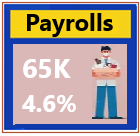
The economy added 372,000 jobs in June, outpacing expectations.The US economy added 372,000 jobs in June, an unexpected boost in hiring and a signal that the labor market remains robust despite recession fears, according to the monthly jobs report from the Bureau of Labor Statistics released Friday. Economists polled by Refinitiv projected 272,700 jobs would be added in June, amid a period of economic unease and growing fears that a recession is brewing. Following the latest monthly gains, the labor market is now 524,000 jobs shy of its pre-pandemic level, BLS data shows. The strongest job gains for June came from the professional and business services, leisure and hospitality and health care industries, with notable increases in areas such as food services and warehousing and storage.
Unemployment Rate
Payrolls increased 372,000 in June, more than expected, as jobs market defies recession fears. Nonfarm payrolls in June increased by 372,000, topping the 250,000 estimate. The unemployment rate remained at 3.6%. Average hourly earnings rose 5.1% from a year ago, a touch faster than estimates. Education and health services led job creation, followed by professional and business services and leisure and hospitality.The unemployment rate held steady at 3.6%, still close to the 52-year low last reached in the months before the pandemic hit. The June job total, slightly down from May's revised 384,000 jobs added, far surpassed expectations.
Wholesale trade Pre
mmmm
Fixed Mortgage Rates
Mortgage rates dropped for the second week in a row, notching the largest decline since December, 2008. The 30-year fixed-rate mortgage averaged 5.30% in the week ending July 7, down from 5.70% the week before, according to Freddie Mac. That is still significantly higher than this time last year when it was 2.90. Rates rose sharply at the start of the year, hitting a high of 5.81% in mid-June. But since then, economic concerns have pushed them lower. The 40 basis point fall offset some of the significant rate increases of May and June.
Consumer Credit
mmmm
|