10 Year Treasury Yield
The 10-year Treasury yield hit 2.106% on Monday morning, its highest point since July 2019, with investors focused on the Russia-Ukraine war and the Federal Reserve’s decision on interest rates. The yield on the benchmark 10-year Treasury note last jumped 9 basis points to 2.101%. The yield on the 30-year Treasury bond also rose 9 basis points to 2.454%. Yields move inversely to prices and 1 basis point is equal to 0.01%.
U.S. Treasury yields ebbed on Thursday morning, as investors digested the Federal Reserve’s decision to hike interest rates for the first time in more than three years. The yield on the benchmark 10-year Treasury note fell 3 basis points to 2.156%. The yield on the 30-year Treasury bond moved 2 basis points lower to 2.43%. Yields move inversely to prices and 1 basis point is equal to 0.01%. ..
Geopolitical Risk
Enter Comments.
PPI - Wholesale Prices
Wholesale inflation climbed 0.8% in February 2022, lower than estimate but still up 10% from last year. Dow gains 200 points as oil prices fall for a second day, inflation report comes in lighter than expected. The producer price index rose 0.8% in February, slightly lower than the 0.9% Dow Jones estimate. Wholesale gasoline prices surged more than 14%, helping feed the biggest single-month increase for final-demand goods prices ever in data going back to 2009. Headline PPI was up 10% from a year ago, tying January for the biggest gain ever.
Another surge in energy prices pushed wholesale goods prices to their biggest one-month jump in record in February 2022, according to Labor Department data released Tuesday. Final demand prices for goods jumped 2.4% for the month, the largest move ever in data going back to December 2009, the Bureau of Labor Statistics said. That pushed the headline producer price index up 0.8% on the month, which actually was slightly lower than the 0.9% Dow Jones estimate. Excluding food, energy and trade services, so-called core PPI rose just 0.2%, well below the 0.6% expectation. On a year-over-year basis, headline PPI rose 10%, the same as January and tied for the biggest 12-month move ever.
Empire State Manufacturing Index
The data published by the Federal Reserve Bank of New York revealed on Tuesday that the Empire State Manufacturing Index declined to -11.8 in March 2022 from 3.1 in February 2022. This print missed the market expectation of 7.25 by a wide margin. Empire state manufacturing in March fell fifteen points, lowest level since May 2020. Empire State Manufacturing Index: -11.8 vs. 7 consensus and +3.10 prior. New orders: -11.2 vs. +1.4 prior. Shipments: -7.4 vs. +2.9 prior. The prices paid index remained very elevated, and the prices received index reached yet another record high.The unfilled orders index came in at 13.1. The delivery times index climbed eleven points to 32.7, pointing to a substantial increase in delivery times, and inventories rose at the fastest pace in years. Looking ahead, firms were slightly more optimistic than last month that conditions would improve over the next six months.
Treasury International Capital (TIC)
The U.S. Department of the Treasury today released Treasury International Capital (TIC) data for January 2022. The next release, which will report on data for February, is scheduled for April 15, 2022. The sum total in January of all net foreign acquisitions of long-term securities, short-term U.S. securities, and banking flows was a net TIC inflow of $294.2 billion. Of this, net foreign private inflows were $270.8 billion, and net foreign official inflows were $23.4 billion. Foreign residents increased their holdings of long-term U.S. securities in January; net purchases were $53.9 billion. Net purchases by private foreign investors were $29.1 billion, while net purchases by foreign official institutions were $24.8 billion. U.S. residents decreased their holdings of long-term foreign securities, with net sales of $4.9 billion. Taking into account transactions in both foreign and U.S. securities, net foreign purchases of long-term securities were $58.8 billion. After including adjustments, such as estimates of unrecorded principal payments to foreigners on U.S. asset-backed securities, overall net foreign purchases of long-term securities are estimated to have been $65.4 billion in January. Foreign residents increased their holdings of U.S. Treasury bills by $9.5 billion. Foreign resident holdings of all dollar-denominated short-term U.S. securities and other custody liabilities increased by $51.6 billion. Banks’ own net dollar-denominated liabilities to foreign residents increased by $177.3 billion.
MBA Purchase Applications
The Market Composite Index, a measure of mortgage loan application volume, decreased 1.2% on a seasonally adjusted basis from one week earlier, according to data for the week ending March 11, 2022. On an unadjusted basis, the Index decreased 1% compared with the previous week. The Refinance Index decreased 3% from the previous week and was 49% lower than the same week one year ago. The seasonally adjusted Purchase Index increased 1% from one week earlier. The unadjusted Purchase Index increased 2% compared with the previous week and was 8% lower than the same week one year ago. Mortgage rates continue to be volatile due to the significant uncertainty regarding Federal Reserve policy and the situation in Ukraine. Purchase applications slightly increased, with both conventional and VA loan applications seeing gains. The average purchase application loan size remained elevated at $453,200 – the second-highest amount in MBA’s survey.
OIL
Oil registered heavy losses Tuesday, building on Monday’s decline, as myriad factors weighed on sentiment, including talks between Russia and Ukraine, a potential slowdown in Chinese demand and unwinding of trades ahead of the Federal Reserve’s expected rate hike on Wednesday. Both West Texas Intermediate crude, the U.S. oil benchmark, and global benchmark Brent crude settled below $100 per barrel Tuesday, a far cry from the more than $130 they fetched just over a week ago. WTI ended the day at $96.44, for a loss of 6.38%. During the session it traded as low as $93.53. Brent settled 6.54% lower at $99.91 per barrel, after trading as low as $97.44. WTI and Brent fell 5.78% and 5.12%, respectively, on Monday.
Retail Sales
Retail sales come up short in February 2022 as inflation slows consumer spending. Retail sales rose 0.3% in February 2022, below the 0.4% estimate as inflation seemed to impact consumer spending. Excluding autos, sales were up just 0.2%, well below the expected 0.9%. Online spending pulled back sharply, while sales totals for gasoline soared as prices jumped higher. Consumers continued to spend in February through at a slower pace than expected, according to a Commerce Department report Wednesday. Advance retail sales grew 0.3% for the month, slightly below the 0.4% Dow Jones estimate. Stripping out autos, sales were up 0.2%, well below expectations for a 0.9% increase and indicative that after a rapid pace to start the year, consumers were slowing down. The spending numbers were well below the rise in prices, which increased 0.8% in February, according to Labor Department data released last week. Retail spending numbers are not adjusted for inflation. The biggest dent in February’s numbers came in online shopping, with nonstore sales down 3.7%. One bright spot in the numbers released Wednesday is that January spending was revised up to an increase of 4.9%, a blistering pace that was even stronger than the initial estimate of 3.8%.
FOMC Meeting 15-19/Mar/2022
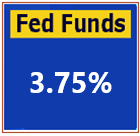
Federal Reserve approves first interest rate hike in more than three years, sees six more ahead. The Fed approved a 0.25 percentage point rate hike, the first increase since December 2018. Officials indicated an aggressive path ahead, with rate rises coming at each of the remaining six meetings in 2022. Members also pared expectations for economic growth this year and sharply raised their outlook for inflation. The Federal Reserve on Wednesday approved its first interest rate increase in more than three years, an incremental salvo to address spiraling inflation without torpedoing economic growth. After keeping its benchmark interest rate anchored near zero since the beginning of the Covid pandemic, the policymaking Federal Open Market Committee said it will raise rates by a quarter percentage point, or 25 basis points. That will bring the rate now into a range of 0.25%-0.5%. The move will correspond with a hike in the prime rate and immediately send financing costs higher for many forms of consumer borrowing and credit. Fed officials indicated the rate increases will come with slower economic growth this year.
Import and Export Prices
U.S. import prices rose 1.4 percent in February 2022, after advancing 1.9 percent in January 2022, the U.S. Bureau of Labor Statistics reported today. Higher fuel and nonfuel prices drove the increases in both months. Prices for U.S. exports advanced 3.0 percent in February 2022 following a 2.8-percent rise the previous month.
Imports : The price index for U.S. imports increased 1.4 percent in February following a 1.9-percent advance in January and a 0.4-percent decline in December. U.S. import prices rose 10.9 percent over the past 12 months.
Exports : U.S. export prices rose 3.0 percent in February, after a 2.8-percent advance the previous month. The February increase was the largest monthly rise since 1-month percent changes were first published in January 1989. Higher prices for both agricultural and nonagricultural exports in February contributed to the overall advance in U.S. export prices. Prices for U.S. exports increased 16.6 percent for the year ended in February.
Industrial Production
US industrial production increased 0.5% in February 2022, in line with market estimates, the Federal Reserve said Thursday. While it followed a 1.4% gain in January, industrial output showed a 7.5% increase year-on-year. Manufacturing output and mining production rose 1.2% and 0.1%, respectively, but the index for utilities declined 2.7%, the Fed said in a statement. Manufacturing was expected to rise 0.6% in February after increasing 0.1% during the previous month. Capacity utilization for the industrial sector increased 0.3 percentage points to 77.6% in February from the revised figure of 77.3% in January. The market estimate was 77.8%.
Business Inventories
U.S. business inventories increased strongly in January 2022, though the pace slowed from prior months, which could result in inventory investment making no contribution to economic growth in the first quarter. Business inventories rose 1.1% after advancing 2.4% in December, the Commerce Department said on Wednesday. Inventories are a key component of gross domestic product. January's increase was in line with economists' expectations. Inventories gained 11.4% on a year-on-year basis in January.
Business Inventoriess and GDP
Inventory investment surged at a robust seasonally adjusted annualized rate of $171.2 billion in the fourth quarter, contributing 4.90 percentage points to the quarter's 7.0% growth pace. Most economists see further scope for inventories to rise, noting that inflation-adjusted inventories remain below their pre-pandemic level. Sales-inventory ratios are also low.But inventories are likely to be neutral to GDP growth this quarter, as they would need to increase at a similarly fast rate as in the fourth quarter to contribute to growth. Growth estimates for the first quarter have been slashed to below a 1% rate from around a 2% pace following Russia's war against Ukraine, which has boosted crude oil prices, sending U.S. gasoline prices to record highs. The Feb. 24 invasion of Ukraine has also led to a spike in prices of other commodities like wheat and is expected to further strain global supply chains.
Jobless Claims
Weekly jobless claims total 214,000, better than expected for tight labor market. Weekly jobless claims totaled 214,000, better than the 220,000 estimate and down 15,000 from the prior week. The U.S. labor market tightened further last week, with jobless claims coming in at the lowest level since the beginning of the year, the Labor Department said Thursday. Initial filings for unemployment insurance totaled 214,000 for the week ended March 12, better than the Dow Jones estimate for 220,000 and a decline of 15,000 from the prior week. The total was the lowest since Jan. 1 and marked another sign that the market and its 3.8% jobless rate was nearing full employment. The four-week moving average, which accounts for weekly volatility in the numbers, also declined, falling 8,750 to 223,000. Continuing claims, which run a week behind the headline numbers, fell by 71,000 to 1.42 million, the lowest level since Feb. 21, 1970.
Housing Market Index - HMI
The NAHB/Wells Fargo Housing Market Index (HMI) recorded a slight decline in early March 2022, per preliminary data released on March 16, 2022. The preliminary national HMI for March was 79, down from a revised value of 81 for February. After hitting a recent low of 75 in August 2021, the HMI peaked at 84 in December 2021.1 Since the housing sector is a significant factor in overall U.S. economic activity, the HMI is widely used as a key economic indicator. The NAHB/Wells Fargo Housing Market Index (HMI) slipped in early March 2022. The preliminary March figure of 79 was down from 81 in January and off a recent peak of 84 in December 2021. The HMI is a predictor of housing starts during the next six months. Housing starts, in turn, are a key economic indicator. Rapidly rising lumber costs are a key issue for home builders and home buyers. C
Housing Starts
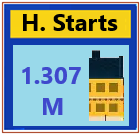
Housing Starts in U.S. Rebound to Fastest Pace Since Mid-2006. New construction rose 6.8% in February to 1.77 million pace.. New U.S. home construction rebounded in February to the strongest pace since 2006, suggesting builders had greater success navigating material and labor constraints in the month. Residential starts increased 6.8% last month to a 1.77 million annualized rate, according to government data released Thursday. Applications to build, a proxy for future construction, eased to an annualized 1.86 million units, though remained elevated.Housing starts and building permits both were better than expected.
Other data from the Commerce Department on Thursday showed housing starts jumped 6.8% to a seasonally adjusted annual rate of 1.769 million units in February, the highest level since June 2006. Economists had forecast starts rebounding to a rate of 1.690 million units.
Single-family housing starts, which account for the biggest share of homebuilding, jumped 5.7% to a rate of 1.215 million units last month. Single-family homebuilding increased in the Northeast, Midwest and South, but fell in the West.
In other economic news, housing starts totaled 1.77 million, more than the 1.7 million estimate. . On the housing side, builders have struggled to keep up with high demand against supplies of materials and labor due to the jobs gap. The February numbers represented a 6.8% gain from a month ago and a 22.3% jump for starts compared to the same period in 2021.
Building Permits
Permits eased but remain elevated near multi-year highsBuilding permits totaled 1.86 million, a bit above the 1.85 million estimate. For permits, the monthly number was down 1.9% from January but up 7.7% from a year ago.While permits for future home construction fell 1.9% to a rate of 1.859 million units, they were not too far from the nearly 16-year high touched in January. That suggested an acute shortage of houses will continue to underpin residential construction even as mortgage rates rise.
Philadelphia Fed Manufacturing index
The Philadelphia Fed said Thursday its gauge of regional business activity rose to 27.4 in March 2022 from 16 in the prior month.Economists polled by the Wall Street Journal expected a 15 reading. Any reading above zero indicates improving conditions. The barometer on new orders increased to 25.8 from 14.2 in the prior month. The shipments index rose to 30.2 from 13.4. Both price gauges increased in the month.The data was much stronger than expected. Analysts had tempered their optimism about manufacturing after a similar Empire State survey released Tuesday by the New York Fed showed manufacturing activity declined, with the business conditions index falling 14.9 points to negative 11.8 in March. The decline was blamed on the spike in oil prices following the invasion of Ukraine by Russia. Manufacturing has been a bright spot during the pandemic. In February, the national ISM manufacturing index rose to 58.6 from 57.6 in the prior month. It has been in positive territory for 21 straight months.
Fixed Mortgage Rates
The average rate for a 30-year fixed mortgage topped 4% for the first time since May 2019, Freddie Mac said Thursday. At the beginning of the year, the average rate on America's most popular home loan was 3.22%. It hit a record low of 2.65% in January 2021 and spent more than half the year under 3%.
Existing Home Sales
nn mmmm
Leading Indicators
Enter Comments.
E-Commerce Sales
Enter Comments. |