10-Year Treasury Yield
The 10-year Tuesday yield made up ground as investors closely watched Covid developments in China and digested comments from Federal Reserve officials on monetary policy plans. The yield on the benchmark 10-year Treasury yield was last up by just over 2 basis points to 3.726%. The 2-year Treasury yield was last trading at around 4.455% after dipping by more than 2 basis points. Yields and prices have an inverted relationship and one basis point is equivalent to 0.01%.
Case Shiller The S&P CoreLogic Case-Shiller U.S. 20-city price index fell 1.2% in September, its third consecutive monthly decline. The decline matches the forecast of economists were expecting a 1.3% decline. Year-on-year appreciation rose 10.4%, but that reflects the stronger conditions in late 2021. U.S. single-family home prices slowed further in September as higher mortgage rates eroded demand. The S&P CoreLogic Case Shiller national home price index dropped 0.8% month-over-month in September. The housing market has been hammered by aggressive Federal Reserve interest rate hikes that are aimed at curbing high inflation by dampening demand in the economy. The figure is down from 13.1% in August. A broader measure of home prices, the U.S. national index, fell by a seasonally adjusted 0.8% in September. Key details: On a month over month basis, all 20 cities posted declines, led by the western region. Sales were strongest in Miami, Tampa and Charlotte. Year-over-year gains in home prices peaked roughly six months ago and have decelerated since then. Big picture: Mortgage rates have shot up, making homes less affordable and putting many buyers on the sidelines. Economists think that home prices have further to fall. Federal Reserve officials don’t seem too concerned this process will turn into a deep downturn Looking ahead: “Prices have much further to fall before they adjust fully to the ongoing collapse in demand,” said Ian Shepherdson, chief economist at Pantheon Macroeconomics.
FHFA
A separate report from the Federal Housing Finance Agency showed home prices edged up 0.1% on a monthly basis in September after declining 0.7% in August. In the 12 months through September, prices climbed 11.0% after advancing 12.0% in August. “The rate of U.S. house price growth has substantially decelerated,” said William Doerner, supervisory economist in FHFA’s Division of Research and Statistics. “This deceleration is widespread with about one-third of all states and metropolitan statistical areas registering annual growth below 10%.” The 30-year fixed mortgage rate breached 7% in October for the first time since 2002, data from mortgage finance agency Freddie Mac showed. Though the rate retreated to an average of 6.58% last week, it remains well above the 3.10% average during the same period last year. “As the Fed continues to move interest rates higher, mortgage financing continues to be more expensive and housing becomes less affordable,” Craig Lazzara, managing director at S&P DJI, said in a statement. “Given the continuing prospects for a challenging macroeconomic environment, home prices may well continue to weaken.”
MBA Purchase Applications
Mortgage rates soared over 7% just a month ago, but since then they have fallen more than half a percentage point. Still, mortgage loan application volume decreased 0.8% last week compared with the previous week, according to the Mortgage Bankers Association’s seasonally adjusted index. The results also include an adjustment for the observance of the Thanksgiving holiday. The average contract interest rate for 30-year fixed-rate mortgages with conforming loan balances ($647,200 or less) decreased to 6.49% from 6.67%, with points remaining at 0.68 (including the origination fee) for loans with a 20% down payment. The weakness continues to be in refinance demand, which dropped 13% from the previous week and was 86% lower than the same week one year ago. Strange, given that roughly 100,000 more current borrowers could now benefit from a refinance with the latest rate drop, according to Black Knight. Mortgage applications to purchase a home gained 4% from the previous week but demand was 41% lower than the same week one year ago. Sales of existing homes continue to drop, while newly built home sales are benefiting from builder concessions, specifically deals in which the builder buys down the mortgage rate.
ADP
Private hiring slowed sharply during November in a sign that the historically tight labor market could be losing some steam, according to a report Wednesday from payroll processing firm ADP. Companies added just 127,000 positions for the month, a steep reduction from the 239,000 the firm reported for October and well below the Dow Jones estimate for 190,000. It also was the lowest total since January. The relatively weak total comes amid Federal Reserve efforts to loosen up a jobs picture in which there are still nearly two open positions for every available worker. The central bank has raised its benchmark borrowing rate six times this year, but the unemployment rate is still 3.7%, near the lowest since 1969. The ADP report comes two days before the Labor Department releases its more closely watched nonfarm payrolls count. Economists polled by Dow Jones expect that report to show a gain of 200,000 after an increase of 261,000 in October.
US Trade in Goods
The U.S. trade deficit in goods widened sharply in October as exports declined amid slowing global demand and a strong dollar. The goods trade deficit surged 7.7% to $99.0 billion last month, the Commerce Department said on Wednesday. Exports of goods dropped 2.6% to $173.7 billion. There were decreases in exports of industrial materials and supplies, which include crude oil. Exports of consumer goods tumbled, but shipments of food and motor vehicles and parts increased. The Federal Reserve's aggressive interest rate hikes to quell inflation have boosted the dollar, making U.S-made. goods expensive on the international market. Goods imports rose 0.9% to $272.7 billion. A smaller trade deficit was one of the main drivers of economic growth in the third quarter. October's sharp widening in the deficit suggested trade could be a drag on GDP this quarter. The Commerce Department also reported that wholesale inventories increased 0.8% in October after rising 0.6% in September. Retail inventories fell 0.2% after dipping 0.1% in September. Motor vehicle stocks increased 0.4%. Excluding motor vehicles, retail inventories slipped 0.4% after dropping 0.9% in September. This component goes into the calculation of GDP. Inventories subtracted from GDP growth in the third quarter.
GDP
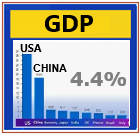
The upward revision reflected upgrades to growth in consumer and business spending as well as fewer imports, which offset the drag from a slower pace of inventory accumulation. When measured from the income side, the economy grew at a 0.3% rate. Gross domestic income (GDI) had contracted at a 0.8% pace in the second quarter. In principle, GDP and GDI should be equal, but in practice diverge as they are estimated using different and largely independent source data. The average of GDP and GDI, also referred to as gross domestic output and considered a better measure of economic activity, increased at a 1.6% rate in the July-September period after shrinking at a 0.7% pace in the second quarter. Profits from current production decreased at a $31.6 billion rate in the third quarter after rising at a $131.6 billion pace in the second quarter. With the Fed in the midst of what has become the fastest rate-hiking cycle since the 1980s, the economy is in danger of sliding into recession as early as in the first half of next year. Economists, however, believe any downturn will be short and mild because of unprecedented labor market strength.The U.S. economy rebounded more strongly than initially thought in the third quarter, the government confirmed on Wednesday, but higher interest rates as the Federal Reserve battles inflation have raised the risks of a recession next year. Gross domestic product increased at a 2.9% annualized rate, the government said in its second estimate of third-quarter GDP. That was revised up from the 2.6% pace reported last month. The economy had contracted at a 0.6% rate in the second quarter.The government’s primary measures of US third-quarter economic activity painted a mixed picture of the economy’s momentum after a lackluster first half of the year. Inflation-adjusted gross domestic product, or the total value of all goods and services produced in the economy, increased at a 2.9% annualized rate during the period, Commerce Department data showed Wednesday. That reflected upward revisions to consumer and business spending, and compares with a previously reported 2.6% advance.
Beige Book
Fed Chair Powell says smaller interest rate hikes could start in December. Federal Reserve Chairman Jerome Powell confirmed Wednesday that smaller interest rate increases are likely ahead and could start in December. But he cautioned that monetary policy is likely to stay restrictive for some time until real signs of progress emerge on inflation. “We will stay the course until the job is done,” he said during a speech in Washington, D.C. at the Brookings Institution. Federal Reserve Chairman Jerome Powell confirmed Wednesday that smaller interest rate increases are likely ahead even as he sees progress in the fight against inflation as largely inadequate. Echoing recent statements from other central bank officials and comments at the November Fed meeting, Powell said he sees the central bank in position to reduce the size of rate hikes as soon as next month. But he cautioned that monetary policy is likely to stay restrictive for some time until real signs of progress emerge on inflation. “Despite some promising developments, we have a long way to go in restoring price stability,” Powell said in remarks delivered at the Brookings Institution.
JOLTS
Job openings fell in October amid Fed efforts to cool labor market. The Job Openings and Labor Turnover Survey showed there were 10.33 million vacancies for the month, decline of 353,000 from September and down 760,000 compared with a year ago. That left 1.7 job openings per available worker for the month, down from a 2 to 1 ratio just a few months ago. Job openings dipped in October amid the Federal Reserve’s efforts to cool off a red-hot employment market, the Labor Department reported Wednesday. The Job Openings and Labor Turnover Survey, a closely watched gauge of slack in the labor force, showed there were 10.3 million vacancies for the month. That’s a decline of 353,000 from September and down 760,000 compared with a year ago. That left 1.7 job openings per available worker for the month, down from a 2 to 1 ratio just a few months ago. The Fed has instituted a series of rate hikes aimed at bringing down runaway inflation. One area of particular focus has been the ultra-tight jobs market, with a 3.7% unemployment rate and wage gains that are helping to fuel price pressures. While the monthly numbers can be volatile, the JOLTS report provided at least some measure that the Fed’s inflation-fighting efforts could be having an impact. The report came the same day that payroll processing firm ADP reported job gains of just 127,000 in November, the lowest total since January 2021. The quits level, a measure of worker confidence that they can easily move from one job to another, also declined, edging lower to 4.026 million, down 34,000 from a month ago and well below the record 4.5 million in November 2021 during what had been dubbed the “Great Resignation.” Total separations nudged higher to 5.68 million, while layoffs and discharges also rose, up 58,000 to 1.39 million. The Labor Department on Friday will release payroll growth numbers for December. Economists expect job growth of 200,000 for the month, according to Dow Jones estimates.
Jobless Claims
Weekly jobless claims totaled 225,000, a decline of 16,000 from the previous week and below the 235,000 estimate. In other economic news Thursday, the Labor Department reported that weekly jobless claims totaled 225,000, a decline of 16,000 from the previous week and below the 235,000 estimate. Another jobs report from outplacement firm Challenger, Gray & Christmas indicated that planned layoffs increased 127% on a monthly basis in November and were up 417% from a year ago. Even with the massive surge, the firm noted the year-to-date layoff total is the second-lowest ever in a data set that dates to 1993. The data comes at a pivotal time for the Fed, which is in the midst of an interest rate-hiking campaign in an effort to bring down inflation.
Core PCE
Key inflation measure that the Fed follows rose 0.2% in October, less than expected. The core personal consumption expenditures price index rose 0.2% in October, slightly below the estimate. The index increased 5% year over year. Inflation rose in October about in line with estimates, sending a sign that price increases at least might be stabilizing, the Commerce Department reported Thursday. The core personal consumption expenditures price index, a gauge that excludes food and energy and is favored by the Federal Reserve, rose 0.2% for the month and was up 5% from a year ago. The monthly increase was below the 0.3% Dow Jones estimate, while the annual gain was in line. The gains also represent a deceleration from September, which saw a monthly increase of 0.5% and an annual gain of 5.2%. Including food and energy, headline PCE was up 0.3% on the month and 6% on an annual basis. The monthly increase was the same as September, while the annual gain was a step down from the 6.3% pace.
PCE is the Federal Reserve’s preferred inflation gauge since it gives a more complete picture of consumer prices. Prices rose by 0.3% in October compared to September, the same monthly increase as in each of the previous two months. Stripping out volatile food and energy, core PCE rose 5% over the last 12 months and 0.2% month on month. That compares to September’s upwardly revised 5.2% annual increase and a month-on-month jump of 0.5%. The 12-month gain in core PCE matched the forecasts of economists surveyed by Refinitiv, while the one-month gain was slightly lower than the 0.3% rise that had been forecast. Inflation pressures have become a major concern for the US economy, prompting the Fed to hike interest rates at an unprecedented rate in an effort to get prices under control. Fed Chairman Jerome Powell said in a speech Wednesday that the Fed could pull back on the pace of its aggressive rate hikes as soon as December. While Powell has stressed the importance of not relying on one particular data point,
Personal Income
The department also reported that personal income jumped 0.7% for the month, well ahead of the 0.4% estimate, and spending rose 0.8%, as expected. Personal income jumped 0.7% for the month, well ahead of the 0.4% estimate, and spending rose 0.8%, as expected. A key measure of consumer prices slowed somewhat in October, another hopeful sign that inflation pressures could be moderating. The Personal Consumption Expenditures price index, or PCE, rose 6% in October compared to a year earlier, the Commerce Department reported Thursday. That’s down from the upwardly revised 6.3% annual increase reported for September.
Consumer Spending
Thursday’s inflation reading likely confirms that plan. The PCE report also showed big jumps in both personal income and personal spending. Personal income jumped 0.7% in October, up from a 0.4% increase in September. And spending by individuals rose 0.8% in the latest reading, and by 0.5% when the effect of higher prices was taken into account. It was the biggest jump in inflation-adjusted spending since January. The main drivers of the increased spending was new cars and trucks, furniture and other big-ticket items for the home and eating out. Both of those readings could feed underlying inflation pressures going forward. Greater demand for goods and services can push prices higher unless there is a corresponding increase in supply to meet that demand. And higher income — fueled by the strong labor market — tends to fuel greater demand. “The consumer spending numbers … included in this month’s release show that households also seem to refuse to give up their spending habits in the face of gathering economic storm clouds,” wrote Kurt Rankin, senior economist for PNC, in a note Thursday.
ISM
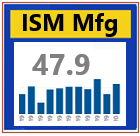
The ISM Manufacturing Index registered a reading of 49%, representing the level of businesses reporting expansion for the period. The reading was 1.2 percentage points below October and the lowest since May 2020, in the early days of the Covid pandemic. Declines in order backlogs and imports were the biggest drags on the index. The closely watched prices index was off 3.6 points to 43%, indicating inflation is abating, while the employment index also receded, down 1.6 points to 48.4% an contraction territory. Markets were mostly lower following the morning’s data, with the Dow Jones Industrial Average down more than 250 points in early trading while the S&P 500 and Nasdaq Composite posted smaller losses.
Employment
The US economy gained 263,000 jobs in November, 63,000 above the consensus estimate. The larger surprise was that average hourly earnings rose by 0.55%, the fastest pace since January. The robust jobs market is good news for American workers, but concerning for the Federal Reserve and equity bulls alike. It indicates that the Fed’s strategy to rein in inflation by raising interest rates isn’t quite working and that more painful interest rate hikes are coming. What’s happening: Executives often try to pass the cost of paying higher wages on to their customers by raising the prices of their goods and services. When prices rise, workers often demand more pay to keep up with the cost of living. And if they receive it, prices rise again to maintain corporate profits. This is the inflation-inducing wage-price spiral that Fed officials are desperately attempting to avoid. The holy grail of economics, then, is often to keep wages up but prices low.
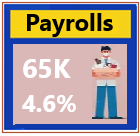
Payrolls and wages blow past expectations, flying in the face of Fed rate hikes. Nonfarm payrolls increased 263,000 for the month while the unemployment rate was 3.7%, the Labor Department reported Friday. The payrolls number was well above the 200,000 estimate, while the unemployment rate was in line. Average hourly earnings jumped 0.6% for the month, double the estimate, and 5.1% annually versus the 4.6% expectation. Job growth was much better than expected in November despite the Federal Reserve’s aggressive efforts to slow the labor market and tackle inflation. Nonfarm payrolls increased 263,000 for the month while the unemployment rate was 3.7%, the Labor Department reported Friday. Economists surveyed by Dow Jones had been looking for an increase of 200,000 on the payrolls number and 3.7% for the jobless rate. The monthly gain was a slight decrease from October’s upwardly revised 284,000. A broader measure of unemployment that includes discouraged workers and those holding part-time jobs for economic reasons edged lower to 6.7%.
Construction Spending U.S. construction spending fell in October 2022, pulled down by continued weakness in single-family homebuilding amid higher mortgage rates. The Commerce Department said on Thursday that construction spending dropped 0.3% in October 2022 after gaining 0.1% in September. The decrease was in line with economists' expectations. Construction spending increased 9.2% on a year-on-year basis in October. Spending on private construction projects dropped 0.5% after being unchanged in September. Investment in residential construction slipped 0.3%, with spending on single-family housing projects tumbling 2.6%. Outlays on multi-family housing projects rose 0.6%. The housing market is reeling from the Federal Reserve's fastest rate-hiking cycle since the 1980s as it battles inflation. The 30-year fixed mortgage rate breached 7% in October for the first time since 2002, data from mortgage finance agency Freddie Mac showed.
Fixed Mortgage Rates
mmmm |