10-Year Treasury Yield
Investors turned to the U.S. bond market for safety. The benchmark 10-year Treasury yield dropped below 4.3% and touched its lowest level since December. U.S. Treasury yields ticked down on Monday as investors looked to a busy week ahead, with a flurry of economic data due including a key inflation reading and insights on housing. The 10-year Treasury yield was nearly 2 basis points lower at 4.402%, and the 2-year Treasury yield slipped to 4.175%.
The 10-year Treasury yield passed below that of the 3-month note in Wednesday trading. In market lingo, that’s known as an “inverted yield curve,” and it’s had a sterling prediction record. While there’s no certainty that growth will turn negative this time around, investors worry that expected growth from an ambitious agenda under President Donald Trump may not happen. Yield curve inversions have had a strong but not perfect forecasting history. In fact, the previous inversion happened in October 2022, and there’s still been no recession, 2½ years later.
Chicago Fed National Activity Index - CFNAI
The Chicago Fed National Activity Index (CFNAI) eased to a negative 0.03 in January 2025 from a positive 0.15 in December 2024.
Earnings - Home Depot
Home Depot shares fall even after earnings beat. Shares of Home Depot were down about 2% in the premarket despite the home improvement retailer posting fourth-quarter results that beat analyst expectations. The company earned $3.02 per share on revenue of $39.7 billion. Analysts expected a profit of $3.01 per share on revenue of $39.16 billion.
US Dollar Index
mmmm
S&P Cased-Shiller HPI
At Year over year at 4.5% in December 2024 from 4.3% November 2024. Month over month at 0.5% from a 0.4%.
FHFA - Home Price Index
At Year over year at 4.7% in December 2024 from 4.2% November 2024. Month over month at 0.4% from a 0.3%.
Coanumer Confidence - CCI
The Conference Board’s consumer confidence index fell to 98.3 in February, well below a Dow Jones estimate of 102.3. That marks the largest monthly decline since August 2021, the Conference Board said. This is the third consecutive month on month decline, bringing the Index to the bottom of the range that has prevailed since 2022.
Money Supply - M2
Home Depot shar
Crypto World - Bitcoin
Bitcoin, which has been correlated with stocks, fell below $90,000 to a three-month low. The blue chip coin is trading almost 20% below its all-time high reached on President Donald Trump’s inauguration day. Following a post-election rally, the flagship digital currency touched $109,000 on inauguration day before falling in February. As of midday Friday, the price was around $84,000, after dipping below $80,000 overnight, according to Coin Metrics. With the price of bitcoin down from a record high in January, there could be a chance to score a tax break, experts say.
Investors may consider “tax-loss harvesting,” which allows you to offset profitable investments by selling declining assets. Currently, there’s also a special tax loophole for longer-term crypto investors.
MBA Mortgage Applications
mmm
New Home Sales
Home sales drop sharply as prices hit an all-time high for January 2025. The U.S. housing market continues to weaken, as potential buyers face stubbornly high mortgage rates, elevated prices and limited supply of listings. Sales of previously owned homes fell 4.9% in January from the prior month to 4.08 million units on a seasonally adjusted, annualized basis, according to the National Association of Realtors. Analysts were expecting a 2.6% decline.. Sales were 2% higher than January 2024, but are still running at a roughly 15-year low.
Commodities - Oil
mmmmm
Hedging Gold
Investors often perceive gold as a safe haven in times of turmoil and buy the asset when there are high levels of uncertainty,. Gold prices are popping. But investors should avoid the temptation to chase a shiny object, investment experts said. The SPDR Gold Shares fund (GLD), which tracks the price of gold bullion, is up about 11% in 2025 as of 2 p.m. ET Tuesday. Returns are up about 42% over the past year. (Prices were down more than 1% on Tuesday.) Gold futures prices are also up about 10% year-to-date and currently 36% higher compared to the price a year ago. By comparison, the S&P 500 U.S. stock index is up about 1.5% in 2025 and 17% in the past year.
Jobless Claims
Jobless claims for the week ended Feb. 22 totaled a seasonally adjusted 242,000, up 22,000 from the previous week’s revised level and higher than the Dow Jones estimate for 225,000. In Washington, D.C., new claims totaled 2,047, an increase of 421, or 26%, the largest number for the city since March 25, 2023.
GDP
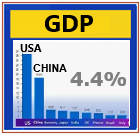
The Commerce Department said the U.S. economy grew at a 2.3% annualized pace in the fourth quarter of 2024, in a second estimate for gross domestic product that was unchanged from the initial figure.
Durable Goods Orders
Orders for long-lasting goods such as aircraft, appliances and computers unexpectedly jumped 3.1% in January, a potential sign of attempts to make big-ticket purchases ahead of an acceleration in tariffs. The Census Bureau reported that the increase in so-called durable goods followed a 1.8% decline in December that was revised from the previous estimate of a 2.2% decrease. The Dow Jones forecast was for a 2% increase. However, excluding transportation, which leaped 9.8% higher, orders essentially were flat. Orders rose 3.5% when excluding defense.
Pending Home Sales
Pending home sales drop to the lowest level on record in January 2025. High mortgage rates and elevated home prices combined to crush home sales in January. Pending sales, which are based on signed contracts for existing homes, dropped 4.6% from December to the lowest level since the National Association of Realtors began tracking this metric in 2001. Sales were down 5.2% from January 2024. These sales are an indicator of future closings. Mortgage rates were also higher in January. The average rate on the popular 30-year fixed loan spent the first half of December below 7% but then began rising. It was solidly above 7% for all of January, according to Mortgage News Daily.
Fed Balance Sheet
Level $6.853 T. Total Assets -W/W $-33.472 B. Reserve Bank Credit - W/W $-20.940 B.
Mortgage Rates
Mortgage rates fell for the sixth week in a row, offering some financial relief to prospective home buyers. The 30-year mortgage rate averaged 6.76% as of Feb. 27, the lowest rate in over two months, according to weekly data from Freddie Mac. Rates were down 9 basis points from the previous week, and down from 6.91% as of Jan. 2.
Core PCE
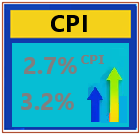
Fed’s favorite core inflation measure hits 2.6% in January, as expected. Excluding food and energy, the core PCE also rose 0.3% for the month and was at 2.6% annually. Fed officials more closely follow the core measure as a better indicator of longer-term trends. The 12-month core measure showed a step down from the upwardly revised 2.9% level in December. Headline inflation eased by 0.1 percentage point. The CPI for January showed an all-items inflation rate of 3% and 3.3% at the core.
Personal Income
Personal income posted rose 0.9% against expectations for a 0.4% increase. However, the higher incomes did not translate into spending, which decreased 0.2%, versus the forecast for a 0.1% gain. Personal income posted rose 0.9% against expectations for a 0.4% increase. However, the higher incomes did not translate into spending, which decreased 0.2%, versus the forecast for a 0.1% gain. On Friday, the Commerce Department reported that personal spending fell 0.2% in January, missing the Dow Jones estimate for a 0.1% increase. Adjusted for inflation, spending fell 0.5%. As a result, that shaved a full percentage point off the expected contribution to GDP, down to 1.3%, according to the GDPNow calculation.
Consumer Spending PCE
Inflation eased slightly in January as worries accelerated over President Donald Trump’s tariff plans, according to a Commerce Department report Friday.. However, the higher incomes did not translate into spending, which decreased 0.2%, versus the forecast for a 0.1% gain.
US Trade Balance - In Goods
U.S. trade deficit in goods hits another record high in January 2025. U.S. trade deficit in goods balloons to record high as businesses race to avoid tariffs. Deficit widens to $153 billion in January on 11.9% jump in imports, likely will weigh on Q1 GDP. The numbers: The U.S. trade deficit in goods exploded to a record high in January as businesses raced to acquire foreign goods ahead of new tariffs. The trade gap widened by 25.6% to a record $153.3 billion, according to the Commerce Department’s advanced estimate released Friday..
Wholesale Inventories Adv
mmmmmmrating.
Retail inventories Adv
mmmmmmrating.
Chicago PMI
Chicago PMI shows unexpected rise, signaling manufacturing sector expansion. The Chicago Purchasing Managers’ Index (PMI), a key indicator of the economic health of the manufacturing sector in the Chicago region, has posted an unexpected rise. The actual figure, released recently, stands at 45.5, significantly higher than the forecasted 40.5. This unexpected rise in the Chicago PMI not only surpassed the forecasted figure but also exceeded the previous reading of 39.5. This indicates a stronger than anticipated expansion in the manufacturing sector in the Chicago region..
S&P 500 Index - Week Performance
Open 2025 at 5,903.26 and close at 5,942.47. Positive 0.83%
Geopolitical Risk
German annual inflation came in at 2.8% in February, provisional data from statistics agency Destatis showed Friday. This was unchanged from January, but higher than the 2.7% reading forecast by economists surveyed by Reuters. German inflation had fallen below the 2% European Central Bank target in September last year, but has re-accelerated since then.
Trump announced Thursday on social media that 25% duties on Mexico and Canada will take effect on March 4, the same day that China will face an additional 10% charge.
|