10-Year Treasury Yield
U.S. Treasury yields dropped on Friday as investors assessed the state of the economy after a slew of reports this week. The 10-year Treasury yield was more than 4.5 basis points lower at 4.478%, while the 2-year Treasury yield was more than 5 basis points down at 4.263%.
Earnings - MCD
McDonald’s revenue disappoints, as U.S. sales see worst drop since pandemic.McDonald’s quarterly earnings met expectations, but its revenue fell short of Wall Street’s estimates. The burger chain’s U.S. same-store sales declined as customers spent less at its restaurants. Both of McDonald’s international divisions reported same-store sales growth. Here’s what the company reported compared with what Wall Street was expecting, based on a survey of analysts by LSEG: Earnings per share: $2.83 adjusted, meeting expectations. Revenue: $6.39 billion vs. $6.44 billion expected.
US Dollar Index
The US Dollar Index, which tracks the US Dollar's performance against six major currencies, remains stable after losses in the previous session. At the time of writing, the DXY hovers around 107.00, while yields on 2-year and 10-year US Treasury bonds stand at 4.31% and 4.53%, respectively.
Crypto World
U.S. government prioritizes creating a framework for stablecoins, not Strategic Bitcoin reserve. The increased public interest in bitcoin, sparked by rumors in Q3 2023 that investment giant Blackrock contemplated launching a bitcoin exchange-traded fund (ETF), persisted throughout 2024. During this time, bitcoin’s performance versus other assets in U.S. dollars was phenomenal, further fueling interest. Although founded on groundbreaking software, bitcoin’s growing popularity seemingly revolves around its U.S. dollar price rather than the underlying technology’s capabilities.
MBA Mortgage Applications
Mortgage Applications Increase in Latest MBA Weekly Survey.Mortgage rates moved slightly lower last week, which led to the pace of refinance applications reaching its strongest week since October 2024. The refinance share of mortgage activity increased to 40.2 percent of total applications from 39.0 percent the previous week. The adjustable-rate mortgage (ARM) share of activity increased to 6.0 percent of total applications. The Market Composite Index, a measure of mortgage loan application volume, increased 2.3 percent on a seasonally adjusted basis from one week earlier. On an unadjusted basis, the Index increased 6 percent compared with the previous week. The Refinance Index increased 10 percent from the previous week and was 33 percent higher than the same week one year ago. The seasonally adjusted Purchase Index decreased 2 percent from one week earlier. The unadjusted Purchase Index increased 4 percent compared with the previous week and was 2 percent higher than the same week one year ago.
Consumer Price Index CPI
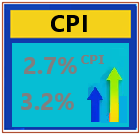
Consumer prices rise 0.5% in January, higher than expected as annual rate rises to 3%. The CPI accelerated a seasonally adjusted 0.5% for the month, putting the annual inflation rate at 3%, both higher than expected. The core CPI ran at 0.4% and 3.3% respectively, also above forecast. Shelter costs continued to be a problem for inflation, rising 0.4% on the month. Food prices jumped 0.4% and energy prices climbed 1.1% as gasoline prices increased 1.8%. Markets largely expect the Fed to stay on hold for an extended time and pushed the next rate cut probability out to September following the CPI report. Inflation perked up more than anticipated in January, providing further incentive for the Federal Reserve to hold the line on interest rates.The consumer price index, a broad measure of costs in goods and services across the U.S. economy, accelerated a seasonally adjusted 0.5% for the month, putting the annual inflation rate at 3%, the Bureau of Labor Statistics reported Wednesday. They were higher than the respective Dow Jones estimates for 0.3% and 2.9%. The annual rate was 0.1 percentage point higher than December.
Commodities - Oil
Oil prices are up this week. Factors include Iran curbs and Trump tariffs. Crude Tests Key Support Zone as Demand Uncertainty Looms. Oil prices face volatility as supply risks battle rising U.S. stockpiles—will demand recovery prevent a deeper decline. WTI crude tests key support at $70.80; a sustained break below $69.55 could push prices toward $64.78 in the near term.
Treasury Budget
US Treasury reports record $711 billion budget deficit for first months of 2025. The U.S. government posted an $87 billion budget deficit in December, reduced partly by a shift of benefit payments into November but capping a record $711 billion deficit for the first three months of the 2025 fiscal year, the U.S. Treasury Department said on Tuesday. The Treasury, releasing its final budget report before President-elect Donald Trump takes office next week, said that the $711 billion October-December deficit was $201 billion, or 39% higher, than the $510 billion deficit in the same period a year earlier as outlays grew sharply and revenues declined slightly. For December, the $87 billion deficit was reduced by $51 billion by the calendar benefit shift, and compared to a $129 billion deficit in December 2023. Receipts for the month were up 6% to $454 billion, while outlays as reported were down 3% to $541 billion..
Hedging Gold
Gold has been on an impressive run toward the $3,000-an-ounce milestone, with a years-long buying spree by central banks and economic uncertainty tied to President Donald Trump’s policies leading the metal to outperform other asset classes so far this year. Gold-mining stocks, meanwhile, have started to play catch up this year after lagging behind the metal’s climb in 2024.As gold nears $3,000, here’s how its surge compares to bitcoin and the stock market Year to date, gold prices at record highs are outperforming S&P 500 and bitcoin.
Jobless Claims
In other economic news Thursday, the Labor Department reported that initial filings for unemployment claims changed little for the week ended Feb. 8. Claims totaled 213,000, a decrease of 7,000 from the prior period and close to the 215,000 estimate. Continuing claims, which run a week behind, fell to 1.85 million, down 36,000.
PPI Index
The monthly reading of the U.S. producer price index for January came in slightly hotter than forecast. But some components in the PPI dropped in cost, which could lead to a soft personal consumption expenditure prices index report. The U.S. producer price index in January increased by 3.5% for the year, the Bureau of Labor Statistics reported Thursday. For the month, wholesale prices rose 0.4%, higher than the Dow Jones estimate for 0.3%. Despite the higher-than-expected reading. Producer prices report points to softer Fed inflation measure than feared.The producer price index increased by a seasonally adjusted 0.4% on the month, compared with the Dow Jones estimate for 0.3%..
Stock market futures moved slightly higher following the release while Treasury yields fell. Wall Street strategists cited details of the report that suggested a slightly more benign inflation picture.
Fed Balance Sheet
Level $6.853 T. Total Assets -W/W $-33.472 B. Reserve Bank Credit - W/W $-20.940 B.
Mortgage Rates
The average contract interest rate for 30-year fixed-rate mortgages with conforming loan balances ($766,550 or less) decreased to 6.95 percent from 6.97 percent, with points remained unchanged at 0.64 (including the origination fee) for 80 percent loan-to-value ratio (LTV) loans. The effective rate decreased from last week.
Retail Sales
Retail sales slumped 0.9% in January 2025, down much more than expected. Retail sales slipped 0.9% for the month from an upwardly revised 0.7% gain in December, worse than the Dow Jones estimate for a 0.2% decline. Excluding autos, prices fell 0.4%, also well off the consensus forecast for a 0.3% increase, while the “control” sales group slid 0.8%. Consumers sharply curtailed their spending in January, indicating a potential weakening in economic growth ahead, according to a Commerce Department report Friday.Retail sales slipped 0.9% for the month from an upwardly revised 0.7% gain in December, even worse than the Dow Jones estimate for a 0.2% decline. The sales totals are adjusted for seasonality but not inflation for a month, in which prices rose 0.5%.
Import and Export
Prices
Import prices accelerated 0.3% in January, in line with expectations for the largest one-month move since April 2024. U.S. import prices hadn’t risen this sharply in nine months. the Bureau of Labor Statistics reported that import prices accelerated 0.3% in January, in line with expectations for the largest one-month move since April 2024. On a year-over-year basis, import prices increased 1.9%. Fuel prices increased 3.2% on the month, also the biggest gain since April 2024. Food, feeds and beverage costs rose 0.2% following a 3% surge in December. Export prices also increased, rising 1.3%.
Industrial Production
US industrial production better than expected in January 2025.US industrial production came in better than expected last month, the Federal Reserve said Friday, as aircraft manufacturing continued to rebound following a strike at aviation giant Boeing. ndustrial output increased by 0.5 percent in January after rising by a revised 1.0 percent a month earlier, the Fed said in a statement. nThis was above market expectations for a 0.3 percent rise in January 2025. A seven-week-long walkout at Boeing ended in November, after workers voted to accept a pay rise and one-off bonus tabled by the engineering giant
Business inventories
US business inventories post first drop in nine months. Bearish for USD. U.S. business inventories fell for the first time in nine months in December as strong domestic demand depleted stocks at retailers and wholesalers. Inventories dropped 0.2%, the first decline since March, after gaining 0.1% in November, the Commerce Department's Census Bureau said on Friday. Economists polled by Reuters had forecast inventories, a key component of gross domestic product, being unchanged. Inventories increased 2.0% on a year-on-year basis in December. Inventories are the most volatile component of GDP. Private inventory investment was a big drag on GDP in the fourth quarter, restricting economic growth to a 2.3% annualized rate. The economy grew at a 3.1% pace in the July-September quarter. With decreases by wholesale and retail inventories more than offsetting an increase by manufacturing inventories, the Commerce Department released a report on Friday showing U.S. business inventories unexpectedly edged lower in the month of December. This unexpected decline indicates a decrease in the worth of unsold goods, suggesting a potential dip in consumer demand. Such a development is typically considered bearish for the US dollar, as it could point to a slower economic growth. The Business Inventories data is considered of medium importance in economic analysis, with a two-star rating.
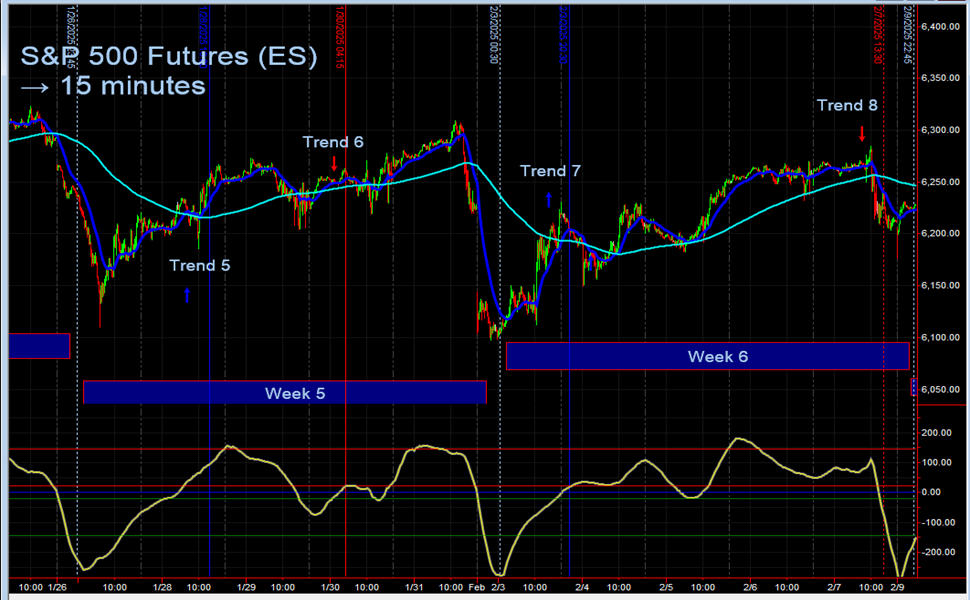
S&P 500 Index - Week Performance
Open 2025 at 5,903.26 and close at 5,942.47. Positive 0.83%
Geopolitical Risk
Talks to end the war with Russia are set to begin — but Ukraine could pay a high price for peace
U.S. President Donald Trump signing an executive order for reciprocal tariffs, he held off from hitting countries with levies immediately. U.S. President Donald Trump on Thursday signed a presidential memorandum laying out his plan to impose “reciprocal tariffs” on foreign nations. Under the plan, the U.S. will treat other countries’ non-tariff policies, such as value-added taxes, as unfair trade practices that warrant tariffs in response, Trump said. The reciprocal tariffs will only take effect after the White House studies the appropriate tariff levels for each affected country.
|