10-Year Treasury Yield
The benchmark 10-year Treasury yield was down more than 4 basis points at 4.163%. The 2-year Treasury yield also pulled back more than 2 basis points to 3.588%. The 30-year Treasury rate fell more than 3 basis points to 4.857%. One basis point equals 0.01% and yields and prices move in opposite directions.On Wednesday, the 30-year yield briefly topped 5% before pulling back on weaker jobs data later in the day.
US Dollar Index
The U.S. dollar will weaken over coming months as market participants ponder the Federal Reserve's future independence and how many more rate cuts it may deliver, a Reuters survey of foreign exchange strategists showed on Wednesday. The greenback, down nearly 10% against a basket of major currencies this year, has been the worst performer among them. (.DXY), opens new tab The short-dollar trade has dominated FX markets since late March, according to Commodity Futures Trading Commission data.
PMI Mfg Final
Data from S&P Global published Tuesday morning, however, painted a more positive picture of the sector, with the firm's US manufacturing PMI showing the strongest monthly increase since May 2022. S&P Global's US manufacturing PMI came in at 53, above the 49.8 seen in July 2025. This report also showed, however, that tariffs continue to act as a headwind for manufacturing.
ISM Mfg Index
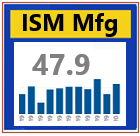
ISM Data out Tuesday from the Institute for Supply Management showed the ISM's manufacturing PMI came in at 48.7 last month, Aug 2025, an increase from the reading of 48 seen in July but below estimates for a reading of 48.9, according to Bloomberg data. Readings of less than 50 on the index indicate a contraction in activity in the sector. This marked the sixth straight month of contraction in the US manufacturing sector, according to the ISM's reading.
Construction Spending
U.S. construction spending fell in July 2025 as high mortgage rates continued to constrain the housing market. The Commerce Department's Census Bureau said on Tuesday that construction spending slipped 0.1% after an unrevised 0.4% drop in June. The decline was in line with economists' expectations. Spending dropped 2.8% on a year-over-year basis in July. High mortgage rates have undercut the housing market. Though mortgage rates have eased from this year's lofty levels on expectations that the Federal Reserve would resume cutting interest rates in September, they remain elevated. A slowing labor market is also becoming a constraint for home sales.
Crypto World Bitcoin
Bitcoin price faces pressure as investors shift to bonds and gold, and risk aversion raises the chance of BTC falling to $108,000. Bitcoin failed to hold onto its bullish momentum on Thursday as traders fled toward the safety of government bonds after weaker-than-expected United States labor market data.
MBA Mortage Applicatiosn
Mortgage applications decreased 1.2% from one week earlier, according to data from the Mortgage Bankers Association’s (MBA) Weekly Mortgage Applications Survey for the week ending Aug. 29.The Market Composite Index, a measure of mortgage loan application volume, decreased 1.2% on a seasonally adjusted basis from one week earlier. On an unadjusted basis, the Index decreased 3% compared with the previous week.
Factory Orders
The U.S. economy continues to demonstrate resilience as the latest data on Factory Orders reveals a decline that is in line with expectations. The actual number came in at -1.3%. New orders for U.S.-manufactured goods fell in July, pulled down by weakness in commercial aircraft bookings, but businesses appeared to have maintained a strong pace of spending on equipment early in the third quarter. Factory orders decreased 1.3% after an unrevised 4.8% drop in June
JOLTS
Job openings declined to 7.181M in July from 7.357M in the prior month (revised from 7.437M), according to data released by the U.S. Bureau of Labor Statistics on Wednesday. The most recent month's number missed the 7.375M consensus, signaling that labor demand continues to weaken.The job openings rate of 4.3% slipped from 4.4% from June and 4.5% in July 2024. The quits rate, at 2.0%, was unchanged from the previous month and compared with 2.1% in last year's July.
EIA Crude Oil Report
Oil prices eased about 1% to a two-week low on Thursday on negative economic news from the U.S. and expectations OPEC producers would increase output targets at a meeting this weekend. That small price decline came ahead of the release of U.S. oil inventory data that could show a surprise build in crude inventories.
Beige Book
U.S. economic activity and employment were mostly little changed or unchanged in recent weeks while prices rose moderately or modestly, the Federal Reserve said on Wednesday, a mixed report that highlighted the impact of tariffs and other Trump administration policies on households and businesses as the central bank weighs a cut in interest rates this month. Fed’s Beige Book Shows Little or No Growth Across Most of US.
Hedging Gold
Gold could rally to almost $5,000 an ounce if the Federal Reserve’s independence were damaged and investors shifted just a small portion of holdings from Treasuries into bullion, Goldman Sachs Group Inc. said.
ADP Employment Report
Labor market growth slows dramatically in August with U.S. adding just 54,000 jobs, ADP says. U.S. private sector hiring rose less than expected in August and significantly cooled from the prior month, according to the ADP. Private payrolls increased by just 54,000 in August, well short of the 75,000 estimate from economists polled by Dow Jones and down from the revised gain of 106,000 jobs added in July. Thursday’s release adds to an already concerning picture of the labor market.
Jobless Initial Claims
The number of Americans filing new applications for unemployment benefits increased more than expected last week, while hiring by private employers slowed in August, offering further evidence that labor market conditions were softening.
US Trade Balance
Trade deficit widens 32.5% to $78.3 billion in July 2025. The U.S. trade deficit, the gap between its imports and exports, was $73.8 billion in July 2025, up from June's revised deficit of $59.1 billion, as a significant increase in goods imports outpaced exports. The overall deficit widened by 32.5% from the previous month, driven primarily by a substantial increase in the goods deficit to $103.9 billion. The United States has maintained a consistent trade deficit, particularly in goods, for decades, although it typically runs a surplus in services.
Productivity and Costs
U.S. worker productivity grew faster than initially thought in the second quarter, curbing the rise in labor costs. Nonfarm productivity, which measures hourly output per worker, increased at a 3.3% annualized rate last quarter, the Labor Department's Bureau of Labor Statistics said on Thursday.That figure was revised up from the previously reported 2.4% pace of increase. Economists polled by Reuters had forecast productivity growth would be upgraded to a 2.7% rate. Unit labor costs - the price of labor per single unit of output - increased at a 1.0% rate last quarter. They were revised down from the previously reported 1.6% growth pace. Labor costs increased at a 2.5% rate from a year ago, down from the previously reported 2.6% pace.
PMI Services Final
The August U.S. Services Purchasing Managers' Index (PMI) from S&P Global came in at 54.5, below the 55.4 forecast. The reading marks the 31st consecutive month of expansion and the second strongest growth of 2025 so far. S&P Global Services PMI: Growth Remains Positive in August
ISM Services Index
The U.S. ISM Services PMI climbed 1.9 pts to 52.0 in August. That was better than expected and marked the highest level since February, suggesting resilience in the still-expanding services sector despite some headwinds. The new orders gauge jumped nicely to the highest level since October 2024 on sturdy demand, while business activity continued to expand. Meanwhile, after faltering below the 50-mark in July, the imports index jumped to the highest level since the start of 2024. However, that's where the good news ends, with the rest of the details rather lacklustre.
Fed Balance Sheet
The Fed's balance sheet is continuing to decrease through quantitative tightening, with total assets at approximately $6.6 trillion as of September 4, 2025, down from a peak of $9 trillion in 2022
Mortgage Rates
On Thursday, September 4, 2025, the average contract interest rate for a 30-year fixed-rate mortgage was 6.57% according to Bankrate. Rates change constantly, however, and can vary based on the lender, loan details, and other market factors.
Non Farm Payroll
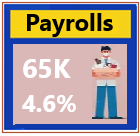
Non Farm Payrolls rose 22,000 in August, less than expected in further sign of hiring slowdown. Nonfarm payrolls increased by just 22,000 for the month, lower than the 75,000 forecast, while the unemployment rate rose to 4.3%. The report showed a marked slowdown from the July increase of 79,000, which was revised up by 6,000. Revisions also showed a net loss of 13,000 in June. Health care again led by sectors, adding 31,000 jobs, while social assistance contributed 16,000. Wholesale trade and manufacturing both saw declines of 12,000 on the month.
Unemployment Rate
US economy adds 22,000 jobs, unemployment rate hits 4.3% in August 2025 as labor market continues dramatic slowdown. The unemployment rate rose to 4.3% last month.These revised figures now suggest that over the past three months, the US economy has created fewer than 30,000 new jobs, on average.
|