10-Year Treasury Yield
U.S. Treasury yields declined on Monday as investors awaited key economic data set to be published this week which could provide hints about the outlook for interest rates and the state of the economy. At 9:29 a.m. ET, the yield on the 10-year Treasury was less than 1 basis points lower to 4.258%. The 2-year Treasury yield was last up nearly 2 basis points at 4.705%.
New Home Sales
mmmmm
Gold
mmmm
Geopoliitcal Risks
mmmmmm
Money Supply
mmmm
MBA Purchase Applications
nnnn
PMI Composite Flash
nnnn
Jobless Claims
Initial jobless claims totaled 215,000 for the week ended Feb. 24, up 13,000 from the previous period and more than the 210,000 estimate.Initial jobless claims totaled 215,000 for the week ended Feb. 24, up 13,000 from the previous period and more than the 210,000 Dow Jones estimate but still largely in keeping with recent trends. However, continuing claims, which run a week behind, rose to just above 1.9 million, a gain of 45,000 and higher than the FactSet estimate for 1.88 million.
Durable Goods Orders
US durable goods orders slump; business investment on equipment appears soft. Durable goods orders fall 6.1% in January. Core capital goods orders rise 0.1%. Orders for long-lasting U.S. manufactured goods fell by the most in nearly four years in January, while business investment on equipment appeared to have eased, signs that the economy lost momentum at the start of the year.
GDP
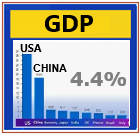
According to revised gross domestic product numbers released Wednesday, The U.S. economy grew at a slightly slower pace in the fourth quarter of 20234 than previously reported. GDP rose at a 3.2% annualized rate adjusted for seasonality and inflation, 0.1 percentage point lower than the initial estimate. The downward revision came primarily due to smaller than expected private inventory investment, which offset upward revisions in local government and consumer spending.
Intal Trade Goods
nnnn
Retail Inventories (Adv)
nnn
Wholesale -
nnn
CFNAI -
mmmm
Mortgage Rates
mmm
Consumer Sentiment UM
The final reading on February consumer sentiment came in slightly below expectations as inflation expectations inched up. The University of Michigan’s sentiment index came in at 76.9, below a Dow Jones estimate of 79.6. It’s also below the January reading of 79. Consumer sentiment moved sideways this month, slipping just two index points below January and holding the gains in sentiment seen over the past three months. Year-ahead inflation inched up from 2.9 in January to 3.0% in February. For the second straight month, short-run inflation expectations have fallen within the 2.3-3.0% range seen in 2018 and 2019.
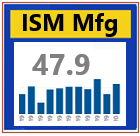
ISM Manufacturing Index
ISM manufacturing gauge shows contraction worsened in February. U.S. manufacturing activity pulled back more than expected in February on a decline in new orders, production and employment readings, the Institute for Supply Management reported Friday.,The ISM manufacturing index slipped to 47.8 for the month, down 1.3 points from January and below the 49.5 estimate from Dow Jones. As the index measures the percentage level of business reporting expansion, anything below 50 represents contraction for the sector, though readings above 42.5 are consistent with broader economic growth.
Personal Income
mmmmm
Consumer Spending
Consumer spending is the main engine of the U.S. economy. Households have kept spending at a relatively strong pace despite higher interest rates for houses, cars and other big-ticket items.Consumer spending in the U.S. got off to a slow start in the new year, perhaps a hangover from a big holiday shopping season. Household outlays rose a scant 0.2% last month, the government said Thursday. It was the smallest increase in three months. Economists polled by The Wall Street Journal had forecast a 0.2% advance. Incomes jumped 1.0% in January, aided by higher dividend payments and the annual cost-of-living adjustment in Social Security.
Core PCE
The personal consumption expenditures price index excluding food and energy costs increased 0.4% for the month and 2.8% from a year ago, as expected. The personal consumption expenditures price index excluding food and energy costs increased 0.4% for the month and 2.8% from a year ago, as expected according to the Dow Jones consensus estimates. The monthly gain was just 0.1% in December and 2.9% from the year prior.
Core PCE
U.S. prices picked up in January, but the annual increase in inflation was the smallest in nearly three years, keeping a June interest rate cut from the Federal Reserve on the table.Personal income rose 1%, well above the forecast for 0.3%. Spending decreased 0.1% versus the estimate for a 0.2% gain.
Core PCE
Headline PCE, including the volatile food and energy categories, increased 0.3% monthly and 2.4% on a 12-month basis, also in-line. Headline PCE, including the volatile food and energy categories, increased 0.3% monthly and 2.4% on a 12-month basis, compared with respective estimates for 0.3% and 2.4%, according to the numbers released Thursday by the Commerce Department’s Bureau of Economic Analysis. The respective December numbers were 0.1% and 2.6%.
|