10-Year Treasury Yield
mmmmm
PMI Mfg Final Index
US November fial S&P Global manufacturing PMI 49.7 vs 48.8 prelim. US manufacturing survey from S&P Global. The US manufacturing PMI - calculated by S&P Global - rose to 49.7 in November from 48.5 the previous month, and thus fell slightly below the 50 threshold which marks the boundary between expansion and contraction in the sector's activity. S&P Global points out that a sharp slowdown in the decline in new orders played a central role in this near-stabilization of manufacturing activity, with manufacturers pointing to improved domestic demand following the presidential election. Although production fell again last month, manufacturers' production outlook for the coming year has improved significantly, with companies in the sector hoping for favorable measures from the future administration.
ISM Manufacturing
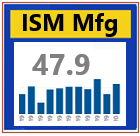
US manufacturing PMI rises to 48.4 in November: ISM. The Institute for Supply Management (ISM) reported manufacturing activity to have shrunk by less than forecasted for November. ISM's manufacturing purchasing managers' index (PMI) rose to 48.4 in November, above expectations and up by 1.9 from October's 46.5 reading.
JOLTS
JOLTS job openings for October 20244 at 7.744M vs 7.475M expected. JOLTs Job Openings increased from 7.372 million to 7.744 million. Job Quits increased from 3.098 million to 3.326 million. The report showed that labor market remained in decent shape. On December 3, 2024, U.S. released JOLTs Job Openings report for October. The report indicated that JOLTs Job Openings increased from 7.372 million (revised from 7.443 million) in September to 7.744 million in October, compared to analyst consensus of 7.48 million.
Geopolitical Risk
mmmm
MBA Purchase Applications
mmm
ADP Employment Report
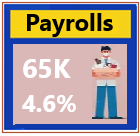
US private payrolls gain slightly below expectations in November 2024. U.S. private payrolls increased at a moderate pace in November, the ADP National Employment Report showed on Wednesday. Private payrolls rose by 146,000 jobs last month after advancing by a downwardly revised 184,000 in October. Wednesday's ADP employment report, the first major read on monthly hiring, showed that private-sector employers added 146,000 jobs in November, below 165,000 estimates, according to Econoday. S&P 500 futures remained slightly higher after the report. ADP's October job gain was revised sharply down to 184,000 from the initially reported 233,000. The three-month trend, which includes September's 159,000 gain, still points to modest improvement after a couple of soft summer months.
ISM Services Index
Economic activity in the services sector expanded for the fifth consecutive month in November 2024. The report was issued today by Steve Miller, CPSM, CSCP, Chair of the Institute for Supply Management® (ISM®) Services Business Survey Committee: "In November, the Services PMI® registered 52.1 percent, 3.9 percentage points lower than October's figure of 56 percent. The reading in November marked the ninth time the composite index has been in expansion territory this year. The Business Activity Index registered 53.7 percent in November, 3.5 percentage points lower than the 57.2 percent recorded in October, indicating a fifth month of expansion after a contraction in June. The New Orders Index also recorded a reading of 53.7 percent in November, 3.7 percentage points lower than October's figure of 57.4 percent. The Employment Index landed in expansion territory for the fourth time in five months; the reading of 51.5 percent is a 1.5-percentage point decrease compared to the 53 percent recorded in October.
Factory Orders
New orders for U.S.-manufactured goods rebounded marginally in October while business spending on equipment appeared to have softened early in the fourth quarter. Factory orders increased 0.2% after a revised 0.2% fall in September, the Commerce Department's Census Bureau said on Wednesday. Economists polled by Reuters had forecast factory orders would rebound 0.2% after a previously reported 0.5% decline in September. Factory orders rose 0.4% on a year-on-year basis in October. The government also reported that orders for non-defense capital goods excluding aircraft, which are seen as a measure of business spending plans on equipment, fell 0.2% in October, as initially reported. Shipments of core capital goods increased 0.3% instead of rising 0.2%, as estimated last month.
PMI Service Final
US Composite PMI Revised Lower: S&P Global. The reading indicates a strong monthly rise in overall output, driven primarily by the services sector (PMI at 56.1), while manufacturing output ...The S&P Global US Composite PMI Output Index climbed to 54.9 in November, a 31-month high, up from 54.1 in October but below the preliminary estimate of 55.3. The reading indicates a strong monthly rise in overall output, driven primarily by the services sector (PMI at 56.1), while manufacturing output continued to decline (PMI at 49.7). However, there were signs of demand stabilizing in manufacturing. The combination of robust growth in services and improving demand lifted overall new orders to their highest level in two and a half years. Meanwhile, output prices increased at their slowest rate in four and a half years. source: S&P Global
Beige Book
Fed Beige Book Shows Businesses Confident in Demand Prospects. Economic growth expectations ‘rose moderately’ in most areas. Fed notes further increase in price sensitivity by consumers. Fed's Beige Book says economy is stable. Firms more optimistic about 2025, but tariffs a worry. Inflation still a nagging problem for businesses The U.S. expanded steadily in November, but hiring was subdued and inflation was still a nagging problem in some parts of the economy, a new Federal Reserve survey found. The Federal Reserve's so-called Beige Book reported moderate U.S. growth by and large, with businesses more hopeful that demand will pick up "in coming months." Businesses expressed some worry about new tariffs under the incoming Trump administration and they said consumers had become more resistant to price increase, forcing businesses to accept lower profits.
Jobless Claims
mmmmm
US Trade Balance
mmmm
Oil - Commodity
mmmm
Fed Balance Sheet
mmmm
Mortgage Rates
US mortgage rates dropped to the lowest level since mid-October and spurred a financing flurry for home purchases during the week that included the Thanksgiving holiday. The contract rate on a 30-year mortgage decreased 17 basis points, the biggest weekly slide since August, to 6.69% in the week ended Nov. 29, according to Mortgage Bankers Association data released Wednesday.
Non-Farm Payroll
Payrolls increased 227,000 in November, more than expected; unemployment rate at 4.2%. Nonfarm payrolls rose by 227,000 for the month, compared with an upwardly revised 36,000 in October and the Dow Jones consensus estimate for 214,000. Nonfarm payrolls increased by 227,000 for the month, compared with an upwardly revised 36,000 in October and the Dow Jones consensus estimate for 214,000. September’s payroll count also was revised upward, to 255,000, up 32,000 from the prior estimate. October’s number was held back by impacts from Hurricane Milton and the Boeing strike.
Unemployment Rate
The unemployment rate edged higher to 4.2%, as expected. The unemployment rate edged higher to 4.2%, as expected. The jobless figure rose as the labor force participation rate nudged lower and the labor force itself declined. A broader measure that includes discouraged workers and those holding part-time jobs for economic reasons moved slightly higher to 7.8%. The data likely gives the Federal Reserve a green light to lower interest rates later this month. Worker pay continued to rise, with average hourly earnings up 0.4% from a month ago and 4% on a 12-month basis. Both numbers were 0.1 percentage point above expectations.
Cosnumer Sentiment
mmmmmm
Hedging - Gold
mmmm
S&P 500 Index - Week Performance
mmm |