Veteran's Day Veterans Day is on Monday, Nov. 11. The U.S. holiday was originally called Armistice Day, because it commemorated the date and time — Nov. 11, 1918, at 11 a.m. — of the signing of the cease-fire that ended World War I. In 1919, on the first anniversary of the armistice, President Woodrow Wilson said the day “will be filled with solemn pride in the heroism of those who died in the country’s service.” According to the U.S. Department of Veterans Affairs, it was to be “a day observed with parades and public meetings and a brief suspension of business beginning at 11 a.m.”
10-Year Treasury Yield
The benchmark 10-year Treasury note yield broke above 4.4% last week before closing Friday at 4.306%. The 2-year note yield edged above 4.3% before closing at 4.25%. Those moves came after Donald Trump secured a second presidential term. This week, investors are awaiting the latest inflation reading due on Wednesday as well as the consumer and producer prices data for October set to be published later this week. The consumer data will provide insights about the health of the U.S. economy.
Treasury Budget - Treasury
U.S. October budget deficit jumps to $257 billion, handing hole to Trump. The U.S. budget deficit jumped nearly four-fold to $257 billion in October, a figure inflated by one-off factors, the Treasury Department said on Wednesday in a report that started off a new fiscal year with a big hole to be turned over to President-elect Donald Trump in January. The Treasury said the October deficit was up 287% from the $67 billion deficit in October 2023, but calendar adjustments in benefit payments had cut that month's deficit nearly in half. The budget results for October, the first month of the 2025 fiscal year, come after President Joe Biden's administration turned in a full-year fiscal 2024 deficit of $1.83 trillion, the largest outside the COVID-19 era. Trump presided over the biggest-ever U.S. budget deficit of $3.1 trillion in fiscal 2020, the result of massive COVID relief spending coupled with a massive halt to economic activity that collapsed federal revenues.
Geopolitical Risk
Japanese Prime Minister Shigeru Ishiba was re-elected in a parliamentary run-off vote on Monday after the ruling coalition lost a majority in the Lower House general election about two weeks ago as many voters, weary of high costs, punished Ishiba’s conservative Liberal Democratic Party for its widespread political funding scandal. Ishiba continues to face the challenge of running a minority government in a hung parliament.
MBA Purchase Applications
Mortgage application volume edged up 0.5% on an adjusted basis during the week ended November 8, as the average rate for a 30-year, fixed-rate mortgage increased to 6.86%, up from 6.81% the previous week, according to the Mortgage Bankers Association’s (MBA) Weekly Applications Survey. Applications for refinances decreased 2% compared with the previous week but were up 43% compared with the same week one year ago. Applications for purchases increased 2% from one week earlier and were up 1% compared with the same week one year ago.
CPI Consumer Price Index
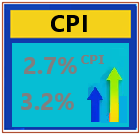
Annual inflation rate hit 2.6% in October, meeting expectations. The consumer price index increased 0.2% in October, taking the 12-month inflation rate up to 2.6%. Both numbers were in line with expectations. The core CPI accelerated 0.3% for the month and was at 3.3% annually, also meeting forecasts. Despite signs of inflation moderating elsewhere, shelter prices continued to be a major contributor to the CPI move. Inflation-adjusted average hourly earnings for workers increased 0.1% for the month and 1.4% from a year ago.
Oil - Commodity
Oil prices settled down more than 2% on Friday as investors fretted about weaker Chinese demand and a potential slowing in the pace of U.S. Federal Reserve interest rate cuts. Brent crude futures settled down $1.52, or 2.09%, to $71.04 a barrel. U.S. West Texas Intermediate crude futures (WTI) settled down $1.68, or 2.45%, at $67.02. For the week, Brent fell around 4%, while WTI declined around 5%. China's oil refiners in October processed 4.6% less crude than a year earlier because of plant closures and reduced operating rates at smaller independent refiners, data from the National Bureau of Statistics showed on Friday.
Jobless Claims
Initial claims for state unemployment benefits dropped 4,000 to a seasonally adjusted 217,000 for the week ended Nov. 9, the Labor Department said in another report.. The number of people receiving benefits after an initial week of aid, a proxy for hiring, fell 11,000 to a seasonally adjusted 1.873 million during the week ending Nov. 2, the claims report showed. The decline in the so-called continuing claims mostly reflected the waning disruptions from the hurricanes. Combined with a drop in first-time applications for unemployment benefits to a six-month low last week, which suggested the abrupt slowdown in job growth in October was an aberration, and tariffs on imported goods expected to be unveiled by President-elect Donald Trump's incoming administration, economists said the Fed was likely to opt for fewer rate cuts in 2025 than the four it projected in September.
PPI-Producer Price Index
In the 12 months through October, the PPI increased 2.4% after advancing 1.9% in September. Services prices rose 0.3% after gaining 0.2% in September. A 3.6% surge in portfolio management fees amid a stock market rally accounted for more than a third of the rise in services costs. Airline fares jumped 3.2% after rising 1.1% in the prior month. Hotel and motel room prices fell 0.5%. The producer price index for final demand rose 0.2% last month after an upwardly revised 0.1% gain in September, the Labor Department's Bureau of Labor Statistics said. The increase in the PPI was in line with economists' expectations. The PPI was previously reported to have been unchanged in September. Rising US producer prices add to signs of fading disinflation. U.S. producer prices picked up in October, lifted by higher costs for services like portfolio management and airline fares, another sign that progress towards lower inflation was stalling. The report from the Labor Department on Thursday followed on the heels of news on Wednesday that consumer inflation had barely budged last month, leaving economists to expect firmer readings in the personal consumption expenditures price indexes in October. The U.S. central bank tracks the PCE price measures for its 2% inflation target.
Fed Balance Sheet
As of November 14, the Fed’s Total Assets stand at $-27.191B. The Fed’s dual mandate requires it to ensure both stable prices and maximum employment. The traditional tool the Fed uses to accomplish these goals is the adjustment of the federal funds rate, the short-term interest rate that determines how much it costs for banks to lend to each other overnight. The 2007-2008 financial crisis, however, demonstrated that even lowering the interest rate to zero was considered insufficient to shore up economies in freefall, and the Fed turned to more unusual tactics. One of these measures was what the Fed refers to as “large-scale asset purchases,” which is more commonly known as “quantitative easing.” Under this process, the Fed enters the market to buy securities, typically mortgage-backed securities (MBS) and Treasuries, injecting both capital and liquidity into the market. This approach is not without risks – for the first time in its history, the Fed is regulator, supervisor, and now participant in the economy. The development of quantitative easing as a go-to tool for the Fed in times of crisis has led to an unprecedented focus on one of its traditionally unremarkable aspects – the Fed total assets. Just as with any other firm, securities that the Fed purchases are considered assets and therefore are represented on the Fed’s balance sheet. This therefore is the most reflective guide of the state of quantitative easing and, by extension, the degree to which the Fed has deemed it necessary to intervene in the economy. Each week, the Federal Reserve publishes its balance sheet, typically on Wednesday afternoon around 4:30 p.m.
Mortgage Rates
Mortgage rates continued to increase last week, driven by higher Treasury yields as financial markets digested the likely impacts of a Trump presidency. The Federal Reserve’s 25-basis-point rate cut was already anticipated and did little to move the markets. The 30-year fixed rate was at 6.86 percent last week, its highest since July 2024. However, despite the increase in rates, applications increased for the first time in seven weeks.
Import and Exports Prices
U.S. import prices increased 0.3 percent in October following a 0.4-percent decline in September, the U.S. Bureau of Labor Statistics reported today. Higher nonfuel and fuel prices contributed to the October advance. The price index for U.S. exports rose 0.8 percent in October, after decreasing 0.6 percent the previous month. Prices for U.S. imports rose 0.3 percent in October, the largest 1-month advance since a 0.9-percent increase in April 2024.
Retail Sales
Partly reflecting a jump in sales by motor vehicle and parts dealers, the Commerce Department released a report on Friday showing retail sales in the U.S. increased by slightly more than expected in the month of October. The Commerce Department said retail sales rose by 0.4 percent in October after growing by an upwardly revised 0.8 percent in September. Economists had expected retail sales to climb by 0.3 percent compared to the 0.4 percent increase originally reported for the previous month.
Industrial Production
US industrial production sags in October amid continued drag from Boeing strike, hurricanes. U.S. industrial production fell for a second straight month in October, continuing to be depressed by hurricanes and a strike by factory workers at Boeing (BA.N), opens new tab, but a rebound is likely in November as the drag from these factors lifts. Industrial output dropped 0.3% last month after a downwardly revised 0.5% decline in September, the Federal Reserve said on Friday. Economists polled by Reuters had forecast industrial production falling 0.3% after a previously reported 0.3% decrease in September.
Empire State Mfg index
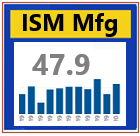
Empire state manufacturing survey shows steady growth in New York businesses. The Federal Reserve Bank of New York released a survey detailing manufacturing trends in New York state. The report found manufacturing activity grew in New York state in November, with sharp increases in new orders and shipments. The survey went on to say price increases remained steady, and firms remained optimistic about future conditions.Friday, import prices rose a stronger than expected 0.3% in October. Also, the Empire State Manufacturing Index soared to 31.2, its highest level since December 2021 and far better than the estimate for a flat reading.
Business Inventories
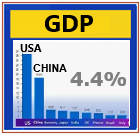
US business inventories rise less than expectated in September 2024. U.S. business inventories increased less than expected in September as a rise in stocks at retailers was partially offset by declines at manufacturers and wholesalers. Inventories edged up 0.1% after advancing 0.3% in September, the Commerce Department's Census Bureau said in Friday. Economists polled by Reuters had forecast inventories, a key component of gross domestic product, gaining 0.2%. Inventories rose 2.2% on a year-on-year basis in September. Inventories and trade are the most volatile components of gross domestic product. Private inventory investment was a small drag on GDP in the third quarter. The economy grew at a 2.8% annualized rate in the July-September quarter.
Hedging - Gold
Gold prices plunge 4.52%, closing at $2,563.22, marking the steepest weekly drop in over three years. Gold traders eye critical support at $2,533.76; a breach could lead to a deeper drop toward $2,387.23. Rising U.S. Treasury yields hit 4.505%, increasing the opportunity cost of holding gold and driving prices lower. The U.S. dollar surges to a one-year high at 107.064, diminishing gold’s appeal as a hedge against uncertainty.
S&P 500 Index - Week Performance
mmm |