10-Year Treasury Yield
Treasury yields dipped on Tuesday ahead of the final major inflation prints before the Federal Reserve’s September meeting. The yield on the 10-year Treasury was 5 basis points lower at 3.648%, with the 2-year Treasury yield also down 6 basis points at 3.607%.
Wholesale Inventories (Pre)
US wholesale July inventories revised slightly lower. U.S. wholesale inventories increased less than initially thought in July amid a sharp rebound in sales, casting doubt on whether inventory investment would contribute to economic growth in the third quarter. The Commerce Department's Census Bureau said on Monday that wholesale inventories rose 0.2%, revised down from the 0.3% gain estimated last month. Stocks at wholesalers were unchanged in June. Economists polled by Reuters had expected that the rise in inventories, a key part of gross domestic product, would be unrevised at 0.3%. Inventories advanced 0.4% on a year-on-year basis in July. Private inventory investment contributed to the economy's 3.0% annualized growth rate in the second quarter. There is hope that inventories could offset some the drag on GDP from a widening trade deficit
Consumer Credit
Consumer credit jumped to another record high in July, rising far more than economists expected. More people are relying on credit cards to pay for things as they work to contend with inflation and slowing wage increases. The trend of increasing debt could slow as banks have toughened up their standards for lending. Household debt reached a record high in July as balances on credit cards, auto loans, and other credit continued to mount. The Federal Reserve said Monday that total consumer debt grew by $25.5 billion to a fresh record high of $5.1 trillion in July. That was well ahead of the $12 billion forecasters had expected.The uptick in household debt highlighted the financial pressure that households face. Many are increasingly relying on credit rather than income to fuel spending as employers pull back on raises in a weakening job market.
Geopolitical Risk
European Central Bank cuts interest rates again and lowers growth forecasts. The European Central Bank on Thursday delivered a quarter-point interest rate cut, marking its second reduction to the deposit rate this year. The widely anticipated move comes after a period of sluggish economic growth across the euro zone and cooling inflation, which fell back toward the central bank’s 2% target in August. The ECB lowered its 2024 growth forecast to 0.8%, down slightly from an earlier projection of 0.9%, citing “weaker contribution from domestic demand over the next few quarters.”
MBA Purchase Applications
Total mortgage demand, however, rose just 1.4% for the week, according to the MBA’s seasonally adjusted index. The results also included an adjustment for the Labor Day Holiday. Refinance applications only increased 1% week to week, but were 106% higher than a year ago. That may sound like a massive increase, but the numbers were so low last year, that even with that large gain, refinancing is still historically low. Applications for a mortgage to purchase a home rose 2% for the week but were 3% lower than the same week one year ago. The average contract interest rate for 30-year fixed-rate mortgages with conforming loan balances ($766,550 or less) decreased to 6.29% from 6.43%
Consumer Price Index (CPI)
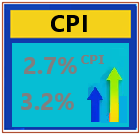
Consumer prices rose 0.2% in August as annual inflation rate hits lowest since early 2021. The CPI, a broad measure of goods and services costs across the U.S. economy, increased 0.2% in August, in line with the Dow Jones consensus. That put the 12-month inflation rate at 2.5%, down 0.4 percentage point from the July level and the lowest since February 2021. Traders priced in an 85% chance that the Fed will approve a quarter percentage point, or 25 basis point, interest rate reduction when its meeting concludes Sept. 18. Real earnings also rose for the month, with average hourly earnings outpacing the monthly CPI increase by 0.2%.
Oil - Commodity
U.S. crude oil rises more than 1% as Francine disrupts production in Gulf of Mexico. UBS estimates Francine may have disrupted up to 1.5 million barrels of U.S. crude production. U.S. crude oil jumped more than 1% to trade above $68 per barrel on Thursday, after Hurricane Francine churned through the Gulf of Mexico, disrupting oil production before making landfall in Louisiana.
Prices :West Texas Intermediate October: $68.13 per barrel, up 82 cents, or 1.22%. Year to date, U.S. crude oil has fallen 4.9%. Brent November contract: $71.38 per barrel, up 77 cents, or 1.1%. Year to date, the global benchmark has dropped around 7%.
Jobless Claims
Initial filings for unemployment benefits totaled 230,000 for the week ended Sept. 7, up 2,000 from the previous period and higher than the 225,000 estimate. The Labor Department said initial filings for unemployment benefits totaled 230,000 for the week ending Sept. 7, up 2,000 from the previous period and higher than the 225,000 estimate. The jobless claims report indicated that layoffs have not spiked, though the weekly number has risen slightly over the past several months.Continuing claims, which run a week behind edged just higher to 1.85 million, an increase of just 5,000 from the previous period.
Producer Price Index (PPI)
Wholesale prices rose 0.2% in August, in line with expectations. The producer price index increased 0.2% in August, the Bureau of Labor Statistics said Thursday. That matched the Dow Jones consensus estimate. Wholesale prices rose in August about in line with expectations, the final inflation data point as the Federal Reserve gets set to lower interest rates. The producer price index, a measure of final demand goods and services costs that producers receive, increased 0.2% on the month, the Bureau of Labor Statistics said Thursday. That matched the Dow Jones consensus estimate. Excluding food and energy, PPI increased 0.3%, slightly hotter than the 0.2% consensus estimate. The core increase was the same when excluding trade services. On a 12-month basis, headline PPI rose 1.7%. Excluding food, energy and trade, the annual rate was 3.3%
Treasury Budget - US Budget Deficit
The U.S. budget deficit reached $1.897 trillion for the first 11 months of the 2024 fiscal year, the Treasury Department said on Thursday, as annual interest costs on the public debt topped $1 trillion for the first time. For the month of August, Treasury reported a $380 billion deficit compared to a surplus of $89 billion in the same month last year that resulted from the reversal of Biden's student loan forgiveness program. The 11-month deficit roughly matches the Congressional Budget Office's estimate of a $1.9 trillion gap for all of fiscal 2024 with one month to go before the Sept. 30 end of the fiscal year. That puts it on pace to be the largest deficit outside the COVID-19 era and sharply higher than the $1.695 trillion deficit reported for fiscal 2023.Other factors boosting the deficit for fiscal 2024 included higher costs for the government-run Social Security and Medicare programs for seniors as well as defense programs, according to the Treasury data. The Treasury said the fiscal 2024 deficit through August was up 24% from a $1.525 trillion deficit in the comparable year-ago period, partly due to higher interest rates but also because of a $319 billion reversal of costs in August 2023 for President Joe Biden's student loan forgiveness program, which was struck down by the U.S. Supreme Court. Last year's reduction was not repeated this year.
Import and Export Prices
US import prices post largest drop in eight months. U.S. import prices dropped by the most in eight months in August amid lower costs for a broad range of goods, suggesting that domestic inflation will continue to subside in the months ahead. The report showing mild increases in producer and consumer prices in August, though some stickiness remained in underlying inflation. With price pressures ebbing, the Federal Reserve is now focused on the labor market, which has slowed considerably from last year's robust job growth. The inflation flare-up early in the year is no longer evident in the prices of imported goods coming into the country and this is another reason to believe that the balance of risks have shifted for Fed officials back to downside risks for the economy and labor market from the inflation risks earlier this year. Import prices fell 0.3% last month, the largest decline since December 2023, after an unrevised 0.1% gain in July, the Labor Department's Bureau of Labor Statistics said. Economists polled by Reuters had expected import prices, which exclude tariffs, would fall 0.2%. The report also showed export prices falling 0.7% last month after rising 0.5% in July.
Consumer Sentiment UM
US consumer sentiment ticks higher for second month but remains subdued. Americans’ outlook on the economy improved for the second straight month in September, bolstered by lower prices for long-lasting goods such as cars and furniture. Americans' outlook on the economy improved for the second straight month in September, bolstered by lower prices for long-lasting goods such as cars and furniture and the prospect of interest rate cuts by the Federal Reserve. The University of Michigan's consumer sentiment index ticked up to 69 in its preliminary reading, its highest level since May and up from 67.9 in August. The gain was driven by consumers' perceptions that prices have improved for durable goods, the report from University of Michigan said.
Mortgage Rates
Mortgage rates fell for the sixth straight week last week, but mortgage demand still seems to be waiting for something bigger. The average contract interest rate for 30-year fixed-rate mortgages with conforming loan balances ($766,550 or less) decreased to 6.29% from 6.43%, with points decreasing to 0.55 from 0.56 (including the origination fee) for loans with a 20% down payment, according to the Mortgage Bankers Association. That is the lowest level since February 2023 and nearly a full percentage point lower than the same week one year ago.
|