10-Year Treasury Yield
U.S. Treasury yields pulled back on Monday as investors geared up for another big week of economic data. The yield on the benchmark 10-year Treasury note was down around 5 basis points at 4.094%. Last week, it reached levels last seen in December. The yield on the 2-year Treasury bond slid around 2 basis points to 4.385. Yields move inversely to prices.
Leading Indicators
The leading index is a gauge of 10 indicators designed to show whether the economy is getting better or worse. Six of the 10 indicators in the survey were positive in December, a big improvement compared to prior months. The economy has continued to expand through a period of high inflation and rising interest rates orchestrated by the Federal Reserve to get prices back under control. The U.S. grew at a rapid 4.9% pace in the third quarter and is estimated to have expanded at almost 2% in the recently ended fourth quarter.The leading index slid 0.1% last month, but it was smaller than the 0.3% drop forecast. The numbers: The leading indicators for the U.S. economy fell again in December to mark the 21st decline in a row, but a widely predicted recession still appears no closer than when the long losing streak first began.
Gold
UBS sees a 10% spike for gold this year as rate cut speculation swirls. Gold prices have slipped from a year-end rally so far in 2024 — but the “power of the Fed’s policy pivot should not be underestimated,” according to UBS. Cooling interest rate expectations have contributed to recent weakness. Analysts at Scotiabank on Monday lifted their 2024 forecast for gold. Gold prices can be impacted by factors including geopolitical instability and market uncertainty — which can boost the appeal of bullion as a “safe haven” asset — and interest rates, which can make higher-yielding investments more attractive when they are raised.
Two important events this week could determine the future of Fed rate policy
Investors will get their first look at the broad picture of fourth-quarter economic growth for 2023 when the Commerce Department releases its initial gross domestic product estimate on Thursday. Economists surveyed by Dow Jones are expecting the total of all goods and services produced in the U.S. economy to have grown at a 1.7% pace for the final three months of 2023, which would be the slowest since the 0.6% decline in Q2 of 2022.
A day later, the Commerce Department will release the December reading on the personal consumption expenditures price index, a favorite Fed inflation gauge. The consensus expectation for core PCE prices, which exclude the volatile food and energy components, is 0.2% growth for the month and 3% for the full year.
Geopoliitcal Risks
These developments have accelerated global fragmentation and the emergence of competing geopolitical and economic blocs. But geopolitical tensions are growing and Wall Street appears to be underestimating their potential impact on the global economy and markets.
The United States and China are squabbling about trade, particularly high-powered AI chips that both believe carry consequences for national security.
- Russia invaded Ukraine almost two years ago.
- Israel’s war with Hamas threatens to spark a wider conflict in the Middle East
- China continues to menace Taiwan.
- Pakistan and Iran have both conducted strikes on each other’s territories in an unprecedented escalation of hostilities between the neighbors.
Bank of America also gave geopolitical risk a top spot on its list of surprises that could affect markets in 2024. According to the Center for Strategic and International Studies, so-called Magnificent Seven companies — Apple, Amazon, Google, Microsoft, Meta, Uber and Nvidia — use Taiwanese manufacturers for over 90% of their chips.
The World Container Index,
which tracks freight rates on eight major routes to and from the United States, Europe, and Asia, increased by 23% last week, according to Drewry, a maritime research and consulting firm. It’s more than doubled since December. Shipping insurance costs are also rising. Shipping is avoiding both the Red Sea and the Suez Canal, as Iranian-backed Houthi fighters attack vessels
Money Supply
mmmm
MBA Purchase Applications
nnnn
PMI Composite Flash
nnnn
Jobless Claims
initial jobless claims totaled 214,000, an increase of 25,000 from the previous week and ahead of the estimate for 199,000, according to the Labor Department. Continuing claims rose to 1.833 million, an increase of 27,000.
Durable Orders
U.S. Durable-Goods Orders Stable in December 2023. Orders for long-lasting U.S. manufactured goods were unexpectedly unchanged in December amid a slump in transportation equipment, but demand elsewhere held up. The Commerce Department's Census Bureau said on Thursday that the unchanged reading in orders for durable goods, items ranging from toasters to aircraft meant to last three years or more, followed a 5.5% rebound in November. Economists polled by Reuters had forecast durable goods orders would rise 1.1%. Orders increased 4.4% on a year-over-year basis in December. Manufacturing, which accounts for 10.3% of the economy, continues to be hamstrung by higher interest rates, which are curbing demand for goods and raising costs for investment.
GDP
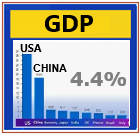
Thursday’s GDP report expected to show the U.S. economy at a crossroads. Fourth-quarter gross domestic product is expected to show growth at a 2% seasonally adjusted annualized pace.The U.S. economy grew at blistering 3.3% pace in Q4 while inflation pulled back. GDP, a measure of all the goods and services produced, increased at a 3.3% annualized rate in the fourth quarter of 2023. Wall Street had been looking for a 2% gain. The U.S. economy for all of 2023 accelerated at a 2.5% annualized pace, well ahead of the Wall Street outlook at the beginning of the year for few if any gains and better than the 1.9% increase in 2022. A strong pace of consumer spending helped drive the expansion, as did government spending. There also was progress on inflation. Core prices for personal consumption expenditures rose 2% for the period, while the headline rate was 1.7%.
Intal Trade Goods
nnnn
Retail Inventories (Adv)
nnn
Wholesale -
nnn
CFNAI -
Chicago Fed National Activity index (CFNAI) in December is -0.15 points, down from the previous value of 0.01 points.
New Home Sales
Sales of new U.S. single-family homes increased strongly in December, boosted by declining mortgage rates and a persistent shortage of previously owned houses on the market. New home sales rebounded 8.0% to a seasonally adjusted annual rate of 664,000 units last month, the Commerce Department’s Census Bureau said on Thursday. November’s sales pace was revised higher to 615,000 units from the previously reported 590,000 units. Economists polled by Reuters had forecast new home sales, which account for about 15% of U.S. home sales, rising to a rate of 645,000 units. New home sales are counted at the signing of a contract, making them a leading indicator of the housing market.
Mortgage Rates
The 30-year mortgage rate stood at 6.69% as of Thursday, down from a 7.79% peak in late October, according to Freddie Mac.
Pending Home Sales
U.S. pending home sales register sharpest monthly rise since mid-2020.Pending home sales unexpectedly shot higher in December as lower mortgage rates helped lure buyers back into the market. The National Association of Realtors on Friday reported that its index measuring sales not yet completed lurched ahead by 8.3% for the month, well ahead of the Dow Jones estimate for a 2% increase. On an annual basis, the index rose 1.3% after being down 5.2% in November. The housing market is off to a good start this year, as consumers benefit from falling mortgage rates and stable home prices
Personal Income
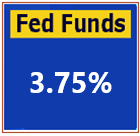
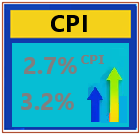
Fed’s favorite inflation gauge rose 0.2% in December and was up 2.9% from a year ago. An important inflation gauge released Friday showed that the rate of price increases cooled as 2023 came to a close. The Commerce Department’s personal consumption expenditures price index for December, an important gauge for the Federal Reserve, increased 0.2% on the month and was up 2.9% on a yearly basis, excluding food and energy. Economists surveyed by Dow Jones had been looking for respective increases of 0.2% and 3%. On a monthly basis, core inflation increased from 0.1% in November. However, the annual rate declined from 3.2%. The 12-month rate is the lowest since March 2021. Including volatile food and energy costs, headline inflation also rose 0.2% for the month and held steady at 2.6% annually. The Fed’s benchmark overnight interest rate is currently targeted between 5.25%-5.5%.
Consumer Spending mmmm
The dollar slipped against a basket of currencies. U.S. Treasury prices fell.
Core PCE
Consumer spending increased 0.7%, stronger than the 0.5% estimate. Personal income growth edged lower to 0.3%, in line with the forecast. The data was included in the fourth quarter's advance gross domestic product report published on Thursday. Consumer spending increased at a strong 2.8% rate last quarter, accounting for the bulk of the economy's 3.3% growth pace. The pace of growth in consumer spending is, however, likely to moderate in the months ahead. Personal income increased 0.3% in December after rising 0.4% in November. The saving rate dropped to a one-year low of 3.7%, from 4.1% in November. |