10-Year Treasury Yield
Treasury yields inch higher as investors assess monetary policy outlook. U.S. Treasury yields rose slightly Monday as investors mulled the Federal Reserve’s next interest rate decision and considered the outlook for the broader economy. The on the benchmark 10-year Treasury was up by about 5 basis points at 3.532%. The 2-year Treasury yield traded about 3 basis points higher to 4.21%. Yields and prices move in opposite directions. One basis point is equivalent to 0.01%.
Leading Indicators U.S. leading indicators index falls for 10th straight month. A gauge of future U.S. economic activity tumbled for a 10th straight month in December with a widespread weakening outlook for manufacturing, home building and both job and financial markets. The Conference Board on Monday said its Leading Economic Index slid 1.0% in December following a downwardly revised decline of 1.1% in November. The decline exceeded all 22 forecasts in a poll of economists by Reuters, which had a median expectation of a decline of 0.7%.
MBA Purchase Applications
mmm.
Jobless
Fewer Americans filed for unemployment benefits last week as the labor market remains tight, even as the Federal Reserve has tried to cool the economy and inflation by raising interest rates. Applications for jobless aid in the U.S. for the week ending Jan. 21 fell by 6,000 last week to 186,000, from 192,000 the previous week, the Labor Department reported Thursday. It’s the first time in nine months that number has been below 200,000 in back-to-back weeks. The four-week moving average of claims, which flattens out some of the week-to-week volatility, declined by 9,250 to 197,500. It’s the first time that number has been below 200,000 since May of last year. Jobless claims generally serve as a proxy for layoffs, which have been relatively low since the pandemic wiped out millions of jobs in the spring of 2020..
Durable Orders
Orders for long-lasting goods also were much better than expected, rising 5.6% for December, compared with the 2.4% estimate. However, orders fell 0.1% when excluding transportation as demand for Boeing passenger planes helped drive the headline number.
A report released by the Commerce Department on Thursday showed new orders for U.S. manufactured durable goods soared by much more than expected in the month of December. The Commerce Department said durable goods orders spiked by 5.6 percent in December after tumbling by 1.7 percent in November. Economists had expected durable goods orders to surge by 2.5 percent compared to the 2.1 percent slump that had been reported for the previous month. Excluding a substantial rebound in orders for transportation equipment, durable goods orders edged down by 0.1 percent in December after inching up by 0.1 percent in November. Ex-transportation orders were expected to come in unchanged..
GDP
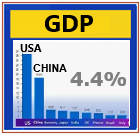
The U.S. economy finished 2022 in solid shape even as questions persist over whether growth will turn negative in the year ahead. Fourth-quarter gross domestic product, the sum of all goods and services produced for the October-to-December period, rose at a 2.9% annualized pace, the Commerce Department reported Thursday. Economists surveyed by Dow Jones had expected a reading of 2.8%. The growth rate was slightly slower than the 3.2% pace in the third quarter. Consumer spending, which accounts for about 68% of GDP, increased 2.1% for the period, down slightly from 2.3% in the previous period but still positive. Inflation readings moved considerably lower to end the year after hitting 41-year highs in the summer. The personal consumption expenditures price index increased 3.2%, in line with expectations but down sharply from 4.8% in the third quarter. Excluding food and energy, the chain-weighted index rose 3.9%, down from 4.7%..
Intal Trade in Goods
mmm.
CFNAI
The Chicago Fed National Activity Index (CFNAI) edged up to –0.49 in December from –0.51 in November. Three of the four broad categories of indicators used to construct the index made negative contributions in December, but two categories improved from November. The index’s three-month moving average, CFNAI-MA3, decreased to –0.33 in December from –0.14 in November..
Whole Sale Inventories
mmm.
Retail Sales Inventories
mmm.
New Home Sales
Sales of new U.S. single-family homes increased for a third straight month in December as mortgage rates continued to decline, offering hope that the struggling housing market was starting to stabilize. New home sales increased 2.3% to a seasonally adjusted annual rate of 616,000 units last month, the Commerce Department said on Thursday. November's sales pace was revised lower to 602,000 units from the previously reported 640,000. Sales rose in the Midwest and South, which are generally considered affordable regions. They fell in the Northeast and West. Economists polled by Reuters had forecast new home sales, which account for a small share of U.S. home sales, falling to a rate of 617,000 units. Sales dropped 26.6% year on year in December. They decreased 16.4% in 2022..
Personal Income
Key Fed inflation measure eased in December while consumer spending also declined. Personal income increased 0.2% for the month, as expected. Consumers spent less in December even as an inflation measure considered key by the Federal Reserve showed the pace of price increases easing, the Commerce Department reported Friday. Personal consumption expenditures excluding food and energy increased 4.4% from a year ago, down from the 4.7% reading in November and in line with the Dow Jones estimate. That was the slowest annual rate of increase since October 2021. On a monthly basis, so-called core PCE increased 0.3%, also meeting estimates. At the same time, consumer spending was even less than already modest estimates, indicating that the economy slowed at the end of 2022 and contributing to expectations for a 2023 recession. Spending adjusted for inflation declined 0.2% on the month, worse than the 0.1% drop that Wall Street had been anticipating. Personal income increased 0.2% for the month, as expected.
Consumer Spending
Consumer spending, however, dropped 0.2%, pointing to an economy that was grinding to a halt as 2022 closed.
Core CPI
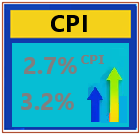
Core PCE inflation, the Fed’s preferred measure, rose 4.4% from a year ago, its smallest annual increase since October 2021.The Fed watches core PCE closely as the measure takes into accounts changing consumer behavior, such as substituting lower price goods for higher-priced items, and strips out volatile food and energy prices. Officially, the Fed says that it watches the headline number. But officials have said repeatedly that core PCE usually provides a better long-term indicator on where inflation is headed because it strips out prices that can be volatile over shorter time periods. Friday’s report shows the continued shifting of inflation pressures from goods, which were in high demand in the earlier days of the pandemic, to services, where U.S. economic activity is traditionally focused. On an annual basis, goods inflation rose 4.6%, down sharply from 6.1% in November, while services inflation held steady at 5.2%. Goods inflation peaked in June 2022 at 10.6%, while services inflation bottomed at 4.7% in July.
Consumer Sentiment UM
The Consumer Sentiment Index released Friday by the University of Michigan (UM) Surveys of Consumers rose to 64.9 in the January 2023 survey, up from 59.7 in December but below last January's 67.2. The Current Index rose to 68.4, up from 59.4 in December but below last January's 72; and the Expectations Index rose to 62.7, up from 59.9 in December but below last January's 64.1. The recent easing of inflation boosted consumer attitudes, and consumer assessments of their personal finances surged 19 percent to its highest reading in eight months. A still-sizable 36 percent of consumers reported that their living standards are being eroded by inflation, the lowest share since April 2022.
Fixed Mortgage Rates The 30-year fixed mortgage rate declined to an average 6.15% last week, the lowest level since mid-September, according to data from mortgage finance agency Freddie Mac. The rate was down from 6.33% in the prior week and has dropped from an average of 7.08% early in the fourth quarter, which was the highest since 2002. But it remains well above the 3.56% average during the same period last year.
Pending Home Sales
U.S. pending-home sales rose 2.5% in December, reversing a six-month losing streak, according to the monthly index released Friday by the National Association of Realtors (NAR).Pending home sales were down for six months in a row, as the U.S. Federal Reserve increased interest rates and mortgage rates took off.Pending-home sales beat analyst expectations. Analysts polled by the Wall Street Journal had forecast the pending home sales index to drop by 1%.Contract signings rose in the South and the West.Pending home sales reflect transactions where the contract has been signed for an existing-home sale, but the sale has not yet closed. Economists view it as an indicator for the direction of existing-home sales in subsequent months.Mortgage application activity hints at the housing market’s further recovery. Mortgage demand rose in the latest week. Key details: Compared with a year earlier, transactions were down by 33.8%.On a monthly basis, pending sales rose in the South and the West. Sales dropped in the Northeast and Midwest.
|