Housing Starts
U.S. single-family homebuilding fell for a second straight month in August as builders continued to struggle with shortages of materials and labor, suggesting the housing market could remain a drag on economic growth in the third quarter. The report from the Commerce Department on Tuesday also showed the number of houses authorized for construction but not yet started raced to a record high last month, a sign of reluctance by builders to take on new projects. Builders’ inability to ramp up the production of single-family homes amid a massive housing shortage is driving up prices and keeping some first-time buyers from the market.
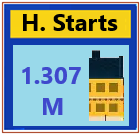
As a result, overall housing starts advanced 3.9% to a rate of 1.615 million units in August. Data for July was revised up to a rate of 1.554 million units from the previously reported 1.534 million units. Economists polled by Reuters had forecast starts would rebound to a rate of 1.555 million units. Housing starts jumped 17.4% compared to August 2020
Current Account
September 21, 2021. U.S. Current Account Deficit Widens in Second Quarter 2021. The U.S. current account deficit, which reflects the combined balances on trade in goods and services and income flows between U.S. residents and residents of other countries, widened by $0.9 billion, or 0.5 percent, to $190.3 billion in the second quarter of 2021. The widening mainly reflected reduced surpluses on services and on primary income that were mostly offset by a reduced deficit on secondary income. The second quarter deficit was 3.3 percent of current dollar gross domestic product, down from 3.4 percent in the first quarter.
Building Permits
Permits for future homebuilding rose 6.0% to a rate of 1.728 million units in August. Single-family permits gained 0.6% to a rate of 1.054 million units. Permits for buildings with five units or more jumped 19.7% to a rate of 632,000 units, the highest level since January 1990.
The inventory of previously owned homes is near record lows, leading to record double-digit annual growth in home prices. Realtors estimate that single-family housing starts and completion rates need to be in a range of 1.5 million to 1.6 million units per month to close the inventory gap.
The Chicago Fed National Activity Index (CFNAI)
US Chicago Fed National Activity Index Edges Down. The Chicago Fed National Activity Index fell to 0.29 in August of 2021 from an upwardly revised 0.75 in July, pointing to slower, but still above-average growth. Production-related indicators contributed +0.11, down from +0.40 in July. The contribution of the sales, orders, and inventories category moved down to +0.03 from +0.07 in July; and the contribution of the employment, unemployment, and hours category to the CFNAI decreased to +0.12 in August from +0.38 in July. Meanwhile, the personal consumption and housing category contributed +0.03, up from –0.09 in July. The index’s three-month moving average, CFNAI-MA3, moved up to +0.43 in August from +0.36 in July.
Jobless Claims
First-time filings for unemployment benefits jumped last week, hitting the highest level in a month, the Labor Department reported Thursday. Initial claims for the week ended Sept. 18 on a seasonally adjusted basis totaled 351,000, an increase from the previous week’s upwardly revised 335,000 and well ahead of the 320,000 Dow Jones estimate. The total was the highest since the week of Aug. 21. Markets reacted little to the news, with stock market futures pointing to a strong opening while safe-haven government bonds saw yields rise, an indication that investors were selling fixed income as yields move opposite price. The latest claims figures show that while the jobs market has come a long way since the early days of the pandemic, there’s still work to be done before it’s healed. Continuing claims data, which runs a week behind, also increased, rising 181,000 to total more than 2.84 million.
New Home Sales
U.S. new home sales beat expectations; supply near 13-year high. Sales of new U.S. single-family homes increased for a second straight month in August, but demand for housing has probably peaked after a COVID-19 pandemic-fueled buying frenzy. The report from the Commerce Department on Friday also showed the supply of new homes on the market last month was the largest in nearly 13 years, with prices unchanged on a monthly basis. It followed on the heels of news on Wednesday that sales of previously owned homes fell in August. New home sales rose 1.5% to a seasonally adjusted annual rate of 740,000 units last month. July's sales pace was revised up to 729,000 units from the previously reported 708,000 units.
Housing Market Index - HMI
Homebuilders in the single-family construction market are feeling better, as lumber prices are way down from sky-high levels and buyer demand is growing. Builder sentiment rose 1point in September to 76, according to the National Association of Home Builders/Wells Fargo Housing Market Index. It was the first increase in three months. Sentiment stood at 83 in September of last year and then set a record high of 90 last November. It then dropped off dramatically when lumber prices spiked and supply chain issues hampered construction.
Existing Home Sales
August Existing Home Sales Drop 2.0%. The decline follows two months of increases. NAR’s chief economist says buyer demand remains strong, but higher prices have pushed many to wait for more inventory. Existing-home sales retreated in August, breaking two straight months of increases, according to the National Association of Realtors® (NAR). Each of the four major U.S. regions experienced declines on both a month-over-month and a year-over-year perspective. Total existing-home sales – completed transactions that include single-family homes, townhomes, condominiums and co-ops – fell 2.0% month-to-month to a seasonally adjusted annual rate of 5.88 million in August. Year-over-year, sales dropped 1.5% year-to-year (5.97 million in August 2020).
FOMC Meeting 21-22/Sep/2021
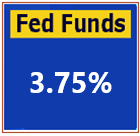
Federal Reserve Chair Jerome Powell announced that the FOMC, at its meeting that concluded on Sept. 22, 2021, has decided to "keep interest rates at zero and continue the current pace of asset purchases." More specifically, the FOMC will continue to target the benchmark federal funds rate at a range of 0% to 0.25%. Powell reiterated the Fed's commitment to its dual mandate of promoting maximum employment while also fostering price stability. He noted that economic indicators point to progress on both fronts. However, he warned that "the path of the economy continues to rely on the path of the [COVID-19] virus." According to Fed Chair Jerome Powell, "The path of the economy continues to rely on the path of the [COVID-19] virus." FOMC members "still foresee rapid growth" ahead. "Long-run [inflation] expectations are in line with the goal of 2%." "If progress continues, a moderation of the pace of asset purchases can be warranted." Evergrande does not pose risks for the U.S.
Leading indicators
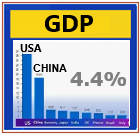
The Conference Board Leading Economic Index® (LEI) for the U.S. increased by 0.9 percent in August 2021 to 117.1 (2016 = 100), following a 0.8 percent increase in July and a 0.6 percent increase in June. The U.S. LEI rose sharply in August and remains on a rapidly rising trajectory. While the Delta variant—alongside rising inflation fears—could create headwinds for labor markets and the consumer spending outlook in the near term, the trend in the LEI is consistent with robust economic growth in the reminder of the year. Real GDP growth for 2021 is expected to reach nearly 6.0 percent year-over-year, before easing to a still-robust 4.0 percent for 2022. |