Consumer Price Index (CPI) - Inflation
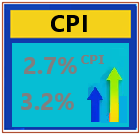
Inflation accelerated at its fastest pace in more than 12 years for April as the U.S. economic recovery kicked into gear and energy prices jumped higher, the Labor Department reported Wednesday. The Consumer Price Index, which measures a basket of goods as well as energy and housing costs, rose 4.2% from a year ago, compared to the Dow Jones estimate for a 3.6% increase. The monthly gain was 0.8%, against the expected 0.2%. Excluding volatile food and energy prices, the core CPI increased 3% from the same period in 2020 and 0.9% on a monthly basis. The respective estimates were 2.3% and 0.3%. The increase in the headline CPI rate was the fastest since September 2008.
Treasury Budget
The U.S. government posted a $226 billion budget deficit in April, a drop of $512 billion or 69% from the gap in April 2020, the first full month of COVID-19 lockdowns, as pandemic-related outlays fell and revenues rose sharply. The Treasury Department said that the deficit for the first seven months of fiscal 2021 still hit a new record of $1.932 trillion, a 30% increase from the same period of fiscal 2020. April receipts rose 82% from a year earlier to $439 billion, but the increase is partly due to last year’s deferral of income tax payments to July.
The Treasury deferred tax payments this year by only one month, until May 17, with no deferral for corporate taxes. April outlays were $665 billion, a decrease of 32% from April 2020, as that month contained the bulk of payments to individuals in the first round of coronavirus rescue aid. Payments under President Joe Biden’s stimulus plan this year were mainly sent in March. Year-to-date receipts for fiscal 2021 totaled $2.143 trillion, up 16% from the year-ago period, while year-to-date outlays totaled $4.075 trillion, up 22%.
Producer Price Index PPI
Companies paid much higher prices to producers in April for everything from steel to meat in another sign of inflation in an economy rapidly recovering from the pandemic. The new data comes a day after a sharp gain in consumer prices sent the stock market reeling. The Producer Price Index rose 0.6% from March, according to the U.S. Bureau of Labor Statistics. Year over year, the PPI spiked 6.2%, the largest increase since the agency started tracking the data in 2010. Economists polled by FactSet were expecting a 0.3% monthly increase in April and 3.8% year over year.
Retail Sales
U.S. retail sales unchanged in April, vs 1.0% increase expected. Retail sales flat in April after huge surge in March. April retail sales in the U.S. were unchanged from March, which saw a surge revised up to 10.7%, according to the latest Commerce Department report published Friday. Why it matters: The U.S. has been entering a period of growing optimism in the wake of the vaccine rollout, falling new COVID-19 cases and deaths, and a slowly recovering labor market.
Retail sales were up 51% year-over-year compared to April 2020...U.S. retail sales unexpectedly stalled in April as the boost from stimulus checks faded, but an acceleration is likely in the coming months amid record savings and a reopening economy. The Commerce Department said on Friday the unchanged reading in retail sales last month followed a 10.7% surge in March, an upward revision from the previously reported 9.7% increase. Economists polled by Reuters had forecast retail sales would rise 1.0%. Economists polled by Dow Jones had expected a more modest 0.8% increase. Many qualified households received additional $1,400 checks in March, which were part of the White House’s $1.9 trillion COVID-19 pandemic rescue package approved early that month. Retail sales account for the goods component of consumer spending, with services such as healthcare, education, travel and hotel accommodation making up the other portion. Households have accumulated at least $2.3 trillion in excess savings during the pandemic, which should underpin spending this year. Coming on the heels of news this month that h..
Import and Exports Prices
Import prices surge again in April 2021 and help fuel rising U.S. inflation Over the past year import prices minus fuel have climbed a milder 5%. U.S. export prices advanced 0.8% last month. U.S. import prices increased solidly in April, the latest sign of inflation ramping up as the economy reopens. Import prices rose 0.7% last month after surging 1.4% in March, the Labor Department said on Friday. The sixth straight monthly gain lifted the year-on-year increase to 10.6%, the largest rise since October 2011. Import prices advanced 7.0% on a year-on-year basis in March. Part of the jump in the year-on-year prices reflected the dropping of last spring’s weak readings from the calculation. Economists polled by Reuters had forecast import prices, which exclude tariffs, increasing 0.6%.
JOLTS
Job openings hit a record high in March — showing the gap between job postings and hirings was huge even before April's jobs report. US job openings rose to 8.1 million from 7.4 million in March, according to JOLTS data. That lands above the median estimate of 7.5 million and marks a record number of openings. The hiring rate climbed to 4.2% from 4% as stimulus and vaccinations fueled reopening. Job openings grew to record highs in the US in March amid continued vaccination and fresh stimulus. The data shows businesses reopening along with the country, yet last Friday's jobs report for April indicated employers have since had trouble filling those jobs. Openings rose to 8.1 million from 7.5 million, according to Job Openings and Labor Turnover Survey, or JOLTS, data published Tuesday morning. The median estimate from economists surveyed by Bloomberg was for 7.5 million openings. The reading marks a third straight increase and places job openings at their highest level ever. The food services, accommodations, and state and local government education sectors added the most openings throughout the month. The health care and social assistance sectors shed 218,000 jobs, marking the largest decline of the month..
Business Inventories
US business inventories for March 0.3% versus 0.3% estimate.The sharp rise in sales in relation to inventories has sent the inventory to sales ratio to below the lowest level going back to 2012. The pandemic restart and supply chain issues as a result of that restart, is likely leading to the sharp fall. Two things can happen. The inventories can be rebuilt if capacity allows, or another potential option is that the inventories remain low, and force up prices.US a business inventories rise 0.3% versus February the at 0.6% (was previously 0.5%).
Industrial Production
U.S. industrial production increased for a second-straight month in April 2021 as more factories came online after being shutdown by winter ice storms. Industrial production -- which includes output at factories, mines and utilities -- rose 0.7% last month, down from a sharp increase of 2.4% in March, the Federal Reserve reported Friday. The March gain, however, was revised sharply higher from an initial estimate of a 1.4% rise. U.S. manufacturing output rose 0.7% in April , the Federal Reserve said Friday. Economists polled by the Wall Street Journal had forecast industrial output rising 0.8% in April. Capacity utilization for the manufacturing sector, a measure of slack in the economy, rose to 74.9% in April from 74.4% in March. The April rate is 4.7 percentage points below its long-run average.
Consumer Sentiment UM
Consumer sentiment dropped sharply in early May, as inflation spiked and consumers prepared for higher interest rates. The preliminary estimate of the University of Michigan's index of consumer sentiment released Friday came in at 82.8, a drop of 6.2% from the month ago reading of 88.3. U.S. consumer sentiment deteriorated unexpectedly in early May as Americans grew increasingly concerned about rising prices. The University of Michigan's preliminary sentiment index fell to a three-month low of 82.8 in May from 88.3 the prior month, data released.
U.S. consumer sentiment unexpectedly dropped in early May as inflation worries sapped confidence in what had been a rapidly brightening economic outlook, a key survey showed on Friday. The University of Michigan’s Consumer Sentiment Index fell 5.5 points to a reading of 82.8, pulling back from the highest level in roughly a year in April. Economists polled by Reuters had been looking for a reading of 90.4, which would have marked the third straight monthly gain..
|