ISM Manufacturing Index
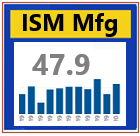
Manufacturing grew in July, as the Manufacturing PMI® registered 59.5 percent, 1.1 percentage points lower than the June reading of 60.6 percent. “The Manufacturing PMI® continued to indicate strong sector expansion and U.S. economic growth in July. Four out of five subindexes that directly factor into the Manufacturing PMI® were in growth territory.
ISM Service - Non Manufacturing Index
The Services PMI registered another all-time high of 64.1 percent, which is 4 percentage points higher than the June reading of 60.1 and eclipses the previous record of 64 percent in May 2021. The July reading indicates the 14th straight month of growth for the services sector, which has expanded for all but two of the last 138 months.
PMI Composite Final for Jul. 2021
July U.S. PMI composite tweak past estimate. Wed, Aug. 04, 2021.
July U.S. PMI Composite (Final): 59.9 vs. 59.7 consensus and 63.7 prior. The latest upturn in business activity was marked overall, despite easing to a five-month low. Greater output was linked to strong demand conditions and a sustained increase in new orders. Some companies stated that capacity constraints hampered activity growth, however. New business continued to rise in July, and at one of the fastest rates since data collection began in October 2009.
Services PMI: 59.9 vs. 59.8 consensus and 64.6 prior.
“The pace of US economic growth cooled in July, according to the final PMI data, but remained impressively strong to suggest that GDP will rise robustly again in the third quarter. Stimulus measures combined with the vaccine roll out and reopening of the economy continued to boost demand for goods and services, most notably among households and especially in consumer-facing services such as travel and hospitality," said Chris Williamson, Chief Business Economist.
PMI Manufacturing Final
US: Markit Manufacturing PMI reaches new series-high of 63.4 (final) in July. Markit Manufacturing PMI renewed series high in July. The IHS Markit's Manufacturing PMI reached a new series high of 63.4 in July, up from the flash estimate of 63.1. Commenting on the report, "July saw manufacturers and their suppliers once again struggle to meet booming demand, leading to a further record jump in both raw material and finished goods prices," said Chris Williamson, Chief Business Economist at IHS Markit.
Construction Spending
U.S. construction spending rose by 0.1% in June, the Commerce Department said on Monday, as an increase in private projects was offset by a fall in public sector building. Construction spending, which accounts for less than 4% of U.S. gross domestic product, increased by 8.2% on a year-on-year basis in June after falling 0.2% in May, data showed. Economists polled by Reuters had forecast construction spending rising by 0.4% in June.
ADP Employment Report 330K
Job creation at private companies tumbled in July as fears mounted over the spreading Covid-19 delta variant, payroll processing firm ADP reported Wednesday. Employers added 330,000 positions for the month, a sharp deceleration from the downwardly revised 680,000 in June. It’s also well below the 653,000 Dow Jones estimate. June’s final total fell from the initial estimate of 692,000. July’s job growth was also the smallest gain since February.
Factory Orders
New orders for U.S.-made goods increased more than expected in June, while business spending on equipment was solid, pointing to sustained strength in manufacturing even as spending is shifting away from goods to services. The Commerce Department said on Tuesday that factory orders rose 1.5% in June after advancing 2.3% in May. Economists polled by Reuters had forecast factory orders increasing 1.0%. Orders soared 18.4% on a year-on-year basis. Demand pivoted towards goods during the COVID-19 pandemic as millions of Americans were cooped up at home, boosting manufacturing, which accounts for 11.9% of the U.S. economy. But the surge in demand is straining the supply chain.
Jobless
Wholesale trade improved in June compared to the same month a year ago and was up from the previous m
Trade Balance in Goods and Services
The U.S. monthly international trade deficit increased in June 2021 according to the U.S. Bureau of Economic Analysis and the U.S. Census Bureau. The deficit increased from $71.0 billion in May (revised) to $75.7 billion in June, as imports increased more than exports.The U.S. monthly international trade deficit increased in June 2021 according to the U.S. Bureau of Economic Analysis and the U.S. Census Bureau.
The deficit increased from $71.0 billion in May (revised) to $75.7 billion in June, as imports increased more than exports. The previously published May deficit was $71.2 billion. The goods deficit increased $4.0 billion in June to $93.2 billion. The services surplus decreased $0.7 billion in June to $17.4 billion.
Wholesale Trade (Pre)
Wholesale trade improved in June 2021 compared to the same month a year ago and was up from the previous month of May, according to the latest report from the U.S. Census Bureau. June 2021 sales of merchant wholesalers, except manufacturers’ sales branches and offices, after adjustment for seasonal variations and trading day differences but not for price changes, were $588.1 billion, up 27.5% from the revised June 2020 level and up 2% from the revised May level. The April 2021 to May 2021 percent change was unrevised from the preliminary estimate of 0.8%.
Total inventories of merchant wholesalers, except manufacturers’ sales branches and offices, after adjustment for seasonal variations and trading day differences, but not for price changes, were $717.6 billion at the end of June, up 1.1% from the revised May level. Total inventories were up 10.5% from the revised June 2020 level. The May 2021 to June 2021 percent change was revised from the advance estimate of up 0.8% to up 1.1%. The June inventories/sales ratio for merchant wholesalers, except manufacturers’ sales branches and offices, based on seasonally adjusted data, was 1.22. The June 2020 ratio was 1.41.
Employment Situation
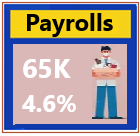
Hiring rose in July at its fastest pace in nearly a year despite fears over Covid-19′s delta variant and as companies struggled with a tight labor supply, the Labor Department reported Friday. Nonfarm payrolls increased by 943,000 for the month while the unemployment rate dropped to 5.4%, according to the department’s Bureau of Labor Statistics. The payroll increase was the best since August 2020. Economists surveyed by Dow Jones had been looking for 845,000 new jobs and a headline unemployment rate of 5.7%. However, estimates were diverse amid conflicting headwinds and tailwinds and an uncertain path ahead for the economy.
Consumer Credit
U.S. consumer credit grew at the fastest rate ever in June, as Americans increased their credit card usage to drive consumer spending in the second quarter, data from the Federal Reserve showed on Friday. Total consumer credit expanded at a pace of $37.69 billion, which was the quickest rate ever and followed a $36.69 billion increase in May, the U.S. central bank said. Economists polled by Reuters had expected consumer credit to increase at a rate of $23.00 billion in June.
An alternate measure tracking the monthly change in the total amount of credit outstanding increased by the most since December 2010, the data showed. That measure showed that revolving credit, which mostly measures credit-card use, rose by $17.858 billion, the largest gain since 2006, after climbing by $9.089 billion in May. The surge in June could explain the sustained robustness in consumer spending during last quarter, even as the flow of stimulus money from the government ebbed.
|