FOMC Minmutes for Meeting 16-17 Mar 2021
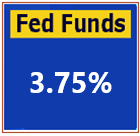
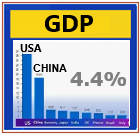
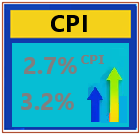
The FOMC's meeting minutes, due out Wednesday afternoon, will elucidate members' thinking from their March meeting. At the conclusion of that meeting, the central bank's median forecast for economic growth was sharply upwardly revised, reflecting improving growth trends as the trajectory of new COVID-19 infections improved and vaccinations broadened out. The central bank said it expects real GDP to grow 6.5% this year, versus the 4.2% rate it anticipated in December. The Fed also said it sees the unemployment rate improving to 4.5% by year-end before returning to its pre-pandemic level of 3.5% by 2023. Despite these improving projections, the Fed still telegraphed that interest rates would likely remain on hold at current near-zero levels through 2023, with the central bank maintaining its ultra-accommodative monetary policy posturing despite a quicker-than-previously-expected economic recovery. Market participants have been wary of this message, with the Fed suggesting a stubborn tilt toward easy monetary policy even in the face of rising inflation. The Fed's latest forecast showed the median member believed core inflation would rise to 2.4% this year, hitting and exceeding the Fed's 2% target two years earlier than previously anticipated. Fed Chair Powell said in his mid-March press conference that inflation would need to be "on track to exceed 2% moderately for some time" in order for the Fed to consider its inflation goal met and allow for liftoff on rates. However, that assertion has left some room for interpretation by market participants, leading many to speculate the Fed may be pushed to adjust policy sooner than it has recently telegraphed.
Fed officials say easy policy will stay in place until economic ‘outcomes’ are achieved. The Federal Reserve released minutes from its March meeting during which it kept accommodative policy in place. Reiterating a recent policy switch, officials at the meeting said policy will only be changed once outcomes are achieved and won’t be adjusted based on forecasts. Federal Reserve officials indicated at their last meeting that easy policy will stay in place until it produces stronger employment and inflation, and won’t be adjusted based merely on forecasts. The Federal Open Market Committee on Wednesday released minutes from the March 16-17 meeting as investors looked for indications about where policy may be heading in the future. The meeting summary indicated that while officials saw the economy gaining substantially, they see much more progress needed before ultra-easy policy changes. Members said the $120 billion a month in bond purchases “were providing substantial support to the economy.
PMI Composite Final
March PMI Composite Index shows fastest growth in service index in seven years. Mon, Apr. 05, 2021
March U.S. PMI Composite Index (final): 59.7 vs. 58.1 consensus and 59.5 prior. Reflects fastest upturn in private sector business activity since August 2014. "Although the expansion in manufacturing sector production eased, service providers registered a marked rise in output," the IHS Market report said. Service Index: 60.4 vs. 60.0 consensus, 59.8 prior. In the services, index, the rate of output growth signaled was fastest since July 2014.
ISM Service Index
In March, the Services PMI® registered 63.7 percent, an 8.4 percentage-point increase compared to the February figure of 55.3 percent. This reading indicates the services sector grew for the 10th consecutive month after two months of contraction and 122 months of growth before that.
Trade Balance in Goods and Services
U.S. International Trade in Goods and Services, February 2021. The U.S. Census Bureau and the U.S. Bureau of Economic Analysis announced today that the goods and services deficit was $71.1 billion in February, up $3.3 billion from $67.8 billion in January, revised.
Factory Orders
New orders for U.S.-made goods fell in February, likely weighed down by unseasonably cold weather, though manufacturing remains strong as the economic recovery regains steam amid an improving public health situation and massive fiscal stimulus. The Commerce Department said on Monday that factory orders dropped 0.8% after surging 2.7% in January. Economists polled by Reuters had forecast factory orders slipping 0.5% in February. Orders increased 1.0% on a year-on-year basi..
Consumer Credit
U.S. consumer borrowing surged in February by the most since late 2017 as a broader re-opening of the economy from pandemic restrictions helped spark an increase in credit-card balances. Total credit jumped $27.6 billion from the prior month, the largest gain since November 2017, after a revised $94 million January gain, Federal Reserve figures showed Wednesday. On an annualized basis, borrowing rose 7.9% in February.
MBA Purchase Applications and MBS
Mortgage rates moved higher again last week, causing homeowners and potential homebuyers to pull back on borrowing. Applications to refinance a home loan, which are most sensitive to weekly rate moves, fell 5% for the week and were 20% lower than a year ago, the Mortgage Bankers Association said/ Mortgage rates moved higher again last week, causing homeowners and potential homebuyers to pull back on borrowing. Overall mortgage application volume decreased 5.1% from the previous week, according to the Mortgage Bankers Association’s seasonally adjusted index. The average contract interest rate for 30-year fixed-rate mortgages with conforming loan balances ($548,250 or less) increased to 3.36% from 3.33%, with points increasing to 0.43 from 0.39 (including the origination fee) for loans with a 20% down payment. As a result, applications to refinance a home loan, which are most sensitive to weekly rate moves, fell 5% for the week and were 20% lower than a year ago. That is the slowest pace since last June. Mortgage applications to purchase a home fell 5% for the week and were 51% higher than a year ago. That annual comparison will be very large for the next few months, as the housing market stalled almost completely last year at this time, when the pandemic shut down the economy. It rebounded dramatically at the start of the summer.
Producer Price Index PPI
U.S. producer inflation heats up in March as prices increase broadly. U.S. producer prices increased more than expected in March, resulting in the largest annual gain in 9-1/2 years. It was likely the start of higher inflation as the economy reopens thanks to an improved public health environment and massive government aid. The producer price index for final demand jumped 1.0% last month as costs increased across the board.
The producer price index for final demand jumped 1.0% last month as costs increased across the board. The PPI rose 0.5% in February. In the 12 months through March, the PPI surged 4.2%. That was the biggest year-on-year rise since September 2011 and followed a 2.8% advance in February. The year-on-year PPI was boosted as last spring’s weak readings dropped out of the calculation. Prices tumbled early in the pandemic amid mandatory closures of non-essential businesses across many states to slow the first wave of Covid-19 cases.
Jobless Claims
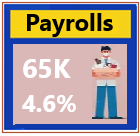
First-time claims for unemployment insurance rose more than expected last week despite other signs of healing in the jobs market, the Labor Department reported Thursday. First-time claims for the week ended April 3 totaled 744,000, well above the expectation for 694,000 from economists surveyed by Dow Jones. The total represented an increase of 16,000 from the previous week’s upwardly revised 728,000. The four-week moving average edged higher to 723,750. The news comes a week after a sign of more aggressive healing in the labor market, as nonfarm payrolls in March increased by 916,000 while the unemployment rate fell to 6%. That was the biggest job gain since August 2020, though unemployment remains well above the pre-pandemic low of 3.5%. Continuing claims provided some good news on the labor front, with the total dropping 16,000 to 3.73 million. That’s the lowest level for continuing claims since March 21, 2020, just after the Covid-19 pandemic hit and companies instituted wholesale layoffs in conjunction with the economic shutdown. Continuing claims run a week behind the headline weekly number...
Wholesale Trade (Pre) - Inventories
U.S. wholesale inventories increased slightly more than initially estimated in February 2021 amid a decline in sales. The Commerce Department said on Friday that wholesale inventories rose 0.6%, instead of 0.5% as estimated last month. Stocks at wholesalers surged 1.4% in January. The component of wholesale inventories that goes into the calculation of gross domestic product increased a solid 0.8% in February. That suggests inventory investment could contribute to GDP growth in the first quarter. Inventories increased 2.0% in February from a year earlier. Sales at wholesalers fell 0.8% after accelerating 4.4% in January. At February’s sales pace it would take wholesalers 1.27 months to clear shelves, up from 1.25 months in January. Businesses are replenishing inventories after they were drawn down early in the pandemic, helping to underpin manufacturing. But a big chunk of the inventory build is coming from imports, which could keep the trade deficit elevated, which could offset some of the boost to GDP growth from inventories. Wholesale stocks of motor vehicles and parts fell 0.6% in February. There were increases in stocks of professional and computer equipment, as well as petroleum..
JOLTS
US job openings climbed to 7.4 million in February on hopes of a spring economic rebound. US job openings gained to 7.4 million from 6.9 million in February, according to JOLTS data. Economists expected openings to hold at 6.9 million through the month. The hiring rate rose to 4% from 3.8% as businesses prepared for reopening to lift demand. US job openings gained more than expected in February as daily coronavirus case counts fell from winter highs and vaccine distribution improved. Openings increased to 7.4 million from 7.1 million in February, according to Job Openings and Labor Turnover Survey, or JOLTS, data published Tuesday. Economists surveyed by Bloomberg projected openings would hold steady at 6.9 million. The reading marks a second straight increase and brings openings to their highest level since January 2019. The health care and food and accommodation sectors counted for most of the gains, according to the report. The state and local government education industry shed 117,000 openings, the biggest decline seen that month.
PPI
U.S. producer prices increased more than expected in March, resulting in the largest annual gain in 9-1/2 years, fitting in with expectations for higher inflation as the economy reopens amid an improved public health environment and massive government funding. The producer price index for final demand jumped 1.0% last month after increasing 0.5% in February, the Labor Department said on Friday. In the 12 months through March, the PPI surged 4.2%. That was the biggest year-on-year rise since September 2011 and followed a 2.8% advance in February. Economists called by Reuters had forecast the PPI increasing 0.5% in March and jumping 3.8% year-on-year. The report was delayed after the Bureau of Labor Statistics’ website crashed...mm |