Empire State Manufacturing Index
Fed's Empire State manufacturing index hits eight-month high in March. NY Empire State Manufacturing Index continues to improve in March. US Dollar Index edges higher toward 92.00 after the data. The headline General Business Conditions Index of the NY Fed's Empire State Manufacturing Survey rose to 17.4 in March from 12.5 in February, the NY Fed's report revealed on Friday. This reading came in better than analysts' estimate of 14.5.
Treasury International Capital (TIC)
The U.S. Department of the Treasury today released Treasury International Capital (TIC) data for January 2021. The next release, which will report on data for February 2021, is scheduled for April 15, 2021. The sum total in January of all net foreign acquisitions of long-term securities, short-term U.S. securities, and banking flows was a net TIC inflow of $106.3 billion. Of this, net foreign private inflows were $45.0 billion, and net foreign official inflows were $61.3 billion. Foreign residents increased their holdings of long-term U.S. securities in January; net purchases were $34.0 billion. Net purchases by private foreign investors were $3.4 billion, while net purchases by foreign official institutions were $30.6 billion. U.S. residents decreased their holdings of long-term foreign securities, with net sales of $56.8 billion. Taking into account transactions in both foreign and U.S. securities, net foreign purchases of long-term securities were $90.8 billion. After including adjustments, such as estimates of unrecorded principal payments to foreigners on U.S. asset-backed securities, overall net foreign purchases of long-term securities are estimated to have been $50.1 billion in January. Foreign residents decreased their holdings of U.S. Treasury bills by $12.2 billion. Foreign resident holdings of all dollar-denominated short-term U.S. securities and other custody liabilities increased by $1.5 billion. Banks’ own net dollar-denominated liabilities to foreign residents increased by $54.7 billion.
FOMC Meeting 16-17/Mar/2021
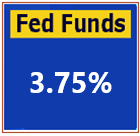
Fed sees stronger economy and higher inflation, but no rate hikes. The Federal Reserve kept rates anchored near zero and maintained the current pace of asset purchases, following the conclusion of this week’s meeting. Officials also upgraded expectations for GDP growth and inflation and cut estimates for the unemployment rate. More members foresee rate hikes in coming years, but not enough to change the forecast for none through at least 2023. The Federal Reserve on Wednesday sharply ramped up its expectations for economic growth but indicated that there are no interest rate hikes likely through 2023 despite an improving outlook and a turn this year to higher inflation. As widely expected, the policymaking Federal Open Market Committee also voted to keep short-term borrowing rates steady near zero, while continuing an asset purchase program in which the central bank buys at least $120 billion of bonds a month. The key changes came in how central bankers view the economic road ahead and what impact that could have on policy.
Retail Sales
The Federal Reserve, which begins its two-day March meeting Tuesday, will be watching bond yields and the latest reading on retail sales. The Commerce Department said before-the-bell that February retail sales fell 3%, a surprisingly weak number. Estimates had called for a 0.4% increase. However, January’s reading was revised higher to a strong 7.6%, getting a bump from the December Covid package. With the Fed’s extraordinarily easy monetary measures during Covid under scrutiny, the nation’s central bank is set to release Wednesday afternoon new economic and interest rate forecasts along with its policy statement. Americans shopped less in February, leading retail sales to fall 3% on a seasonally adjusted basis, the Census Bureau reported Tuesday. It was a much steeper drop than the 0.5% decline economists had predicted, according to Refinitiv. Bad weather across many states were part of the reason sales declined last month. But the data is particularly disappointing because it follows a revised 7.6% January increase that came on the heels of three straight months of contractions.
Import and Export Prices
U.S. import prices increased strongly in February 2021, boosted by higher costs for crude oil and commodities, strengthening expectations for an acceleration in inflation this year. The Labor Department said on Tuesday import prices rose 1.3% last month after surging 1.4% in January. Economists polled by Reuters had forecast import prices, which exclude tariffs, advancing 1.2% in February.In the 12 months through February, import prices accelerated 3.0%. That was the largest gain since March 2012 and followed a 1.0% rise in January.
Import price index MoM 1.3% versus 1.0% estimate. Last month prices rose 1.4%. Import price index YoY 3.0% versus 2.6% estimate Export price index MoM 1.6% versus 1.0% estimate. Export price index YoY 5.2% versus 4.4% estimate. U.S export prices advanced 1.6 percent in February, after a 2.5-percent rise in January which was the largest 1-month increase since the index was first published monthly in December 1988.
Industrial Production
U.S. factory production slumped for a second month in February 2021, missing forecasts for a pickup, indicating headwinds from the trade war to slower global growth are weighing on manufacturers. Still, the prior month’s drop was revised up.
Manufacturing output fell 0.4% after a revised 0.5% decline in the prior month, Federal Reserve data showed Friday. The results missed the estimate for a 0.1% rise in a Bloomberg survey. Total industrial production, which also includes mines and utilities, rose 0.1% after a revised 0.4% decrease that was also upwardly revised.
The Fed said industrial production tumbled by 2.2 percent in February 2021after jumping by an upwardly revised 1.1 percent in January. The pullback surprised economists, who had expected industrial production to climb by 0.6 percent compared to the 0.9 percent increase originally reported for the previous month. The unexpected decrease in industrial production came as manufacturing output plunged by 3.1 percent in February after surging up by 1.2 percent in January.
The Fed also said capacity utilization for the industrial sector dropped to 73.8 percent in February from a revised 75.5 percent in January. Economists had expected capacity utilization to inch up to 75.8 percent from the 56.6 percent originally reported for the previous month. Capacity utilization in the manufacturing and mining sectors fell to 72.3 percent and 77.5 percent, respectively, while capacity utilization in the utilities sector jumped to 78.5 percent...
Business Inventories
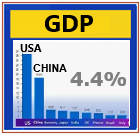
U.S. business inventories rose moderately in January 2021 amid a sharp rebound in consumer spending at the start of the year, and it is now taking businesses the shortest time in nearly nine years to clear shelves. Business inventories increased 0.3% in January after rising 0.8% in December, the Commerce Department said on Tuesday. Inventories are a key component of gross domestic product. January’s gain was in line with economists’ expectations. Inventories fell 1.8% on a year-on-year basis in January. Economists estimate the economy could grow this year by as much as 7%, fueled by the massive fiscal stimulus and rollout of vaccines that are expected to get the pandemic under control. That would be the fastest growth since 1984 and would follow a 3.5% contraction last year, the worst performance in 74 years.
Housing Market Index - HMI
Homebuilder confidence drops as interest rates and lumber prices rise. The National Association of Home Builders/Wells Fargo Housing Market Index fell 2 points to 82 in March. Of the index’s three components, current sales conditions fell 3 points to 87. Sales expectations in the next six months increased 3 points to 83, and buyer traffic was unchanged at 72. A monthly index measuring homebuilder confidence in the single-family housing market fell, as builders face rising interest rates and rising costs for materials, especially lumber. The National Association of Home Builders/Wells Fargo Housing Market Index fell 2 points to 82 in March. Anything above 50 is considered positive sentiment. The index stood at 72 in March 2020 and hit a high of 90 in November.
MBA Purchase Applications
Mortgage refinance demand tanks 39% as rates continue to climb. The average contract interest rate for 30-year fixed-rate mortgages with conforming loan balances ($548,250 or less) increased to 3.28% from 3.26% with points decreasing to 0.41 from 0.43 (including the origination fee) for loans with a 20% down payment. Applications to refinance a home loan fell 4% for the week and were down 39% compared with the same week one year ago. Higher mortgage rates are cutting into demand for refinances, as fewer and fewer borrowers can now get worthwhile savings. Applications to refinance a home loan fell 4% for the week and were down 39% compared with the same week one year ago, according to the Mortgage Bankers Association’s seasonally adjusted index. Just a few months ago, refinance volume was more than 100% higher than the previous year. In addition, the refinance share of mortgage activity decreased to 62.9% of total applications from 64.5% the previous week. The drop is due to higher interest rates, which last week hit the highest level since June 2020. The average contract interest rate for 30-year fixed-rate mortgages with conforming loan balances ($548,250 or less) increased to 3.28% from 3.26% with points decreasing to 0.41 from 0.43 (including the origination fee) for loans with a 20% down payment.
Retail Sales
Harsh weather temporarily weighs on U.S. retail sales in February. U.S. retail sales fell more than expected moderately in February amid bitterly cold weather across the country. A rebound is likely, however, as the government disburses another round of pandemic relief money to mostly lower- and middle-income households. Retail sales dropped by a seasonally adjusted 3.0% last month, the Commerce Department said.
U.S. retail sales fell more than expected moderately in February 2021 amid bitterly cold weather across the country, but a rebound is likely as the government disburses another round of pandemic relief money to mostly lower- and middle-income households. Retail sales dropped by a seasonally adjusted 3.0% last month, the Commerce Department said on Tuesday. Data for January was revised up to show sales rebounding 7.6% instead of 5.3% as previously reported. Economists polled by Reuters had forecast retail dropping 0.5% in February.
Housing Starts
U.S. homebuilding fell more than expected in February 2021 as severe cold gripped many parts of the country, in a temporary setback for the housing market, which remains supported by extremely lean inventories amid strong demand for larger homes. Housing starts dropped 10.3% to a seasonally adjusted annual rate of 1.421 million units last month, the Commerce Department said on Wednesday. Economists polled by Reuters had forecast starts would drop to a rate of 1.560 million units in February 2021.
Housing Permits
Housing starts drop 10.3% in February. Single-family housing starts decrease 8.5%. Building permits fall 10.8%; single-family down 10.0%. Single-family homebuilding, the largest share of the housing market, declined 8.5% to a seasonally adjusted annual rate of 1.040 million units in February, also a six-month low. Single-family building permits tumbled 10.0% to a rate of 1.143 million units in February.
FOMC
Despite the labor market gains, the Federal Reserve indicated Wednesday that it plans to continue its easy monetary policy well into the future. The Fed said it will hold short-term borrowing rates near zero until the economy reaches full employment that is inclusive across income, race and gender lines.
Jobless Claims
obless claims totaled 770,000 for the week ended March 13, an increase from 725,000 during the previous period.
The total was well above the 700,000 Dow Jones estimate as the jobs market looks to recover from the Covid-19 pandemic.
A manufacturing report from the Philadelphia Fed showed that growth is still powerful, with the highest expansionary reading in nearly 50 years.First-time claims for jobless benefits showed an unexpected jump to 770,000 as the labor market tries to recover from the Covid-19 pandemic that sent more than 22 million Americans to the unemployment line a year ago, the Labor Department reported Thursday. Economists surveyed by Dow Jones had been looking for a total of 700,000 for the week ended March 13. The total represented an increase from the previous week’s upwardly revised 725,000.
Philadelphia Fed Manufacturing Index
Regional factory activity recently jumped to the highest level in nearly 50 years, the Federal Reserve Bank of Philadelphia said Thursday. The Philly Fed’s manufacturing activity index soared to 51.8 in March 2021 from 23.1 in the prior month. That’s the best since 1973. Economists had forecast that the gauge would remain more or less flat for the month. “Nearly 59 percent of the firms reported increases in current activity this month (up from 35 percent last month), while only 7 percent reported decreases (down from 11 percent),” the Philly Fed said. The report covers the Philadelphia Fed’s home territory of over 13.3 million people in Delaware, southern New Jersey, and eastern and central Pennsylvania. The new orders measure skyrocketed to 50.9 in March, also a 50 year high, from 23.4 in the prior month. The shipments index moved to 30.2 from 21.5 in February.
Leading Indicators
U.S. Leading indicators misses estimates. February 2021 Leading Indicators: +0.2% to 110.5 vs. +0.3% consensus and +0.5% prior.The Conference Board Leading Economic Index (LEI) for the U.S. increased 0.2 percent in February to 110.5 (2016 = 100), following a 0.5 percent increase in January and a 0.4 percent increase in December. The U.S. LEI continued rising in February, suggesting economic growth should continue well into this year, “Indeed, the acceleration of the vaccination campaign and a new round of large fiscal supports are not yet fully reflected in the LEI. With those developments, The Conference Board now expects the pace of growth to improve even further this year, with the U.S. economy expanding by 5.5 percent in 2021.
Fixed Mortgage Rates
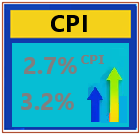
The Fed expects core inflation to hit 2.2% this year, but has a long-run expectation of it sticking around 2%. The U.S. central bank also indicated that it didn’t plan to hike interest rates through 2023 and that it would continue its program of buying at least $120 billion of bonds a month. Guy LeBas, chief fixed income strategist at Janney Montgomery Scott, described the move in yields as a “belated overreaction” to the Fed’s projections and Jerome Powell’s statements on Wednesday. The 10-year U.S. Treasury yield jumped above 1.7% on Thursday, its highest level in more than a year, despite reassurance from the Federal Reserve that it had no plans to hike interest rates anytime soon, nor taper its bond-buying program. |