| HOUSING STARTS |
HOUSING STARTS |
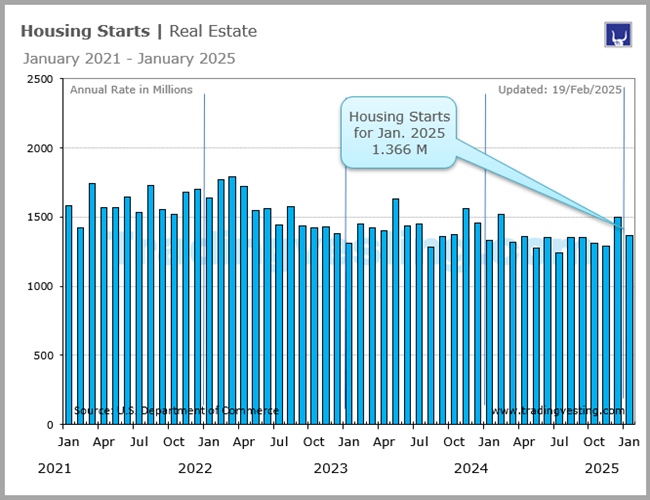
Formerly known as "New Residential Construction" it is an aproximation of the number of housing units on which some constructions was performed during the month: a measure of the number of residential units on which construction is begun each month.
|
 |
 |
| HOUSING PERMITS |
HOUSING PERMITS |
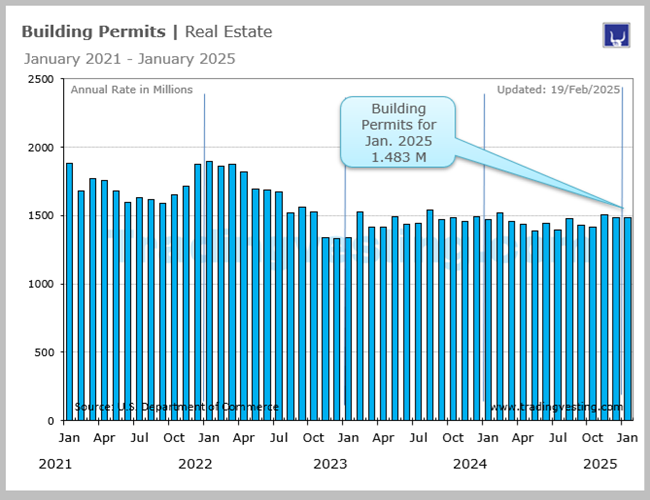
Building permits are permits taken out in order to allow excavation.
An increase in building permits and starts usually occurs a few months after a reduction in mortgage rates. According to the government, a building permit results in a new housing start roughly within one month.
Permits usually lead home construction by about a month, but permits are not required in all regions of the country, and the level of permits therefore tends to be less than the level of starts over time.
An increase in building permits and starts usually occurs a few months after a reduction in mortgage rates. A sale isn't final until a mortgage is closed. |
 |
|
| SHILLER |
S&P CASE SHILLER INDEX |
The S&P/Case-Shiller Home Price Indices are the leading measures for the US residential housing market, tracking changes in the value of residential real estate both nationally as well as in 20 metropolitan regions.
|
 |
|
| NEW HOME SALES |
NEW HOME SALES |
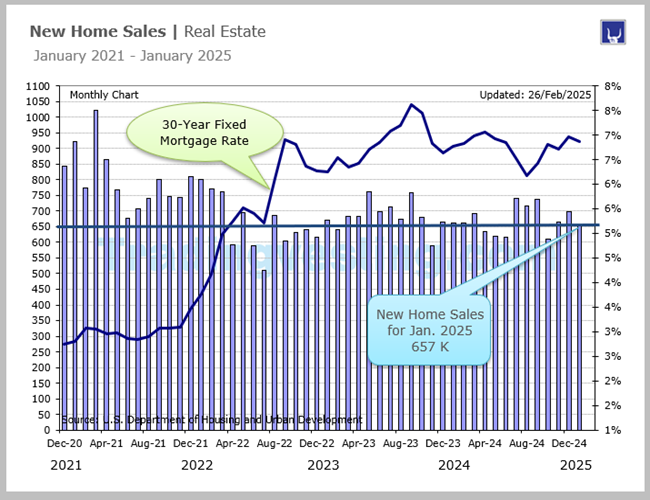
New home sales measure the number of newly constructed homes with a committed sale during the month. The report indicates the level of new privately owned one-family houses sold and for sale.
New home sales usually lead Existing Home Sales regarding changes in the residential sales market by a month or two. For example, an existing home sale in January, was probably signed 30 to 45 days earlier which would have been in November or December. This is based on the usual time it takes to obtain and close a mortgage. |
 |
|
| EXISTING HOME SALES |
EXISTING HOME SALES |
| This report provides a measure of the level of sales of existing home sales or previously occupied homes. The report is considered a decent indicator of activity in the housing sector. |
 |
| PENDING HOME SALES |
PENDING HOME SALES |
| The Pending Home Sales Index is a forward-looking indicator based on contract signings of Existing Home Sales: The number of Americans who signed contracts to buy homes. Contract signings typically indicate where the housing market is headed. |
 |
| HMI |
HOUSING MARKET INDEX |
| The NAHB/Wells Fargo Housing Market Index gauges builder perceptions of current single-family home sales and sales expectations for the next six months as good, fair or poor. |
 |
| FHFA |
FHFA HOUSE PRICE INDEX |
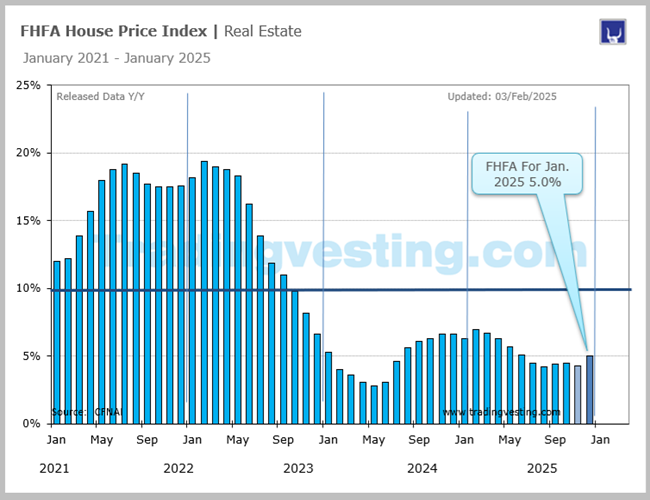
| The FHFA report measures changes in real estate values using purchases of properties with mortgages backed by Fannie Mae or Freddie Mac. It doesn't provide a specific price for homes. |
 |
| MBA |
MBA PURCHASE APPLICATIONS |
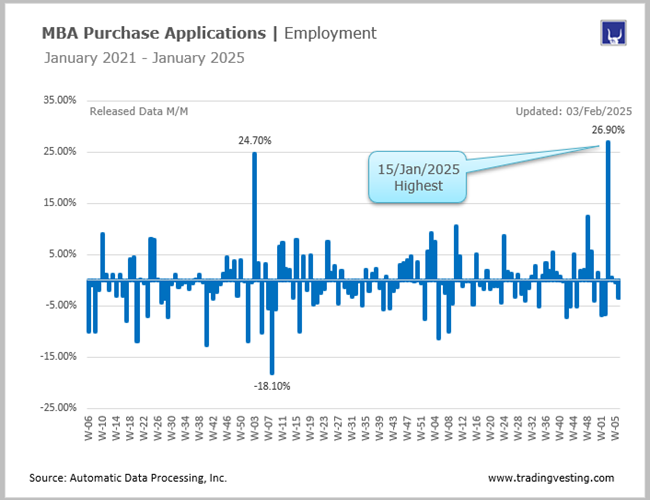
| The Mortgage Bankers Association's (MBA) Weekly Applications Survey offers a comprehensive analysis of mortgage application activity and serves at a current indicator for the US housing market. See also 30-Year Fixed Mortgage Rate. |
 |
| 30-YEAR MORTGAGE RATE |
Mortage Rates Trends |
Productivity measures the goods and services generated by an economy while Unit-labor costs reflect how much it costs a business to produce one unit of output, such as a ton of coal.
Productivity measures the goods and services generated by an economy. In the long run, higher productivity usually results in higher profits for businesses and bigger paychecks for workers.
Unit-labor costs reflect how much it costs a business to produce one unit of output, such as a ton of coal. |
 |
 |
|