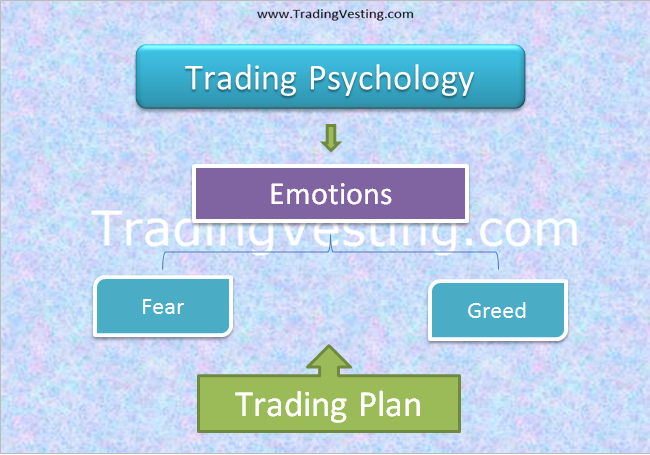
Emotions
Beyond not having a TradingPlan, a common reason for loss among traders is lack of discipline in following their system. Instead, the trader succumbs to the destructive influences of emotion and is soon trading differently than indicated by the TradingPlan.
Throughout the entire trading cycle, from entry to exit, the trader is subject to a range of emotions, most of which are a natural consequence of the way in which our brains are "wired". But trading based on emotion leads to undesirable consequences and must be avoided.
Trading emotion can lead to over-trading. The emotion here is often greed. This is more likely to be the case if the trader began with the unrealistic expectation that a great deal of money can be made with just a small investment, sometimes reinforced from a series of initial winning trades. Over-trading can also be motivated by revenge. After having lost some money, the trader may be tempted to increase trading or position size in an attempt to quickly recoup the loss, even though this goes against the trading system. Being bored can also lead to over-trading. When the market is quiet and no trade signal is given by the system, the trader may place a trade anyway under the rationalization that no money can be made if one is not trading. Remember the rule: Never trade just to trade.
Fear is a powerful emotion that, if acted upon, can jeopardize performance in a number of ways. Fear can cause a trader to exit a trade too soon, or pass up on what would have been a profitable trade. This is more likely to happen if a trader enters the market with money that they can not afford to lose. On the other hand, fear of missing out on a profitable trade can cause a trader to wrongly enter a position prematurely. Fear can lead to indecision, causing the trader to question whether or not to get into a trade even though the trading system is giving a clear signal. Doubt or lack of confidence soon arises, both in the trading system and in the skill of the trader themselves
The successful trader starts with a healthy and realistic mindset. Trading is not regarded as a "get-rich-quick" scheme but rather as a profession or as a business that requires time, effort and dedication. Experiencing losing trades is part of this business
The successful trader controls emotion and rigidly adheres to their trading system. A trading log or diary can help a trader maintain discipline: a trader is more likely to follow their system if they know that, should they deviate from the system, they'll have to admit that failure in writing later that day. You can find a trader's log. |