10-Year Treasury Yield
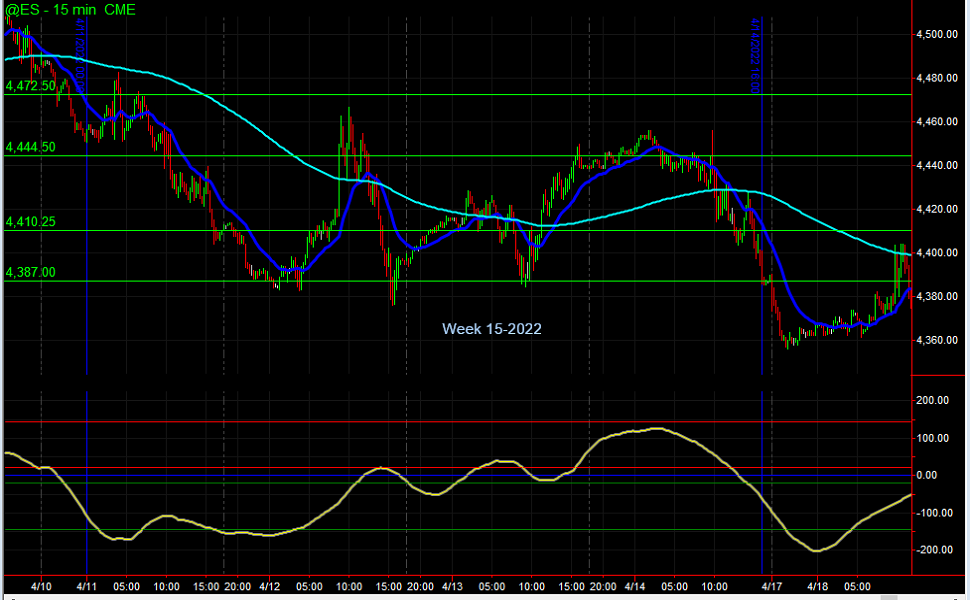
The S&P 500 dropped 1.3%, while the tech-heavy Nasdaq Composite declined 1.8%. The Dow Jones Industrial Average fell 238 points, or 0.7%. Those moves came as the 10-year Treasury yield hit a high of 2.78% early Monday morning, or its highest point in three years since January 2019 when the 10-year yielded as high as 2.799%. Yields move inversely to prices and 1 basis point is equal to 0.01%.
Consumer Price Index - CPI
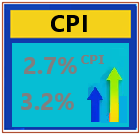
U.S. stock-market futures jump as CPI data suggest inflation may be peaking. Stock futures jump after CPI report on hope inflation is peaking, Nasdaq-100 futures gain 1.6%. U.S. stock futures rose as the March 2022 consumer prices report showed inflation excluding volatile food and energy costs was slightly less than expected. A drop in rates helped boost stocks. Consumer prices for March 2022 increased 1.2% month-to-month and 8.5% annually, the Labor Department said on Tuesday. But traders were focusing on the core reading, which excludes food and energy prices. Core CPI in March 2022 increased 0.3%, below the consensus economist estimate from Dow Jones of 0.5%. Core prices on an annual basis were up 6.5%. The 10-year Treasury yield retreated from a three-year high following the report as traders were betting the core reading could mean inflation is showing signs of peaking.
In the 12 months through March 2022, the CPI accelerated 8.5%. That was the largest year-on-year gain since December 1981 and followed a 7.9% jump in February. It was the sixth straight month of annual CPI readings north of 6%. Economists expected the index to show that prices surged 8.4% in March from the previous year and 1.2% on a monthly basis.Despite the increases, markets reacted positively to the report. Stock market futures rose and government bond yields declined. The big news in the March report was that core price pressures finally appear to be moderating. Stocks give up earlier gains and turn negative as traders assess latest inflation data..
Treasury Budget
The U.S. government posted a $193 billion budget deficit in March 2022, less than a third of the $660 billion gap a year earlier, the Treasury Department said on Tuesday, as COVID-19 relief outlays fell sharply and tax receipts surged to record levels. The Treasury said March outlays were $508 billion, down 45% from March 2021, while receipts jumped 18% to $315 billion, a new March record, reflecting a strong U.S. economic recovery. The March 2021 deficit of $660 billion had been a record for the month, driven by direct payments of $1,400 to millions of Americans under last year's $1.9 trillion American Rescue Plan Act. For the first six months of the 2022 fiscal year that started on Oct. 1, the Treasury reported a deficit of $668 billion, a 61% drop from the year-ago period. Year-to-date outlays fell 18% from the first half of fiscal 2021 to $2.79 trillion, while receipts grew 25% to $2.122 trillion, a new first-half record.
MBA Purchase Applications
Mortgage applications to purchase a home rose 1% for the week but were 6% lower than the same week one year ago. More potential buyers are now turning to adjustable-rate mortgages, which carry lower interest rates. Their share of applications last week was 7.4%, the highest level since June 2019. With rates surging, demand for refinancing has fallen sharply of late. Applications to refinance a home loan fell 5% during the most recent week, seasonally adjusted, and were 62% lower than they were a year ago, according to the MBA. For the full year, the group expects refinances to fall 64%. The refinance share of mortgage activity decreased to 37.1% of total applications last week from 38.8% the previous week.Rising rates are causing a drop in home loan demand, so mortgage bankers are lowering their forecast for the year. The Mortgage Bankers Association said it expects overall mortgage originations, which include refinancing loans, to total $2.58 trillion in 2022, a 35.5% decline from last year. This lowered outlook comes as demand for refinancing sinks. Applications to refinance a home loan fell 5% during the most recent week and were 62% lower than they were a year ago. The average contract interest rate for 30-year fixed-rate mortgages with a 20% down payment and conforming loan balances of $647,200 or less increased to 5.13% from 4.90%, according to the MBA. The rate stood at 3.27% the same week one year ago. Points rose to 0.63 from 0.53, including origination fees.
JP Morgan - Earning Season
JPMorgan Chase kicked off earnings season Wednesday with some bad news: First-quarter profit fell 42% from a year ago, driven lower by Russia's invasion of Ukraine, high levels of inflation and supply chain problems. JPMorgan Chase reports $524 million hit from market dislocations caused by Russia sanctions. JPMorgan Chase said Wednesday that first-quarter profit fell sharply from a year earlier, driven by increased costs for bad loans and market upheaval caused by the Ukraine war. Here are the numbers: Earnings: $2.63 a share (unclear if comparable to $2.69 estimate). Revenue: $31.59 billion vs. $30.86 billion estimate, according to Refinitiv.
Delta Airlines - Earning Season
Travel is booming, and Delta Air Lines boosted ticket prices. That helped the company weather higher fuel costs in the first quarter, and Delta believes it can turn a profit in the second quarter. Delta forecasts a quarterly profit as travelers keep flying despite higher fares, helping offset surging fuel costs. Here’s how Delta performed in the first quarter compared with what analysts expected, according to average estimates compiled by Refinitiv: Adjusted loss per share: $1.23 versus $1.27 expected. Revenue: $9.35 billion versus $8.92 billion expected. The carrier reported a net loss of $940 million for the first three months of the year on revenue of $9.35 billion, above the $8.92 billion in sales that analysts polled by Refinitiv expected. Sales were off 11% from 2019 levels.
Producer Price Index - PPI
Producer prices rose 11.2% from a year ago in March 2022, the biggest gain on record. The prices that goods and services producers receive rose in March at the fastest pace since records have been kept, the Bureau of Labor Statistics reported Wednesday. The producer price index, which measures the prices paid by wholesalers, increased 11.2% from a year ago, the most in a data series going back to November 2010. On a monthly basis, the gauge increased 1.4%, above the 1.1% Dow Jones estimate. Stripping out food, energy and trade services, so-called core PPI rose 0.9% on a monthly basis, nearly double the 0.5% estimate and the biggest monthly gain since January 2021. Core PPI increased 7% on a year-over-year basis. PPI is considered a forward-looking inflation measure as it tracks prices in the pipeline for goods and services that eventually reach consumers.
Banks - Earning Season
Citigroup topped expectations for first-quarter profit and revenue on better-than-expected trading results as Wall Street benefited from surging volatility tied to the Ukraine war. Shares rose 1.6% in premarket trading on the results. Here’s what the company reported compared with what Wall Street was expecting, based on a survey of analysts by Refinitiv: Earnings per share: $2.02 vs $1.55 expected. Revenue: $19.19 billion vs $18.15 billion expected.
Wells Fargo on Thursday reported lower-than-expected first-quarter revenue amid a drop in mortgage lending, but beat earnings expectations as the bank decreased its credit reserves. Shares fell more than 3% in premarket trading. Here are the numbers: Earnings: 88 cents a share, higher than the 80 cents a share estimate from Refinitiv. Revenue: $17.59 billion vs. $17.8 billion estimate.
Morgan Stanley on Thursday reported first-quarter earnings that surpassed Wall Street expectations, thanks to the bank’s solid revenue gains from trading. Shares of the New York-based bank jumped more than 1% in premarket trading Thursday. Here’s what the company reported compared with what Wall Street was expecting, based on a survey of analysts by Refinitiv: Earnings per share: $2.02 vs. $1.68 expected. Revenue: $14.8 billion vs. $14.2 expected.
Goldman Sachs posted first-quarter results that blew past expectations as its traders navigated a surge in market volatility sparked by the war in Ukraine. Here’s are the numbers: Earnings: $10.76 per share, vs. $8.89 estimate, according to Refinitiv. Revenue: $12.93 billion, vs. $11.83 billion estimate.
Jobless Claims
The unemployment rate is at a two-year low of 3.6% and there were a near record 11.3 million job openings at the end of February 2022, which economists said made it easier for some cash-strapped Americans to take a second job or pick up extra shifts. Tightening labor market conditions were underscored by a separate report from the Labor Department on Thursday showing initial claims for state unemployment benefits increased 18,000 to a still-low seasonally adjusted 185,000 for the week ended April 9. Economists had forecast 171,000 applications for the latest week. Claims have dropped from a record high of 6.137 million in early April 2020. Better job security is also allowing some consumers to take on more debt. Another buffer against inflation is also coming from the massive savings accumulated during the pandemic.
Retail Sales
Retail sales rose 0.5% in March 2022 amid inflation jump; import prices hit 11-year high. Consumers continued to spend in March 2022 even as inflation rose to its highest level since late 1981, according to government data released Thursday. Retail sales climbed 0.5% from the previous month, slightly less than the 0.6% Dow Jones estimate and a deceleration from the upwardly revised 0.8% gain in February 2022. The move came with inflation rising 1.1% for the month as measured by the consumer price index. Retail sales data are not adjusted for inflation. Consequently, the biggest gain in sales for the month game at gas stations, which saw an 8.9% increase in sales as gasoline prices rose 18.3% during the period. The sector has seen a 37% sales burst over the past year.
U.S. retail sales picked up in March 2022, helped by a surge in gas station receipts that masked mixed results in other large spending categories as consumers contend with decades-high inflation. The value of overall retail purchases climbed 0.5%, Commerce Department figures showed Thursday. While that was just shy of expectations, the prior month was revised up sharply to show a 0.8% increase. U.S. retail sales increased solidly in March 2022, boosted by higher gasoline prices, but the pain at the pump pulled spending away from online retailers. The report from the Commerce Department on Thursday also showed retail sales in February 2022 were much stronger than initially reported. The data suggested the economy continued to expand in the first quarter despite high inflation. Retail sales increased 6.9% on year-on-year basis.
Import and Export Prices
Import prices increased 2.6% in MArch 2022, the biggest one-month jump since 2011. Also, inflation continued to hit imports, with prices rising by 2.6%, the largest month increase since April 2011, the Bureau of Labor Statistics reported. That was higher even than the 2.2% estimate. On a 12-month basis, import prices jumped 12.5%, the largest such gain since September 2011.
Business Inventories
U.S. business inventories jump 1.5% in February 2022. Business inventories rose 1.5% in February 2022 as companies tried to stock up low levels of products on hand. Sales in the month increased 1%, the government said Thursday. The inventory-to-sales ratio rose to 1.26 form 1.25. The ratio reflects how long it would take a company to sell all the goods sitting on warehouse shelves. Low readings lately are a sign of how hard it is for businesses to produce enough goods to keep up with demand. Higher inventories add to GDP.
Consumer Sentiment UM
U.S. Consumer Sentiment Unexpectedly Rises to Three-Month High for April 2022. Michigan gauge jumps to 65.7, exceeding all estimates. Strong labor market, wage expectations bolster outlook. U.S. consumer sentiment unexpectedly rose to a three-month high in early April as optimism about job growth and wage expectations more than outweighed decades-high inflation. The University of Michigan’s sentiment index increased to 65.7 from 59.4 in March, data released Thursday showed. The figure exceeded all estimates in a Bloomberg survey of economists, which had a median forecast of 59.
Oil - Commodity
Stocks fall a
Fixed Mortage Rates
The
Empire State Manufacturing Index
The Empire State Manufacturing Survey general business-conditions index soared in April 2022, rising 36 points to 24.6, indicating a return to expansionary business conditions in the sector. The index — the monthly gauge of New York’s manufacturing industry — had declined nearly 15 points in March to -11.8. The April reading — based on firms responding to the survey — indicates business activity “picked up significantly” in New York, the Federal Reserve Bank of New York said in its Friday report. A positive reading indicates expansion or growth in manufacturing activity, while a negative index number points to a decline in the sector. The survey found 40 percent of New York manufacturer respondents reported that conditions had improved over the month, while 15 percent said conditions had worsened, the New York Fed said. The New York Fed distributes the Empire State Manufacturing Survey on the first day of each month to the same pool of about 200 manufacturing executives in New York state. On average, about 100 executives return responses.
Industrial Production
U.S. Industrial Production Advances Much More Than Expected In March 2022. Partly reflecting a spike in the output of motor vehicles and parts, the Federal Reserve released a report on Friday showing U.S. industrial production increased by much more than expected in the month of March. The report showed industrial production advanced by 0.9 percent in March, matching the upwardly revised increase in February. Economists had expected industrial production to rise by 0.4 percent compared to the 0.5 percent growth originally reported for the previous month. Manufacturing output climbed by 0.9 percent in March after jumping 1.2 percent in February, largely reflecting a 7.8 percent surge in the output of motor vehicles and parts. Factory output elsewhere moved up 0.4 percent.
Treasury intrenational Capital - TIC
Stocks fall a
|