10-Year Treasury Yield
Treasury yields were steady Monday as traders anticipate the Federal Reserve moving forward with a rate cut later this week. The yield on the benchmark 10-year Treasury was down marginally at 4.059. On Friday, it had rebounded by 5 basis points, after touching the 4% level earlier in the week when data prints showed prices were rising while the labor market was weaker than anticipated.
Empire Estate Mfg Index
Business activity across New York State's manufacturing region unexpectedly declined, according to a closely followed survey on Monday by the New York Federal Reserve, as new orders and shipments both fell sharply. The headline general business conditions index of the Empire State Manufacturing Survey sank 21 points to -8.7 in September 2025, marking its first negative reading since June.
US Dollar Index
The US Dollar Index (DXY), which measures the value of the US Dollar (USD) against six major currencies, has lost its daily gains and is trading around 97.00 during the European hours on Thursday. Traders will likely observe weekly US Initial Jobless Claims later in the North American session.
Retail Sales
U.S. retail sales increased more than expected in August as consumers bought a range of goods and dined out, but a weakening labor market and rising prices because of tariffs pose a downside risk to continued strength in spending. The third straight month of solid gains in sales reported by the Commerce Department on Tuesday is unlikely to prevent the Federal Reserve from cutting interest rates on Wednesday, given the widening cracks in the labor market. It could, however, urge caution against aggressive rate cuts, economists said. Retail sales rose 0.6% last month after an upwardly revised 0.6% advance in July, the Commerce Department's Census Bureau said. Economists polled by Reuters had forecast retail sales, which are mostly goods and are not adjusted for inflation, rising 0.2% following a previously reported 0.5% gain in July.
Import and Export Prices
U.S. import, export prices both unexpectedly rise in August. U.S. import prices rose 0.3% M/M in August, exceeding the 0.2% decrease expected and the 0.2% increase in July, which was revised down. US import prices rose by 0.3 per cent month on month (MoM) in August following a 0.2-per cent MoM increase in July and a decrease of 0.2 per cent in June, according to the Bureau of Labour Statistics (BLS). Higher prices for non-fuel imports more than offset lower prices for fuel imports in the month. Such prices were unchanged year on year (YoY) in the month.
Industrial Production
U.S. factory production unexpectedly increased in August amid a rebound in the output of motor vehicles and some nondurable goods, though tariffs continued to cast a shadow over the manufacturing sector. Manufacturing output rose 0.2% last month after a downwardly revised 0.1% fall in July, the Federal Reserve said on Tuesday. Economists polled by Reuters had forecast production for the sector, which accounts for 10.2% of the economy, would slip 0.2% following a previously reported unchanged reading in July.
Business Inventories U.S. business inventories increased marginally in July amid a surge in sales, government data showed. Inventories rose 0.2% after advancing by the same margin in June, the Commerce Department's Census Bureau said on Tuesday. Inventories are a key component of gross domestic product and one of the most volatile. They increased 1.5% year-on-year. Inventories decreased at a $32.9 billion annualized rate in the second quarter, subtracting 3.29 percentage points from GDP. That was, however, more than offset by a record 4.95 percentage point contribution from a smaller trade deficit.
HMI - Housing Market Index Builder sentiment levels remained unchanged in September but lower mortgage rates and expectations that the Federal Reserve will soon cut the federal funds rate led to higher future sale expectations in the coming months. Builder confidence in the market for newly built single-family homes was 32 in September, unchanged from the August reading, according to the National Association of Home Builders (NAHB)/Wells Fargo Housing Market Index (HMI) released today. While builder sentiment has hovered at a relatively low reading between 32 and 34 since May, builders expressed optimism that a more favorable interest rate climate could bring hesitant buyers off the sidelines in the final quarter of 2025.
Crypto World Bitcoin
Crypto executives meet in Washington, D.C. to push for bitcoin reserve bill: CNBC Crypto World. Bullish Stock Spikes After Hours, CEO Says Company's Bitcoin-Dominated Indexes Could Become 'MSCI Of Crypto World'.
MBA Mortage Applicatiosn
Meanwhile, MBA data showed the interest rate on a 30-year mortgage sank to its lowest since October 2024, while refinancing applications spiked almost 60% to their highest since March 2022.
Housing Starts
U.S. single-family homebuilding and permits for future construction dropped in August amid a glut of unsold new houses and a softening labor market, shrugging off falling mortgage rates.Single-family housing starts, which account for the bulk of homebuilding, fell 7.0% to a seasonally adjusted annual rate of 890,000 units last month, the Commerce Department's Census Bureau said on Wednesday.
Building Permits
Permits for future single-family homebuilding decreased 2.2% to a rate of 856,000 units. A National Association of Home Builders survey on Tuesday showed sentiment among homebuilders remained subdued in September, though expectations for higher sales over the next six months improved. Builders are increasingly cutting prices and offering other incentives to reduce the inventory bloat. New housing inventory is near levels last seen in late 2007.
EIA Crude Oil Report
U.S. crude oil stockpiles fell sharply last week as net imports dropped to a record low amid a jump in exports to a near two-year high, the Energy Information Administration said on Wednesday. Gasoline inventories also declined unexpectedly in the week ended September 12, while distillate stockpiles rose more than expected, the EIA said. Crude stocks fell by 9.3 million barrels last week to 415.4 million barrels, the EIA said, compared with analysts' expectations in a Reuters poll for a 857,000-barrel draw.
FOMC Meeting #6
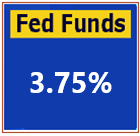
Fed’s interest rate cut this week, with policymakers voting 11-to-1 to lower the benchmark overnight lending rate by a quarter percentage point to a range between 4.00%-4.25%. Fed Chairman Jerome Powell described the rate move as “risk management,” and policymakers indicated that two more rate cuts would be forthcoming this year.
Hedging Gold
mmmmm
Jobless Initial Claims
The surge in jobless claims in early September to a four-year high turns out to have been a false alarm, at least for now. The number of people who applied for unemployment benefits in the seven days ending Sept. 13 subsided to 231,000 from a revised 264,000 in the prior week, the government said Thursdayy. The number of Americans filing new applications for unemployment benefits fell last week, but the labor market has softened as both demand for and supply of workers have diminished. Initial claims for state unemployment benefits decreased 33,000 to a seasonally adjusted 231,000 for the week ended September 13, the Labor Department said on Thursday. The decline partially reversed a surge in the prior week, which had pushed claims to levels last seen in October 2021.
Philadelphia Fed Mfg Index
The latest data shows significant strengthening of manufacturing activity in the Philadelphia Fed's Business Outlook Survey, with the main index climbing to +23.2 in September 2025, a significant improvement from -0.3 in August and the highest level since January. This jump indicates robust growth, with other key indicators such as future new orders, future shipments, and future capital expenditures also showing strong gains.
LEI Leading Indicators
U.S. Leading Indicators Continue to Show Weakening Economy. The Leading Economic Index fell 0.5% to 98.4 in August, amid growing concerns about the labor market, headwinds from tariffs and a weak manufacturing sector. The U.S. economy faces a slowing economy amid growing concerns about the labor market, headwinds from tariffs and a weak manufacturing sector, according to a basket of economic indicators.
TIC Treasury International Capital
The U.S. Department of the Treasury today released Treasury International Capital (TIC) data for July 2025. The next release, which will report on data for August 2025, is scheduled for October 17, 2025. The sum total in July of all net foreign acquisitions of long-term securities, short-term U.S. securities, and banking flows was a net TIC inflow of $2.1 billion. Of this, net foreign private inflows were $22.6 billion, and net foreign official outflows were $20.5 billion. After including adjustments, such as estimated foreign portfolio acquisitions of U.S. stocks through stock swaps, overall net foreign purchases of long-term securities are estimated to have been $49.2 billion in July.
Fed Balance Sheet
mmmmm
Mortgage Rates
The rate on the popular 30-year mortgage has dropped to an 11-month low of 6.35% last week from around 7.04% in mid-January, data from mortgage finance agency Freddie Mac showed, as financial markets anticipated the Federal Reserve would resume cutting interest rates this week. MBA data showed the interest rate on a 30-year mortgage sank to its lowest since October 2024,
Quadruple Witching
It’s the third Friday of September, so it’s “Quadruple Witching” — the simultaneous expiration of stock options, stock index options, index futures and single stock futures — which means we may see more unexpected trading activity that we would on an otherwise relatively quiet trading day. Depending on where trading firms had placed themselves ahead of time will determine much of what transpires today.
|