10-Year Treasury Yield
Treasury yields slid on Monday as investors look toward key inflation data due later in the week. The benchmark 10-year Treasury yield fell more than 3 basis points to 4.049%. The 2-year Treasury yield was less than 1 basis point lower at 3.501%. The 30-year Treasury yield dropped more than 8 basis points to 4.691%.
Consumer Credit
The latest data on consumer credit reveals an impressive surge, surpassing both expectations and previous figures. The actual value of outstanding consumer credit that requires installment payments has reached $16.01 billion, demonstrating a robust increase in consumer spending and confidence. This actual figure of $16.01 billion significantly overshadows the forecasted figure of $10.40 billion. The substantial deviation from the forecast indicates a stronger-than-expected performance of the consumer credit sector, suggesting an upswing in the economy.
US Dollar Index
The dollar index, which tracks the currency against six international peers, fell 0.2 per cent.
Crypto World Bitcoin
XRP Price Breaks Through $2.9: Market Enthusiasm Rebounds, GMO Miner Helps Investors Steadily Position. Developers across Latin America are increasingly choosing to build on well-established blockchains like Ethereum and Polygon rather than launching new base-layer protocols, according to a new report from consultancy firm Sherlock Communications.
MBA Mortage Applicatiosn
Mortgage demand jumps to the highest level in three years, as interest rates drop sharply.Applications to refinance a home loan jumped 12% for the week and were 34% higher than the same week one year ago. Applications for a mortgage to purchase a home rose 7% for the week and were 23% higher than the same week one year ago.
PPI Wholesale Prices
US wholesale prices declined unexpectedly in August despite Donald Trump’s sweeping tariffs, keeping the Federal Reserve on track for an interest rate cut next week. The annual Producer Price Index climbed 2.6 per cent, according to the Bureau of Labor Statistics. Economists had predicted a jump of 3.3 per cent. On a monthly basis, wholesale prices fell 0.1 per cent, falling well short of Wall Street estimates of a rise of 0.3 per cent. The producer price index fell 0.1% in August, after a downwardly revised 0.7% increase in July and well off the Dow Jones estimate for a 0.3% rise. The release provides breathing room for the Federal Reserve to approve an interest rate cut at its meeting next week.
Wholesale Inventories
U.S. wholesale inventories increased a bit less than initially thought in July, suggesting businesses were not rushing to rebuild inventory after stocks were depleted in the second quarter. Stocks at wholesalers edged up 0.1%, instead of rising 0.2% as estimated last month. Inventories, a key part of gross domestic product, gained 0.2% in June. They advanced 1.3% on a year-over-year basis in July. Wholesale stocks of motor vehicles dropped 1.6%. But stocks of apparel surged 1.9%, while those of prescription medication increased 1.8%. Grocery inventories increased 2.0%.
EIA Crude Oil Report
EIA Reports Significant Build in U.S. Crude Stockpiles.U.S. crude oil inventories increased by 3.9 million barrels in the week ending September 5, reaching 424.6 million barrels. Total motor gasoline inventories rose by 1.5 million barrels, while middle distillate inventories saw a massive increase of 4.7 million barrels. Despite the inventory builds, crude prices were trading up slightly on Wednesday morning immediately following the EIA data releas
Hedging Gold
Gold’s surge to yet another all-time high is bringing attention to a seasonal trade that had fallen out of favor. I’m referring to the notion that gold is an especially strong performer in the month of September. As far as I can tell, this idea goes back to a study from the January 2013 issue of “Research in International Business and Finance.” Entitled “The autumn effect of gold,” the study found that, from 1980 to 2010, gold’s average September performance was significantly better than in other months.
Jobless Initial Claims
On employment, the Labor Department reported a surprise increase in weekly unemployment compensation filings to a seasonally adjusted 263,000, higher than the 235,000 estimate and up 27,000 from the prior period.
CPI Consumer Price Index
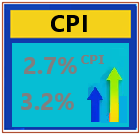
Prices consumers pay for a variety of goods and services moved higher than expected in August while jobless claims accelerated, providing challenging economic signals for the Federal Reserve before its meeting next week. The consumer price index posted a seasonally adjusted 0.4% increase for the month, double the prior month, putting the annual inflation rate at 2.9%. Economists surveyed by Dow Jones had been looking for respective readings of 0.3% and 2.9%. For the vital core reading that excludes food and energy, the August gain was 0.3%, putting the 12-month figure at 3.1%, both as forecast. Fed officials consider core to be a better gauge of long-run trends.
Treasury Budget
The U.S. budget deficit for August fell $35 billion or 9% from a year earlier to $345 billion as President Donald Trump's tariffs pushed net customs receipts up by about $22.5 billion for the month, the Treasury Department said on Thursday. With one month to go in the 2025 fiscal year, the year-to-date deficit rose $76 billion, or 4% to $1.973 trillion. A U.S. Treasury official declined to predict whether the deficit would top $2 trillion for the full fiscal year ended September 30 but told reporters that September typically has higher revenues than August because of quarterly tax payment deadlines.
Fed Balance Sheet
A surge in U.S. Treasury bill issuance in recent months has reduced liquidity in the financial sector, stoking investor concerns that funding markets could face a September squeeze. That could create ripple effects through markets by reducing demand for assets like stocks and corporate bonds, and pushing some investors to set cash on the side in anticipation of volatility. Some measures of liquidity are already signaling stress ahead, such as a higher cost of borrowing cash overnight collateralized by Treasuries. Still, money market conditions are different. The Fed has launched the Standing Repo Facility (SRF) -- that could be tapped by banks for emergency liquidity, and bank reserves - the biggest component of overall financial sector liquidity - are much higher at $3.2 trillion than in 2019.
Mortgage Rates
The average contract interest rate for 30-year fixed-rate mortgages with conforming loan balances, $806,500 or less, decreased to 6.49% from 6.64%, with points decreasing to 0.56 from 0.59, including the origination fee, for loans with a 20% down payment.
Consumer Sentiment UM
U.S. consumer sentiment fell for a second straight month in September as consumers saw rising risks to business conditions, the labor market and inflation. The University of Michigan's Surveys of Consumers on Friday said its Consumer Sentiment Index fell to 55.4 this month, the lowest since May, from a final reading of 58.2 in August. Economists polled by Reuters had been expecting a reading of 58.0, little changed from the month before.
|