10-Year Treasury Yield
The yield has fallen around 100 basis points, or a full percentage point, since Wednesday, marking the largest three-day decline since Oct. 22, 1987, when the yield fell 117 basis points. That move followed the Oct. 19, 1987 stock market crash — known as “Black Monday” in which the S&P 500 plunged 20% for its worst one-day drop. The move was bigger than the 2-year yield slide of 63 basis points that took place in three days following the 9/11 attacks. The yield on the 10-year Treasury was down by more than 15 basis points at 3.543%.
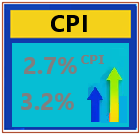
CPI Inflation gauge increased 0.4% in February, as expected and up 6% from a year ago. Inflation rose in February but was in line with expectations, likely keeping the Federal Reserve on track for another interest rate hike next week despite recent banking industry turmoil. The consumer price index increased 0.4% for the month, putting the annual inflation rate at 6%, the Labor Department reported Tuesday. Both readings were exactly in line with Dow Jones estimates. Excluding volatile food and energy prices, core CPI rose 0.5% in February and 5.5% on a 12-month basis. The monthly reading was slightly ahead of the 0.4% estimate, but the annual level was in line.
MBA Purchase Applications
nnnnn
PPI
Wholesale prices posted an unexpected decline in February, providing some encouraging news on inflation as the Federal Reserve weighs its next move on interest rates. The producer price index fell 0.1% for the month, against the Dow Jones estimate for a 0.3% increase and compared with a 0.3% gain in January, the Labor Department reported Wednesday. On a 12-month basis, the index increased 4.6%, well below the downwardly revised 5.7% level from the previous month. Excluding food, energy and trade, the index rose 0.2%, down from the 0.5% gain in January. On an annual basis, that reading was up 4.4%, the same as in January. Excluding food and energy, PPI was flat, vs. the estimate for a 0.4% gain.
Retail Sales
In a separate important data point Wednesday, the Commerce Department reported that retail sales fell 0.4% in February, according to data that is not adjusted for inflation. The total was in line with expectations and dragged down by a 1.8% slide in auto sales. Food services and drinking establishments, which had seen strong receipts over the past year, fell 2.2% for the month, though they were still up 15.3% on an annual basis. Furniture and home furnishing stores were off 2.5%, while miscellaneous retailers saw a 1.8% decline
Empire
Also, the Empire State Manufacturing survey for March, a gauge of activity in the New York region, posted a -24.6 reading, down 19 points from a month ago. The reading represents the percentage difference between companies reporting expansion versus contraction. The Dow Jones estimate was for a -7.8 level. The big drop came from precipitous decreases in new orders and shipments as well as inventories. Hiring edged lower as did the prices index. The news comes a day after the Labor Department said consumer prices rose another 0.4% in February, bringing the annual inflation rate to 6%.
Business Inventories
U.S. business inventories fall for first time in nearly two years.U.S. business inventories fell for the first time in nearly two years in January, potentially setting up inventory investment to be a drag on economic growth in the first quarter. Business inventories dropped 0.1%, the Commerce Department said on Wednesday. That was the first decline and also the weakest reading since April 2021 and followed a 0.3% gain in December. Economists polled by Reuters had expected inventories, a key component of gross domestic product, would be unchanged. Inventories increased 11.1% on a year-on-year basis in January. Inventory accumulation surged in the fourth quarter, mostly reflecting an unwanted piling up of goods, as growth in consumer spending decelerated because of higher interest rates. Retail inventories increased 0.2% instead of 0.3% as estimated in an advance report published last month. They rose 0.4% in December. Motor vehicle inventories advanced 0.6% as estimated last month. They increased 1.4% in December. Retail inventories excluding autos, which go into the calculation of GDP, gained 0.1% instead of the 0.2% rise estimated last month.
HMI
The National Association of Housebuilders/Wells Fargo housing market index increased for a third month in a row. The index rose to 44 in March, the highest reading since September 2022 and beating market forecasts for a reading of 40. The gauge for current sales conditions increased to 49 from an upwardly revised print of 47, while prospective buyer traffic edged 3 points higher to 31 - a six-month high. On the other hand, sales expectations for the next six months fell slightly to 47, down from 48. NAHB chief economist Robert Dietz said: "While financial system stress has recently reduced long-term interest rates, which will help housing demand in the coming weeks, the cost and availability of housing inventory remains a critical constraint for prospective home buyers."
TIC
March 15, 2023 Washington – The U.S. Department of the Treasury today released Treasury International Capital (TIC) data for January 2023. The next release, which will report on data for February 2023, is scheduled for April 17, 2023. The sum total in January of all net foreign acquisitions of long-term securities, short-term U.S. securities, and banking flows was a net TIC inflow of $183.1 billion. Of this, net foreign private inflows were $171.2 billion, and net foreign official inflows were $11.9 billion. Foreign residents increased their holdings of long-term U.S. securities in January; net purchases were $31.7 billion. Net purchases by private foreign investors were $85.0 billion, while net sales by foreign official institutions were $53.3 billion. U.S. residents decreased their holdings of long-term foreign securities, with net sales of $0.1 billion. Taking into account transactions in both foreign and U.S. securities, net foreign purchases of long-term securities were $31.9 billion. After including adjustments, such as estimates of unrecorded principal payments to foreigners on U.S. asset-backed securities, overall net foreign purchases of long-term securities are estimated to have been $22.3 billion in January. Foreign residents decreased their holdings of U.S. Treasury bills by $9.7 billion. Foreign resident holdings of all dollar-denominated short-term U.S. securities and other custody liabilities decreased by $4.5 billion. Banks’ own net dollar-denominated liabilities to foreign residents increased by $165.2 billion.
Jobless Claims
mmmm
Empire State Mfg Index
New York Fed survey finds disturbing trends in manufacturing data. New orders and shipments are down, along with employment and worker hours, monthly survey shows. The Federal Reserve of New York's latest Empire State Manufacturing Survey shows a continued drop in manufacturing activity in the state, a worrisome trend amid the market turmoil hitting the tech and banking sectors. The survey's general business conditions index fell 19 points in March to -24.6 points, continuing a "see-saw pattern of ups and downs" within negative territory, the New York Fed said in its monthly report issued Wednesday.
Retail Sales
US retail sales point to underlying strength in the economy. Retail sales fall 0.4% in February. Core retail sales increase 0.5%; January sales revised up. U.S. retail sales fell moderately in February, likely payback after the prior month's outsized increase, but the underlying momentum remained strong, suggesting the economy continued to expand in the first quarter despite higher borrowing costs.The report from the Commerce Department on Wednesday, which followed on the heels of data last week showing solid job growth in February, prompted economists to upgrade their gross domestic product growth estimates for this quarter. News on inflation was somewhat encouraging. Producer prices fell last month, leading to the smallest year-on-year increase in nearly two years.
mmmmmm
mmmm
mmmmmm
mmmm
mmmmmm
mmmm
Fixed Mortgage Rates
nnnnn
|